


Ireland. Part 17
Description
This section is from the book "Ireland - John L. Stoddard's Lectures", by John L. Stoddard. Also available from Amazon: John L. Stoddard's Lectures 13 Volume Set.
Ireland. Part 17
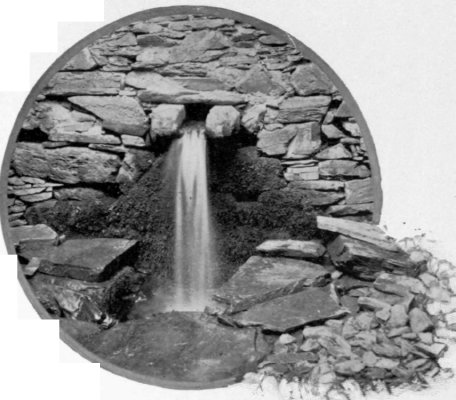
ST. Patrick S Well, Downpatrick.
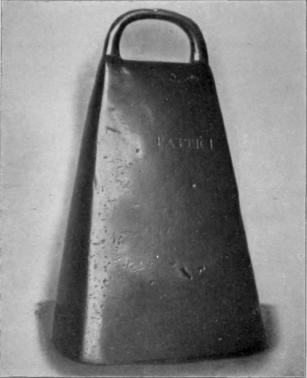
ST. Patrick's Hell.
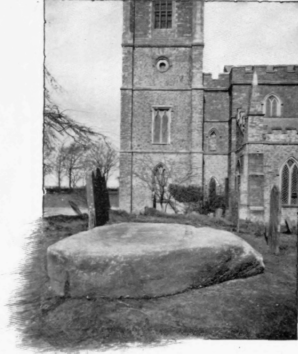
St. Patrick's Grave, Downpatrick.
Whether or not his dust reposes in the shadow of the cathedral at Downpatrick, under the granite slab that bears his name, he is, and ever will be, the dominant figure in Ireland - the keystone in the bridge by which men passed from Irish Paganism to Christianity. So many new-born Irishmen have been named after the great saint, that " Pat" has come to be a synonym for almost every son of Erin, and youthful Irish-Americans are prone to be ashamed of the fact that they bear the name of Patrick. They should be proud of it. There is no name on earth that in its own legitimate meaning is more aristocratic. It signifies patrician, as contrasted with plebeian, and it is quite presumable that the young monk thus named was worthy of the title. Most men are glad to trace their lineage to old Norman conquerors. But who among them all stands out more prominently on the stage of history than St. Patricius? The conquest that he made was not of this world; but which of all the mailed robbers from the north achieved such glorious triumphs and such bloodless victories, and left such blessings to posterity?

The Cover Of St. Patrick's Bell.
Beside St. Patrick's bell in the Museum is a beautiful metal case specially made, in the latter part of the eleventh century, to enclose it. This is itself a reliquary of remarkable richness, upon whose frame of brass are ornaments of gold and silver, wrought in intricate designs, while several gems and crystals sparkle on its surface. It is an interesting fact that such bell-covers seem not to have been made in any part of Christendom save Ireland; but the sanctity in which the relic of the great apostle was regarded caused the bells of other saints to be similarly protected. Many of them, like the bell of St. Patrick, had special guardians, their custody often remaining for many generations in one family. Yet, after all, despite the elegance and antiquity of this case, one turns from it at last to contemplate again the older and plainer, but far more precious, bell itself, and in imagination to hear once more its silent tongue, which, when the dawn of a new Faith was stealing o'er this farthest island of an unknown sea, so often made the hills and valleys echo with its call to prayer. But Christian relics are not the only treasures of the past preserved in this Museum. In some of its galleries are souvenirs of an antiquity, compared to which that of the early Church seems modern. For Ireland, like all other European countries, had her Stone, Bronze, and Iron Ages, and passed through the same stages of development that all the different races of humanity have gradually reached and left behind them in their upward march from barbarism. An instinct, common to all peoples of the earth, leads them along the same adventurous path, groping their way through blood and tears, and clinging to a bit of flint, or scrap of metal, as mountain climbers clutch a root or piece of rock, to give them vantage ground for another upward step. How harmless now appear these rows of flint flakes, ranged like ornaments within a case!
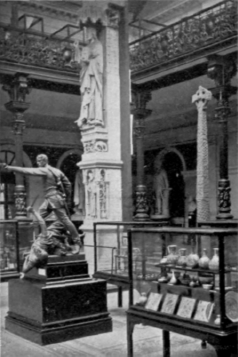
A Corner Of The Museum.

Old Irish Flint Implements.
But every one of them has a history, closely connected with the life of man. Some of the larger ones were used as knives and ax-heads, to fashion a rude boat; others, as sharp and cruel as a tiger's teeth, once served as weapons at the ends of spears; while some in their collision, at first by chance, then purposely, struck out the spark, which gave to the astonished savage the possibility of fire, and lit the way to higher civilization by means of warmth, cooked food, and the use of metals. But these old implements of prehistoric times refuse to tell their secrets, and lie before us like loosely scattered type, waiting for some great printer to combine them into words and sentences, and tell the story of the Stone Age to the world.
Continue to:


My Books

