


Ireland. Part 18
Description
This section is from the book "Ireland - John L. Stoddard's Lectures", by John L. Stoddard. Also available from Amazon: John L. Stoddard's Lectures 13 Volume Set.
Ireland. Part 18
Va s t l y more interesting, however, than these flints, are some rough pillars; a few of which are in the Museum, while many similar ones exist intact in various parts of Ireland. They are called "Ogham " stones from the legendary Og-ma, the Cadmus of the Celts, who gave to them the art of writing, for on their edges have been cut rude letters, distinguished from one another by their different lengths and angles. Impossible as it would seem to be, the patient labor of enthusiastic scholars has deciphered these inscriptions, as perfectly as other students of antiquity mastered the mystery of Egyptian hieroglyphics; and the crude language of the primitive Celt is now as legible as that of Cleopatra. As I stood looking at the strange incisions, carved in the twilight of the Irish dawn on these rough monoliths, as messages to posterity, I thought of the stupendous temple-palaces at Thebes which I had seen but a few months before; and more than ever was I impressed with the mysterious law that seems to regulate the rise and fall of nations. Thus, at the very time when Egypt's brilliant civilization flourished on the Upper Nile; and, later, when Hellenic art and wisdom shed their lustre over they Egean; and when the feet of Jesus trod Judea's hills; here, on this island (even then comparatively near to Egypt, Greece, and Palestine, and now within a few hours' journey to them), an unknown race was slowly emerging from the bog of barbarism, to take, in turn, its part in the great drama of humanity, when the illustrious actors of those other lands should have forever disappeared, leaving the splendid theatres of their exploits in ruins. Strange, is it not, that the historic kingdom of the Pharaohs should to-day be governed by the Ruler of Ireland, while the Sirdar, who takes the place of Ramses II., as the conqueror of the Soudan, is the Irishman, Lord Kitchener?

An Ogham Stone.

A Bishop' S Croz1er Of The Old Irish Church.

Lord Kitchener.

The people of Dublin are the proud possessors of a park no less than seven miles in circumference, with an area of seventeen hundred acres. Laid out in admirable driveways, richly wooded, and commanding lovely views, it well deserves its reputation of being one of the finest pleasure-grounds in Europe. Its name, Phoenix Park, suggests a previous conflagration here, especially as there rises, at the intersection of its principal avenues, a handsome column sur- mounted by the legendary fire-born bird. But, since the name is said to be merely a corruption of the Irish "fionn-uske," meaning a spring of running water, the title of the park and the interpretation naturally placed upon the figure of the phoenix are alike misleading. One is accustomed to associate Lord Chesterfield only with a code of exquisite politeness and the famous letters on fine manners which he addressed directly to his son, and indirectly to the world. Yet it was he who, as the Lord Lieutenant of Ireland, in 1747, granted this vast enclosure (formerly a deer park) to the public, embellished it with walks and drives, caused the erection of the Phoenix Column, and by judicious planting gave to the broad expanses of green turf rare touches of arboreal beauty. Not far from the entrance stands the massive granite obelisk, two hundred and five feet high, reared to the memory of the Duke of Wellington. Residents of the Irish capital are justly proud to reckon the Iron Duke among the distinguished men whom Dublin has produced. Whenever I passed this fine memorial to his genius, I always noticed one or more persons reading the titles of his victories inscribed upon the monument, or gazing at the bronze reliefs of some of his most famous battle-scenes.

The PhoenlX Column, Phoenix Park, Dublin.
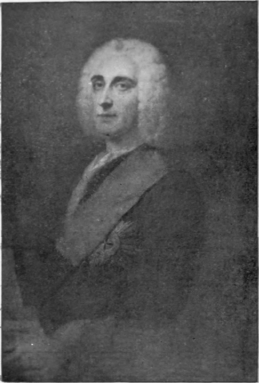
Lord Chesterfield.

The Wellington Monument, Phoenix Park.
What a race of warriors the Irish have always been ! How many of them fought against the Roman legions in the days when Celtic chieftains ventured down into the plains of Italy and threatened the Eternal City, we do not know ; but that a number of them joined their Gallic brethren in resisting Julius Caesar, we may well believe.
Continue to:


My Books

