


Ireland. Part 19
Description
This section is from the book "Ireland - John L. Stoddard's Lectures", by John L. Stoddard. Also available from Amazon: John L. Stoddard's Lectures 13 Volume Set.
Ireland. Part 19

A Bit Of Phoenix Park.
There can also be little doubt that, later, when degenerate Roman citizens avoided military duty, the Celts, like other vanquished tribes, were enrolled to take their places in the imperial armies; while, in comparatively recent times, driven from their unhappy land by persecution and starvation, the Irish swelled the ranks of French and Spanish armies with i i 4Ireland whole regi-ments of soldiers, whose reckless bravery was unsurpassed. For many years Ireland was Europe's favorite recruiting ground. So great was the exodus of Erin's valiant sons, after the conquest of the island by King William, in 1691, that a French historian estimates that during the next fifty years four hundred thousand Irishmen perished as soldiers of France. Their reputation was most brilliant. The Prince of Orange said that they were born soldiers; the French king, Henry Fourth, called Hugh O'Neill the third soldier of the age; and it was in the battle of Landen that the gallant Irish general, Sarsfield, the hero of Limerick, while commanding the left wing of the French army, fell, mortally wounded, murmuring, as he saw his life-blood ebb away, "Oh, that this was for Ireland!" In fact, there was not one of all those Irish warriors who did not cherish in his heart the hope that some day his right arm might wield the sword for Ireland's independence, and who, like Sarsfield, did not grudge the blood which poured so freely from their wounds upon a foreign soil. What wonder, then, that when at Fontenoy, with the cry "Remember Limerick," •• Like lions leaping at a fold, when mad with hunger's pang, Right up against the English line the Irish exiles sprang.' the English king exclaimed: "Cursed be the laws that deprive me of such subjects ! " It is a proof of the valor and ability of these Irish exiles that some of them rose to be generals, and even marshals, in Russia, Austria, and Spain, as well as in France. Irish blood flowed in the veins of Marshal McMahon, for six years President of the French Republic; while Leopold O'Donnell, a direct descendant of the old O'Donnell chieftains, once so powerful in Ireland, held, from 1843 to 1848, the post of Captain General of Cuba, and subsequently was for several years, as Minister of War and Premier of the Cabinet, the virtual Sovereign of Spain. It must also be said for Ireland that, notwithstanding all her grievances, she has not hesitated to fight for England nobly. At one time Irish troops formed nearly one-half of the military forces of the British Empire; the Irish Grenadiers at Waterloo covered themselves with glory; and, turning from quantity to quality, who can estimate the value of Ireland's gift to England in the Duke of Wellington, and the Napiers, whose homestead, Celbridge House, near Dublin, was called "The Eagles' Nest" on account of the high spirit of the sons of Colonel Napier, all of whom attained distinction. Charles, for example, was the conqueror of the great province of India, known as Sind, containing no less than forty-eight thousand square miles and nearly three million inhabitants. Like a true Irishman, General Napier was as witty as he was brave, and when he sent his dispatch announcing his final victory, he perpetrated the best military pun on record; for, instead of writing, "I have Sind," he used the single word "Peccavi! " Still another Irish contribution to her Majesty's service in India was Viscount Gough, whose statue stands in Phoenix Park, and who by his success in the far East won for himself the enviable title of "Conqueror of the Punjaub."
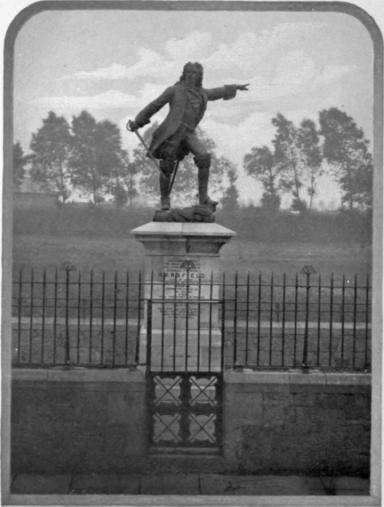
Statue Of General Sarsf1eld, Limerick.

Gough' S Statue, Phoenix Park.

Celbr1dge House.
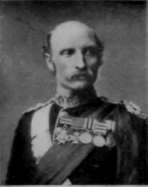
White.
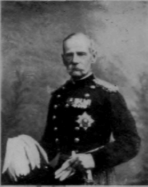
Roberts.

K1Tchener:.
Three 1rish Heroes.
Moreover, passing by many more who might be mentioned, we come to the significant fact that at the present time most of the celebrated leaders of the British army are Irishmen. Thus, who among the military heroes of Great Britain are more admired, trusted, and beloved than the sons of Ireland, - Lord Wolseley, Commander in Chief; Lord Roberts, Field Marshal in the Transvaal; Sir George White, the hero of Lady-smith; and Lord Kitchener, conqueror of the Soudan? The presence of these men at the head of the British armies assures the world that Irish loyalty and devotion to the Empire were never better shown than now.
Continue to:


My Books

