


Ireland. Part 2
Description
This section is from the book "Ireland - John L. Stoddard's Lectures", by John L. Stoddard. Also available from Amazon: John L. Stoddard's Lectures 13 Volume Set.
Ireland. Part 2
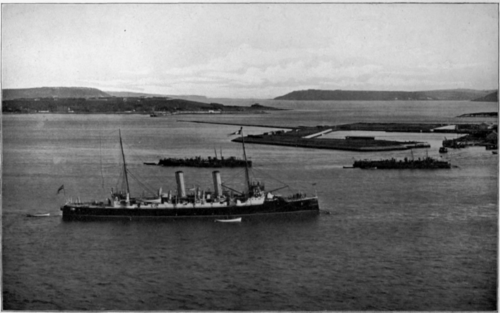
Queenstown Harbor.
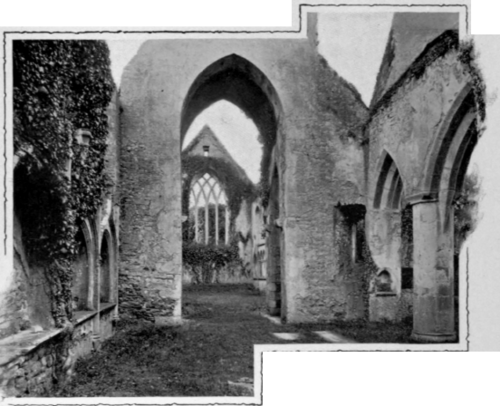
Adair Abbey.
Others have claimed that Ireland's misfortunes have been due to her religion. But when and where have the Irish ceased to be religious? Have they not taken their religion with them wherever they have gone? And if this has not proved an obstacle to their success abroad, how can it have produced their wretchedness at home? It is often said of the Irish that they are never without a grievance, and are perpetually complaining. But neither individually nor collectively do people usually moan, unless they are in pain. In ninety-nine cases out of a hundred a cry of distress means suffering. Dissatisfaction is frequently the child of envy, but it may also be the offspring of legitimate ambition.

An Irish Fisherman.
A noble discontent with one's inferior condition, or with unfair treatment, has ever been the spring of progress. The finer and more sensitive the spirit, the more acutely does it feel oppression, and the more resolutely will it beat against the barriers that prevent its free development. To the protesting spirits of one age a happier humanity often pays grateful tribute in the next.
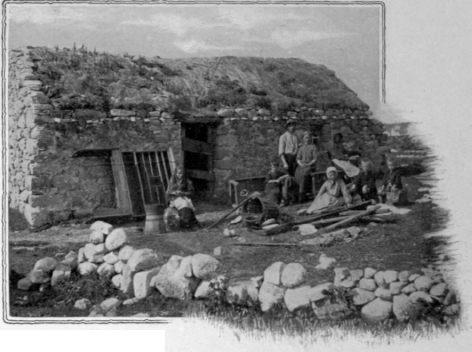
An Evicted Family.
Whether the blame for Irish discontent should chiefly rest upon the governors or the governed, has been for years a matter of dispute; but it is quite incredible that all the misery which crushed for centuries this naturally cheerful, buoyant race was due exclusively to Celtic character and crimes. However anxious, therefore, one may be to avoid political topics in a general survey of this unfortunate country, it is impossible utterly to ignore its past, if one would comprehend its present. Hence certain facts, suggested by an approach to the Irish capital, may here appropriately be called to mind.
The first misfortune of Ireland is one of geography. The "silver streak," that is at once the glory and defence of England, divides the mother country from the Emerald Isle. Had this been otherwise, and had the Irish coast been joined to England by a strip of land, narrower even than the belt uniting Scotch and English territory, how different might have been the history of Ireland! Now that the barriers of mountains, seas, and rivers have practically sunk to insignificance, it is easy to forget how great their influence has been in the development of nations. It is, however, undeniable that they were frequently the means of fostering jealousies, promoting wars, preventing unity of thought and action, and strengthening the narrowness of spirit naturally bred in isolation. Fifty-three miles of turbulent water roll between Dublin and the English coast; nearly three times the distance between Dover and Calais. But England's southern neighbor, although nearer, constitutes part of a great continent, while Ireland's insularity naturally links her fortunes with those of the more powerful island which virtually separates her from the rest of Europe.
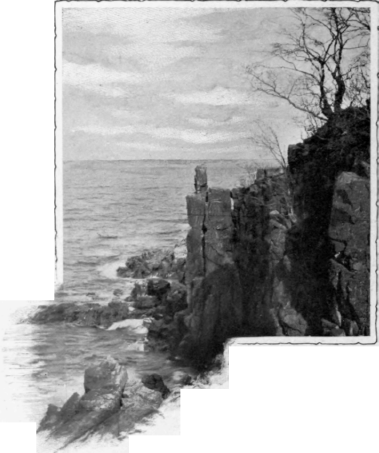
The Silver Streak.
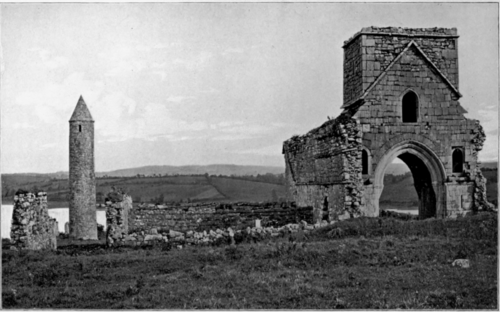
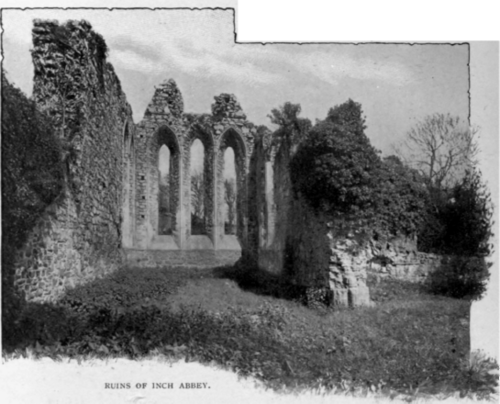
Ruined Monastery On Lough Erne.
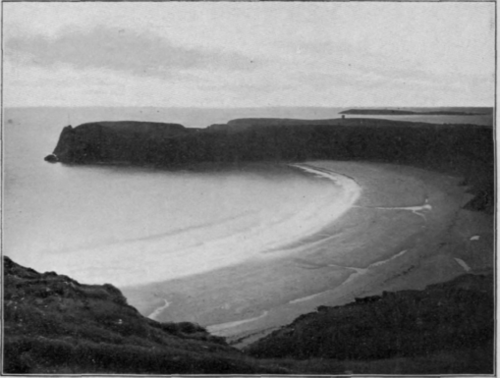
Where Foreign Troops Might Land.
Too close to England to obtain her independence, too distant to feel satisfied with what was long an alien and unsympathetic rule, she has repeatedly been tempted to rebellion by the enemies of Britain, who promised to assist her by landing French or Spanish forces on her western coast.
There can be little doubt also that a peaceable and prosperous union of the two islands would have taken place much sooner, had English sovereigns visited Ireland more frequently; and, better still, had they been willing to reside there for a certain portion of each year, as, by the Scandinavian Constitution the King of Sweden and Norway is obliged to spend a few months annually in the latter country. A prominent characteristic of the Celts has always been a passionate attachment to their chieftains. Hence it is probable that if their British rulers had passed even a little of their time among them, and treated them with kindness and consideration, none of their subjects would have rendered them more love and loyalty than the warm-hearted and enthusiastic Irish.
Continue to:


My Books

