


Scotland. Part 16
Description
This section is from the book "Scotland - John L. Stoddard's Lectures", by John L. Stoddard. Also available from Amazon: John L. Stoddard's Lectures 13 Volume Set.
Scotland. Part 16
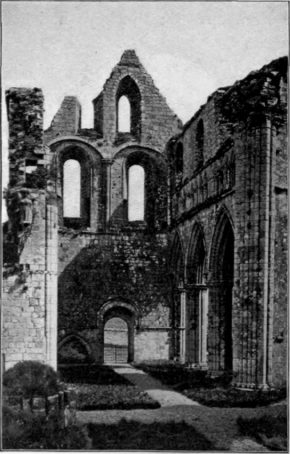
Dundrennan Abbey.
What must have been the captive's suffering during those last months of suspense, when the decree of Parliament was known, and while Elizabeth still hesitated to enforce it! It is comparatively easy to prepare for execution once. It is a different thing to have the sword continually suspended over one's head. Mary, however, made no appeal for mercy. Whatever was to be her fate, she was resolved to meet it like a Queen. Few episodes in history are more pathetic than the final scene in Fotheringay Castle. As Mary approached the block, every one was impressed by the melancholy sweetness of her face, and by the traces of that rare personal beauty which had contributed so much to the sorrows of her life. Even her executioners knelt down and asked forgiveness for the duty which they must perform. The Queen replied, "I forgive you and all the world with all my heart." Then turning to the women who attended her, she exclaimed: "Pray do not weep. Believe me, I am happy to leave the world. Tell my son" (here for an instant her voice faltered) "that I thought of him in my last moments, and that I sincerely hope his life may be happier than mine." Finally, amid a dreadful silence, broken only by an occasional sob, Mary knelt down and laid her neck upon the block. A moment later her head was held up by the chief executioner with the words: "So perish all the enemies of Queen Elizabeth!"
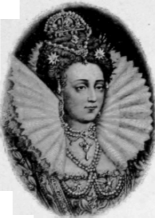
Elizabeth.

The Fair Prisoner.

Elizabeth's hesitation.

Last Moments Of Mary.
Yes, Mary had perished; but there survived her the memorable words that she had uttered to her judges when on trial for her life: "I am a Queen, subject to none but God. Him do I call to witness that I am innocent of all the charges brought against me. And recollect, my lords, the theatre of ,the world is wider than the realm of England!" From the tribunal of Elizabeth Mary had thus appealed to the tribunal of humanity; and not in vain. Twenty years later, when her son was sovereign of both England and Scotland, he caused his mother's body to be removed from Fother-ingay to London, and buried there with pomp and splendor. Shortly before this act of filial duty and respect, the death of England's queen had, also, in turn its element of tragedy. For, stricken with horror at the thought of her approaching dissolution, and struggling fiercely to retain vitality, Elizabeth had been unwilling till the very last to lie in bed, but had met the King of Terrors on the floor, as in an arena, where she fought for life.
Elizabeth and Mary! The rival cousins now lie, almost side by side, beneath the same cathedral roof; and not a day goes by, or has gone by for centuries, but pilgrims to Westminster stand between their graves, questioning sadly the motives which inspired each, admiring the good which both achieved, and sighing in pity for the faults which both committed.

Mary Going To The Block.
"No further seek [their] merits to disclose,
Nor draw [their] frailties from their dread abode; There they alike in trembling hope repose,
The bosom of [their] Father and [their] God".
After such tragic memories of human suffering it is a pleasure to approach the western coast of Scotland, and study there with reverence and astonishment the works of God. The memories of Wallace, Bruce, Sir Walter, Burns, and Mary, Queen of Scots, are not the only fascinations which make a tour in Scotland so delightful. Apart from the human element, which in-terests us so deeply, this little country of the North has many points of natural scenery which may be justly called sublime. Nowhere in all my travels, not even among the fjords of Norway, have I seen a coast so strangely cleft and shattered into fragments, by the ocean surges, as the western shore of Scotland. For a long distance out to sea, the mountainous formation of the land continues; but through the valleys and ravines between those ocean-girdled hills the waves roll fathoms deep; and the great bluffs, swept naked by the blasts, rise from the seething flood, gaunt, bleak, and terrible, like the surviving monsters of some fearful deluge, turned to stone. At other times, one sees along the bases of the wave-worn cliffs a multitude of sharply pointed rocks, like bones which the rapacious sea has left. Once they were, no doubt, portions of the habitable shore; but now they only serve as targets for the lightning's bolts or the sharp javelins of the western winds.
Continue to:


My Books

