


Switzerland. Part 13
Description
This section is from the book "Switzerland - John L. Stoddard's Lectures", by John L. Stoddard. Also available from Amazon: John L. Stoddard's Lectures 13 Volume Set.
Switzerland. Part 13

An Ice Wall.

Huts Of Shelter On Mont Blanc.
Farewell; I trust that we shall meet in heaven!" But such a mountain as Mont Blanc can rarely be ascended in a single day. Two days are generally given to the task. On the evening of the first day its would-be conquerors reach, at a height of ten thousand feet, a desolate region called the Grands Mulets.
Here on some savage-looking rocks are two small cabins.
One is intended for a kitchen, the other for a sleeping-room; that is, if one can sleep in such a place; for what an excitement there must be in passing a night at this great altitude! The distant stars gleam in the frosty air with an unwonted brilliancy and splendor. The wind surges against the cliffs with the full, deep boom of the sea; while the silence in the unmeasurable space above is awe-inspiring.
Where Several Alpine Climbers Rest.
But, on the morrow, the glorious view repays one for a night of sleeplessness. At first one looks apparently upon a shoreless ocean, whose rolling billows seem now white, now opalescent, in the light of dawn. Then, one by one, the various mountain peaks appear like islands rising from the sea. At last, these waves of vapor sink slowly downward through the valleys, and disappear in full retreat before the god of day. But till they vanish, the traveler could suppose that he had here survived the deluge of the world, and was watching its huge shrouded corpse at his feet.

A Sea Of Clouds.
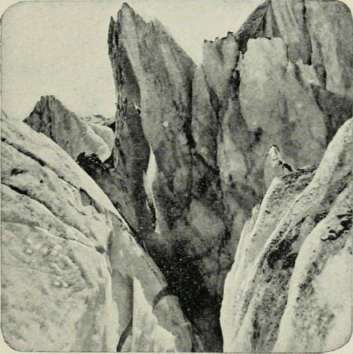
Cavernous Jaws.
Between the Grands Mulets and the summit, Mont Blanc makes three tremendous steps, from eight hundred to one thousand feet in height, and between these are several frightful chasms, so perilous that on beholding them we catch our breath. There is something peculiarly horrible in these crevasses, yawning gloomily, day and night, as if with a never-satisfied hunger. A thousand - nay ten thousand - men in their cavernous jaws would not constitute a mouthful. They are even more to be dreaded than the avalanche; for the path of the avalanche is usually known; but these crevasses frequently hide their black abysses under deceitful coverlets of snow, luring unwary travelers to destruction. Nevertheless the avalanche is in certain places an ever-present danger. Mountains of snow stand toppling on the edge of some stupendous cliff, apparently waiting merely for the provocation of a human voice, intruding on their solitude, to start upon their awful plunge. The world well knows the fate of those who have been caught in such a torrent of destruction.

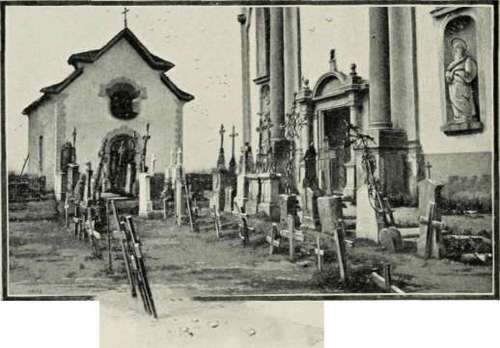
Basle: The Bridge And Cathedral.
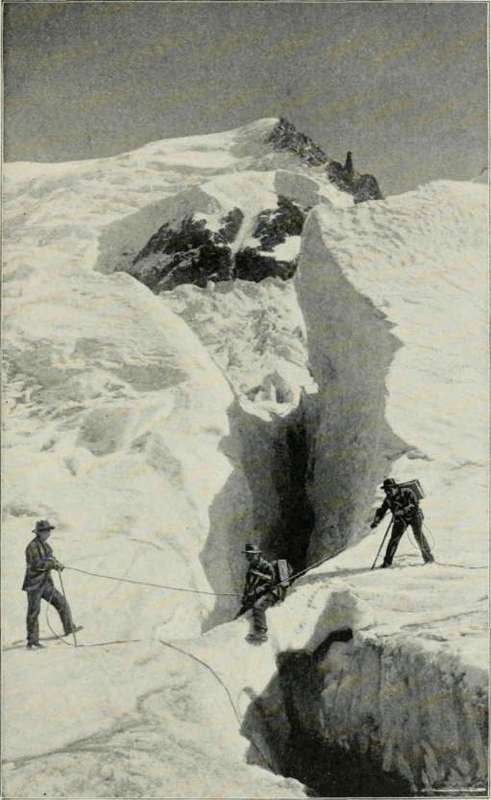
A Bridge Of Ice.
"No breath for words! no time for thought! no play For eager muscle! guides, companions, all O'ermastered in the unconquerable drift, In Nature's grasp held powerless, atoms Of her insensate frame, they fared as leaves In the dark rapid of November gales, Or sands sucked whirling into fell simooms; One gasp for breath, one strangled, bitter cry, And the cold, wild snow closed smothering in, And cast their forms about with icy shrouds, And crushed the life out, and entombed them there, - Nobler than kings Egyptian in their pyramids, Embalmed in the mountain mausoleum, And part of all its grand unconsciousness Forever.
Its still dream resumed the Mount; The sun his brightness kept; for unto them The living men are naught, and naught the dead, No more than snows that slide or stones that roll".
Finally, these and all other dangers being past, the wearied but exultant climbers reach the summit of Mont Blanc, that strangely silent, white, majestic dome, so pure and spotless in its lofty elevation beneath the stars. To watch this scene from the Vale of Chamonix, when the great sovereign of our solar system sinks from sight, leaving upon Mont Blanc his crown of gold, is an experience that will leave one only with one's life. The concentrated refulgence on that solitary dome is so intense that one is tempted to believe that the glory of a million sunsets, fading from all other summits of the Alps, has been caught and imprisoned here. We know that sun will rise again; but who, in such a place, can contemplate unmoved the death of Day?
Continue to:


My Books

