


Chapter XIII. Migratory Beekeeping
Description
This section is from the book "History Of American Beekeeping", by Frank Chapman Pellett. Also available from Amazon: History Of American Beekeeping.
Chapter XIII. Migratory Beekeeping
In 1878, C. O. Perrine, of Chicago, a dealer in honey, conceived the idea of a floating apiary on the Mississippi River. He thought that by moving the bees north as spring advanced it would be possible to extend the season and keep the bees busy for a much longer period.
He, accordingly, purchased a steamboat in Louisiana and started north in early spring. About fifteen thousand dollars were invested in the outfit, including steamboat, barges and bees with their equipment. A crew of fifteen or more men was required to manage the boat and care for the bees.
The outfit was described in the American Bee Journal as follows:
The hives stand in four walls, five hives one above the other, nearly the whole length of the boat, about 250 hives in each line.
The walls of colonies on the right side and left side have openings for the bees to come out on the water front; a space of two feet between the hives and the guards answers for a gallery for the beeman to walk on in front of the hives.
In the middle of the boat there are two other walls of colonies, 250 hives in each, facing an inner court six feet in width. The bees from these colonies reach the open air through the sky line opening in the roof above the court.
Between the first and second rows of hives from the outside there is an aisle three feet in width, for the convenience of handling the hives and the honey.
The distance from the barge deck to the roof over the colonies is fifteen feet. The space below the deck is ten feet in width and about seven feet high, and is to be used for sleeping apartments, making and repairing hives, handling and extracting honey and putting it in marketable shape. The dining room and cooking will be on the steamer that tows the bee fleet.
Perrine planned to harvest big crops with his fleet of barges which were to carry from 1,000 to 2,000 colonies of bees. He had visions of shipping the honey direct to Europe, as he was exporting extensively at that time.
The start was made with 1,000 colonies arranged as above described. The intention was to reach St. Paul, Minnesota, a distance of about 2,000 miles, by the end of July. Apparently no one connected with the enterprise had any clear idea of nectar sources and honeyflows, since the thought was expressed that so many bees would harvest the cream of available honey in any location in one or two days. Instead of remaining quiet when a good flow was on, the outfit kept on moving and thus missed the best of the possible crop.
Starting from New Orleans on May 14, the steamer had proceeded only sixty miles upstream when an accident required the owner to return to the city for repairs, leaving the boat tied up to the bank. So many delays occurred through accidents and breakage of machinery, that the progress north was very slow. Finally the barges were abandoned and the bees placed aboard the steamer itself. Every few days the boat would stop and set the hives on shore to permit the bees to gather the available harvest, then they were reloaded and the movement north resumed. Although it appears to have been late in summer before the boat reached St. Louis, it was announced that the journey would be completed through to St. Paul and then the bees moved south again for the winter. Per-rine proposed to start north again the following spring with 2,000 colonies, leaving New Orleans not later than April first.
Perrine returned to Chicago in October, leaving the remaining 600 colonies of bees near the bank of the river in Calhoun County, Illinois. There he expected to leave them until November, or until the yellow fever had subsided, when he expected to move them down the river again.
Perrine's attempt appears to have aroused an immense amount of interest, and at least one other beekeeper attempted to follow his example. W. B. Rush left New Orleans with a small boat and sixty-one hives of bees for a similar trip north. He went as far north as Pekin, on the Illinois River.
At the winter meeting of the Eastern Iowa and Western Illinois Beekeepers' Association, Perrine spoke of his experiment and stated that heavy losses of bees occurred from falling into the water, as much as 25 per cent, he estimated. He proposed to try again the following season, moving the bees only at night. The result, as would be expected, was disappointing and the following year he told of his failure at the convention of the North American Association. There he stated that, after several attempts to establish a floating apiary, he would advise the beemen to keep as far as possible from large bodies of water.
He had lost most of his working force of bees in two days when they fell into the water during a cold wind.
Perrine was not entirely persuaded that migratory beekeeping could not be made to succeed, but he proposed in the future to move the bees by rail.
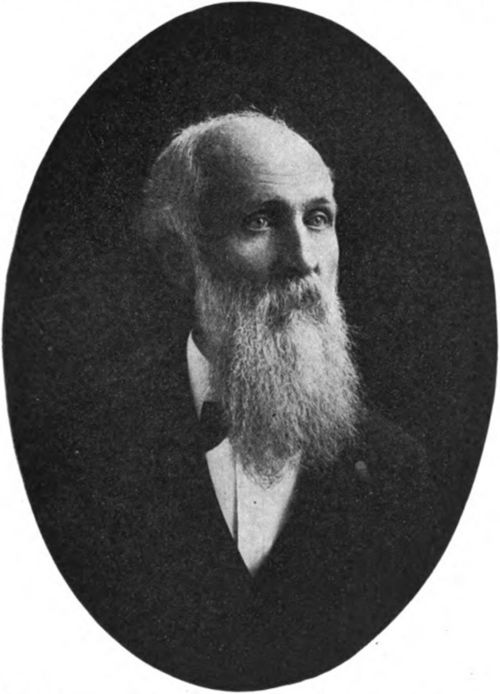
O. O. Poppleton was a migratory beekeeper along the Indian River in Florida for many years.
Little was heard about migratory beekeeping for several years after Perrine's disastrous experience. In the late eighties, O. O. Poppleton, a successful Iowa beekeeper, began spending his winters in Florida because of poor health. Finding that the mild climate was conducive to improved physical condition, Poppleton moved to Florida and settled on the Indian River. He adopted the "Long Idea" hive which held twenty-five frames which were twelve inches square. No supers were used, and filled frames were removed from the hive body itself when ready for extracting.
Continue to:


My Books

