


Chapter XVII. Other American Bee Periodicals
Description
This section is from the book "History Of American Beekeeping", by Frank Chapman Pellett. Also available from Amazon: History Of American Beekeeping.
Chapter XVII. Other American Bee Periodicals
A list of beekeeping publications in the Miller Memorial Library by Dr. H. F. Wilson, custodian, published in the report of the State Apiarist of Iowa for 1930, mentions 101 periodicals relating to bees, which have been launched in the United States, and ten in Canada. A large number of them were of little importance and for a brief period of circulation. To record the mere titles and length of life required nine closely set pages. Of these the American Bee Journal was the first, followed a few years later by Gleanings in Bee Culture. These have been reviewed, since both have continued publication to date and have had a great measure of influence on the development of the industry.
A few of the others attracted an important following for a time and rendered a service which is worthy of record. Of special interest is the Canadian Bee Journal, founded by D. A. Jones at Beeton, Ontario, in 1885, and later published at Brantford with R. L. Holterman as editor. It started as a weekly, but in 1891 it was changed to a semi-monthly. In 1893, a new series was started with monthly issues, which was combined with Canadian Horticulturist and Beekeeper, in 1913. It still continued under the name, The Beekeeper, until January, 1934, when the old title, Canadian Bee Journal, was resumed.
The October issue, 1899, announced the retirement of Holterman as editor. He also gave up his other connections with the beekeeping industry for the purpose of becoming an evangelist. This did not hold him permanently, however, since we find him back in the business of beekeeping after a short time.
The November number announced W. J. Craig as editor. Later J. J. Hurley appeared as his successor.
The first issue of the American Apiculturist appeared at Salem, Massachusetts, in May, 1883. S. M. Locke was the editor. With the August, 1886, issue the name of Henry Alley appears as manager. It is because of Alley's connection with the magazine that it is principally remembered today. The name of P. H. Morant & Company appeared for a time as pub-[135] lisher, but it seems that Morant, while owner of the magazine, knew nothing about bees and had no interest in them.
Alley was aggressive and original and attracted a considerable following. He was a pioneer in queen rearing and made a very definite advance in that field. The magazine continued at Wenham, Massachusetts, until May, 1895. It is doubtful whether any complete sets are now in existence. The file in the American Bee Journal library lacks two or three copies, while those in the Miller and United States Department of Agriculture libraries lack several numbers.
The American Beekeeper, published by the W. T. Falconer Company, of Falconer, New York, first appeared in January, 1891. The editor remained anonymous until February, 1898, when it was announced that H. E. Hill had assumed editorial management. It is assumed that prior to that date the work was done by members of the bee supply firm by whom it was published. It continued under Hill's guidance until the end. The name of Arthur C. Miller appeared as associate editor for a time. Miller was a New England banker who followed beekeeping as a hobby, and who looked forward to the end of his life to retiring and spending his time with the bees.
The magazine was popular for years and had a representative subscription list for that day, but it never developed any outstanding quality to make a lasting impression on the industry. With the August, 1908, issue the publication was suspended.
The Annals of Bee Culture, published at Hawesville, Kentucky, by D. L. Adair, was of short duration but of considerable interest for the few years of its existence. Adair was able to obtain contributions from the leading apiarists of the day, which he compiled in a single issue for each year. A. I. Root, A. S. Packard, Charles Dadant, Moses Quinby, Edward Kretch-mer, Elisha Gallup, H. A. King, and others whose names were well known, appeared in the pages of Annals.
Matter of more than transient interest was selected, but the only value now lies in the historical significance of the various articles. Four volumes were published (1869-72).
The Beekeeper's Exchange, of Canajoharie, New York, with J. H. Nellis as editor, was started in January, 1879. Later it was published by Houck and Peet. It was well edited, with a wide variety of articles, but was of short duration, suspending publication with the July, 1883, number.
Among the later day magazines which still continue publication may be mentioned the Beekeeper's Item, which was founded at New Braunfels, Texas, in December, 1916. Louis Scholl, who at that time was an extensive commercial honey producer, was editor and publisher until 1926, when it was taken over by E. G.
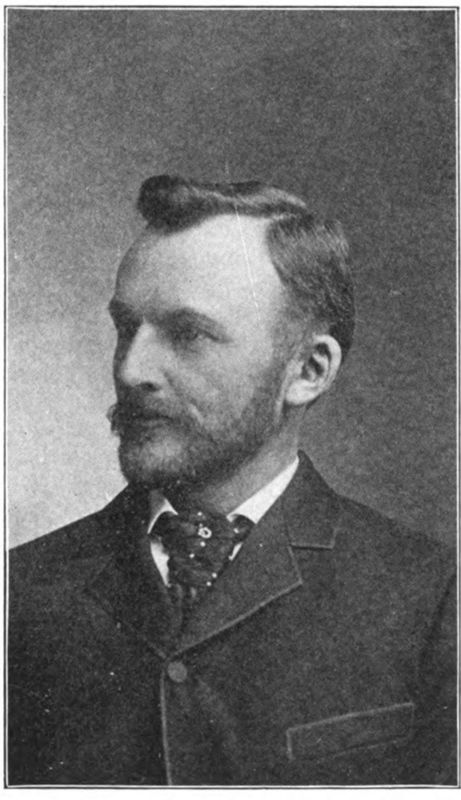
R. L. Holterman was editor of the Canadian Bee Journal in its early years.
LeStourgeon, of San Antonio. The Item has attained extensive circulation and of late has been the official organ of a number of beekeeping associations. The first four volumes were in newspaper form and of a size which is not convenient for preservation, hence they are not as common as should be the case with a publication of such recent issue. It is published in a region which was formerly one of the most important commercial honey producing centers. Of late there has been something of a decline in that region, and the large production has been more apparent in the sweet clover regions.
The Beekeeper's Guide, edited by A.
G. Hill, of Kendallville, Indiana, continued from 1877 to 1893. The first six volumes were in newspaper form and are now rarely to be found.
The Beekeeper's Magazine, published by H. A. King & Company, New York, ran from January, 1872, to December, 1888. With the January, 1889, number it was absorbed by Beekeeper's Advance. For a time it was a leader in its field but made no permanent impression on the industry, and is now but little remembered. The Kings sold bee supplies, published the magazine, and wrote text books on bees. In view of the wide circulation of their publications in their day, it is rather surprising that so little is known of them now. Like many others of the time, they offered nothing fundamentally new or important in a day when beekeeping was in its infancy, hence they were soon forgotten.
Continue to:


My Books

