


Bandages
Description
This section is from the book "Stable Management And Exercise", by M. Horace Hayes. Also available from Amazon: Stable Management And Exercise.
Bandages
As I have entered somewhat fully into the subject of bandages in Veterinary Notes for Horse Owners, my remarks here will be more or less a repetition of those made in that book.
The only bandages which I shall now consider, are ordinary flannel bandages and cotton wadding bandages. The linen and cotton bandages which are used for cold applications in many stables, serve no good purpose which cannot be better attained by other means.
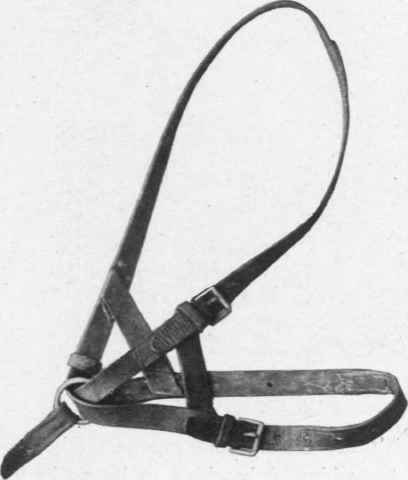
Fig. 42. Foal's Head-collar (oft side view).
Flannel bandages for ordinary stable use may be about 8 ft. long and 4 1/2 in. wide; should have a selvage on each side, and should be made of thick material and of pure wool.
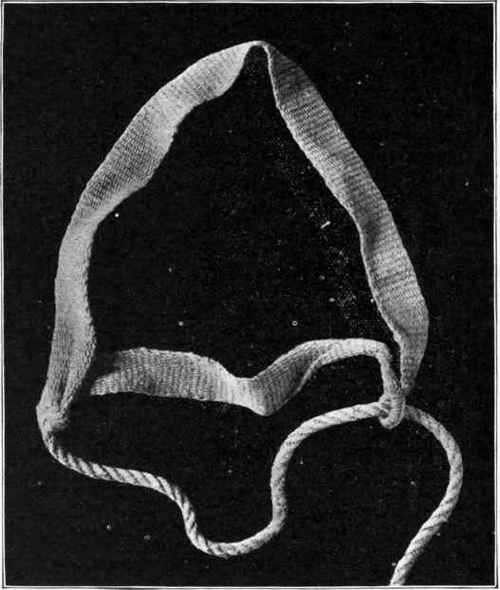
Fig. 43. Webbing halter.
Those which are usually sold are generally too short, too thin, and too wide. A bandage to be ready for immediate use should be wound up with the tapes inside. When about to put it on, we may unroll 6 or 8 inches of it, and lay this loose portion obliquely across the outside of the leg, close to the knee, with the end reaching to about the centre of that joint, and the rolled-up part turned to the outside, and directed downwards and forwards. The bandaging should be continued round the fetlock and upper part of the pastern, and brought close up below the knee. The loose end is then turned down, and the folds of the bandage carried over it. The tapes are tied a little above the centre of the canrton bone. By this method, no twists need be taken in the bandage, which will lie close.
A bandage for fast work, as in the case of a hunter or racehorse, requires some nicety of adjustment in order to prevent the loose end of the bandage from getting free. This accident is apt to occur, especially with an elastic bandage, when the animal is galloping, if it is put on in the ordinary manner. When the bandage becomes thus unrolled, and remains attached to the leg only by the tape, it is liable to trip the horse up if he puts a hind foot on it; for he would then be unable to advance the leg to which the bandage is tied. To lessen the chance of the bandage becoming unrolled, we may put it on in the manner described in the preceding paragraph, except that the end of the bandage in the first instance should be brought two or three inches above the knee, so as to allow of a comparatively long free end to be turned down, and to be firmly secured by the bandage being rolled over it; and that no turns should be taken round the pastern with the bandage, the lower part of which should be just clear of the fetlock joint. The loose end will then be firmly secured on both sides between the turns of the bandage.

Fig. 44. Improvised halter.
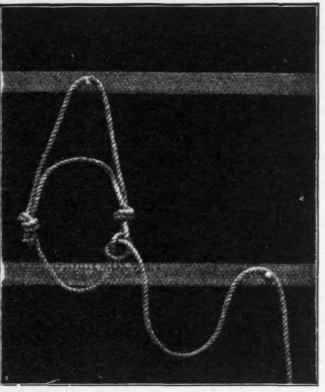
Fig. 45. Improvised halter, with knot on leading rope, so as to prevent it running.
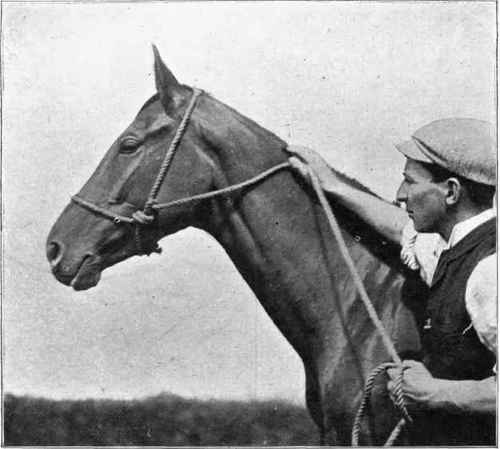
Fig. 46. Improvised halter (near side view).
I have found that the liability of a bandage to become undone while the horse is in movement, is directly proportionate, other things being equal, to the difference of the width of the leg at the fetlock and the width just below the knee. When this is small, as is usually the case with well-bred animals, the back tendons run nearly parallel to the cannon-bone, and consequently the turns of the bandage can be put on evenly. If, on the contrary, the width of the fetlock is large, and that below the knee is comparatively small, each turn of the bandage will necessarily be looser at its upper edge than at its lower one, which fact will naturally tend to make the bandage work loose, especially during a long day, as out hunting.
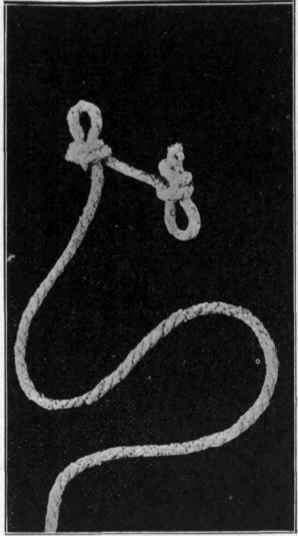
Fig. 47.

Fig. 48. Making a Halter.
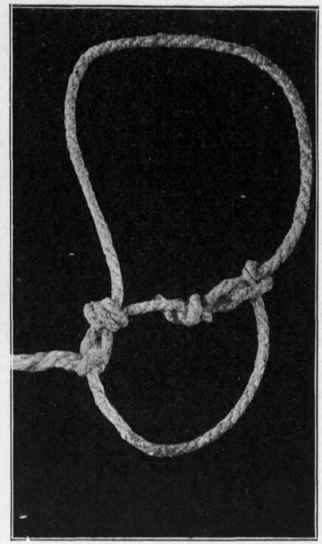
Fig. 49.
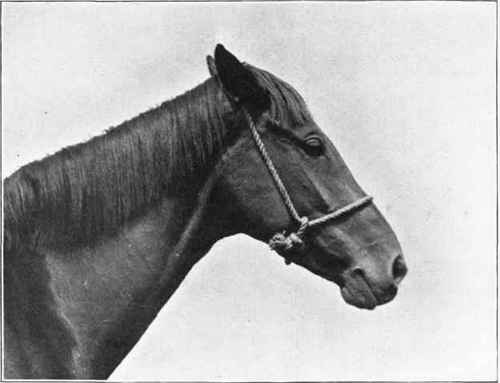
Fig. 50. Improvised halter (off side view).
Cotton wadding bandages, the use of which I shall describe later on, are applied in the following manner: - Take two yards of cotton wadding (which can be obtained from any draper), and cut it down the centre, so as to have two pieces of wadding a couple of yards long and about 10 inches wide. Wrap the leg round with the wadding, one piece over the other; apply round it, rather loosely, a calico bandage (which can be got ready-made from any chemist, or can be constructed out of a piece of unbleached calico) about 6 yards long and 3 inches wide, so as to keep the wadding in place; and tightly apply another and similar calico bandage, so as to afford firm and evenly-distributed pressure on the leg, and secure it by tapes, sewing, or by a safety pin.
With the amount of wadding which has been recommended to be used, there is practically no danger of putting on the second bandage too tightly. It is easier to distribute the pressure evenly with two bandages than with one. If we cannot get cotton wadding, we may substitute 1/2 lb. of ordinary cotton-wool (the medicated kind will not do so well, because it has lost a great portion of its elasticity), and arrange it round the leg. When using cotton-wool for the object in question, its presence next the skin sometimes gives rise to irritation - probably on account of the pressure not having been properly distributed - which untoward result can be obviated by, in the first instance, wrapping the leg loosely round with a piece of soft cotton cloth, or by putting on an ordinary flannel bandage, and the cotton-wool over it. Irritation of the leg is never caused by the cotton wadding bandage put on in the manner described. I have been the first to introduce into veterinary and stable practice this application of pressure, which has been long known in human practice, and which was first brought to my notice by Dr. Henderson of Shanghai.
Continue to:


My Books

