


Chapter 7. Types Of Horses
Description
This section is from the book "Training Young Horses To Jump", by Geoffrey Brooke. Also available from Amazon: Training Young Horses To Jump.
Chapter 7. Types Of Horses
In Chapter 1 it was stated that good fencers were to be found in all shapes. The following photographs of six horses are selected for three reasons:
1 - Not one of them was high-priced as a young horse; in fact, three of them were bought by Colonel Wood for troop horses.
2 - Yet each was an exceptional jumper in his or her own way.
3 - Each represents more or less a different type of horse from the point of view of conformation.
It will be noticed that the balance of each horse is mentioned. Balance is the basis of a good mouth: a good mouth does not merely infer a horse that does not pull, as is often believed, but a mouth that admits of free flexion to the bit, thus enabling the rider to get the maximum of control. By this I mean that the rider can almost place his horse's feet where he wishes. As explained in Chapter 1, the degree of flexion of the neck reacts on the extension of the horse's four legs proportionately. This is commonly called "coming back to the hand." The more highly the horse is trained the finer is the adjustment of the limbs produced by the bit in sympathetic hands.
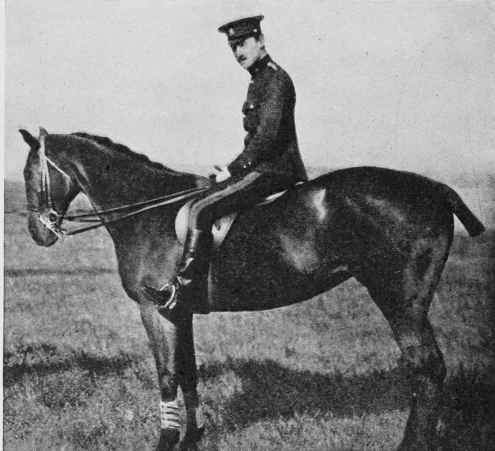
Fig. 23 - Bay Mare - Balance fairly good. Winner of the Championship at Olympia, 1910, for jumping, also many other prizes. A very sticky fencer naturally, but a clever hunter and absolutely safe over any timber. She could never extend herself freely over water. She had a hard mouth and through not obeying her bit she would at times come wrong at her fences, but owing to her exceptional spring she would never hit a fence.
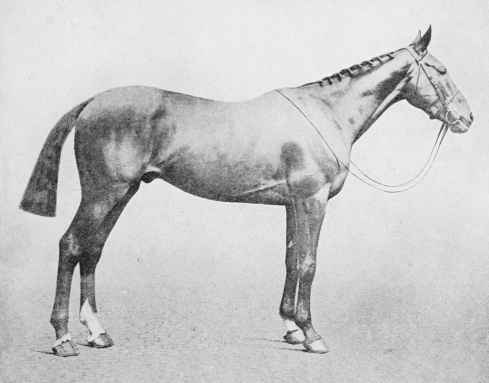
Fig. 24 - Brown Gelding - Perfect balance. A beautiful fencer. A horse that never came wrong at his fences and landed like a feather. However, as his head denotes, he had a sulky temper that did not decrease with age. He liked jumping at a pretty fast pace and never found it necessary to put in a short stride. A kind head and eye should be looked for when purchasing any young horse. - W. A. Rouch Copyright
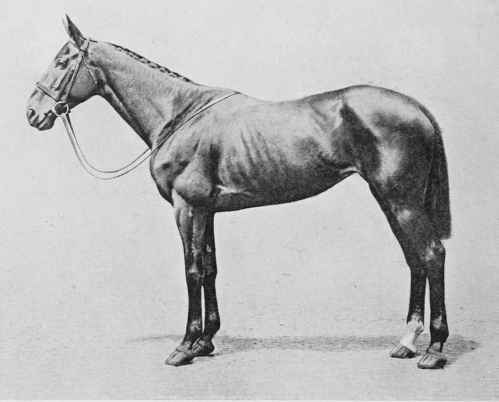
Fig. 25 - A Bay Mare - Fair balance. An exceptional fencer. She came from a stonewall country where she had been hunted as a four-year old. She always preferred to buck over her fences and liked jumping slowly, at which pace she could extend herself over a wide place with ease. She had a very long stride and did not quite come back freely to her bit, so at times would take off close under a fence, but never with ill results. - W. A. Rouch Copyright
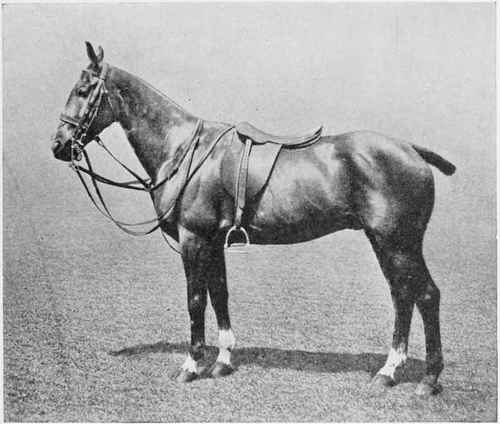
Fig. 26 - Brown Gelding - Balance perfect. Only 14.3, but could jump any country, fast or slow, with consummate ease. In his prime one could not wish for a better ride in a redly good hunt. If he had been bigger his place might possibly have been in the National.
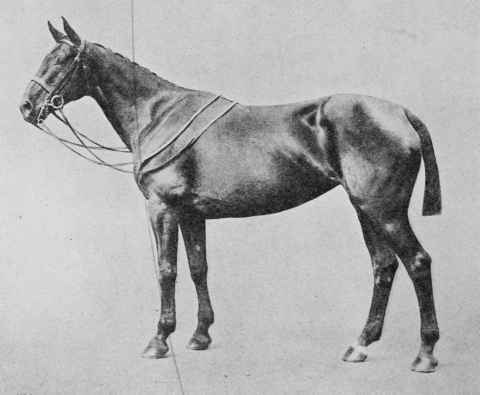
Fig. 27 - Brown Mare - Balance perfect. Winner of innumerable prizes and a brilliant hunter, she could jump any sort of fences fast or slow. Perfect mouth and balance and would always take off right. A most intelligent mare. - W. A. Rough Copyright
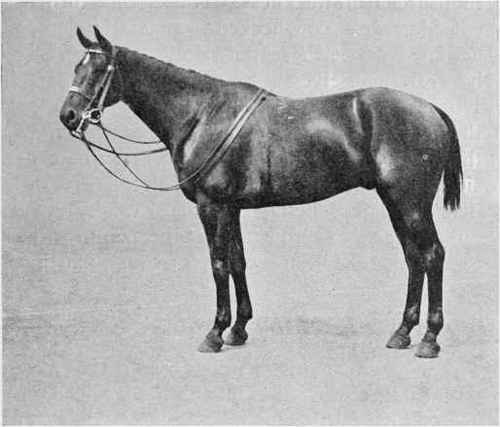
Fig. 28 - Brown Gelding - Balance perfect. Winner of the Championship, Olympia, 1912. Mouth and balance good and can easily be put in his stride at his fences. He can extend himself over water as easily as he can negotiate an upright fence. This horse started to be schooled for Olympia in March 1912, and was never rapped by means of wire pulleys or any other method, as is generally believed to be necessary. He was taught to look at and come right at his fences, and though he may possibly touch a fence he will never make a bad blunder. - W. A. Roue H Copyright
Of the six selected horses those with the best balance had the best mouths, and nearly always came right at their fences, or could easily be made to do so; whereas those with less finished mouths were more erratic in taking-off. This peculiarity does not apply at all to racing, when the boldest and best natural fencers are those that find their right stride consistently at their fences; but I think it is generally the case with a finished hunter who is required to collect himself and arch his back over a fence.
In a young horse good natural balance is of great assistance in jumping. Foreign buyers in Ireland invariably look for this qualification, and consequently breeders pay particular attention to it. An aptitude for jumping is hereditary in horses, and this characteristic can nearly always be relied on in breeding, a fact that should not be forgotten by buyers. Mares, from their conformation, can afford to be longer in the backs than geldings and yet jump equally well. Excessive length behind the saddle in a gelding generally denotes weakness, which is reflected in his jumping. In the photographs of mares it is noticeable that each is longer in the back than the geldings.
The hocks have to withstand excessive exertion when jumping. Therefore hocks that turn out or are too small should be avoided, as both are indications of weakness. Hocks that turn in considerably - cow-hocked - generally denote weakness somewhere, but need not necessarily be weak themselves.
Horses that have their hocks too far back, so that the hind-limbs appear to be away from the horse instead of under him, may be considered unlikely to make good fencers. The shoulders should not appear too heavy or bulky nor be too prominent at the point, at the same time they should appear muscular but "clean." The shoulder-blade should slope well back towards the withers so as to carry a saddle well.
But though a horse may appear to have moderate hocks and shoulders, the real test is -Does he use them well or not ? This can only be judged, first by watching the horse's movements, and then by riding him oneself. A horse with a sulky head or bad-tempered eye should be mistrusted, as they seldom belie their looks, and will necessarily be more trouble to train than a horse with a nice, kind eye. Width between the eyes is desirable.
Powerful loins and quarters are a condition in which one can seldom hope to buy young horses.
Consequently one must look to the necessary frame for building up such condition.
Horses with narrow chests and tied in at the elbow (i.e. elbows close in to the body, and consequent lack of freedom) should be avoided. Well-sprung round ribs and a good deep girth are essential for a hunter. The forearms and lower thigh should be proportionately powerful to the size of the horse. A nice length of rein is necessary for a pleasant ride. The way the head is put on the neck will denote the likelihood of whistling. There should be ample width underneath between the jaws for freedom of respiration and room for the windpipe. All other points, such as the feet, joints, limbs, etc., should be considered from the point of view of soundness. Avoid any abnormal malformation, i.e. pasterns should neither be too long and sloping, nor yet too short and upright; a horse should neither be back at the knees nor yet stand over. Feet should neither be too flat nor long and low at the heel, nor should they be too short and "boxy." The frog, however, should be large and well-developed.
Toes turned in or out produce faulty action and cause undue strain on the ligaments on the outside or inside of the legs respectively. Feet that are too long and low at the heel bring undue strain on the back tendons.
Diminished bone measurement below the knee, i.e. "tied in below the knee," should be avoided when buying. Size of bone below the knee denotes the capacity of the limbs for bearing weight. The tendons and ligaments in a well-bred horse are in proportion to the bone, but, to some extent, quality of breeding and reduced substance are preferable to bulk in the bone of a more common horse. In a good grass country a well-bred horse is an absolute necessity, or one can never hope to keep with hounds in a quick hunt.
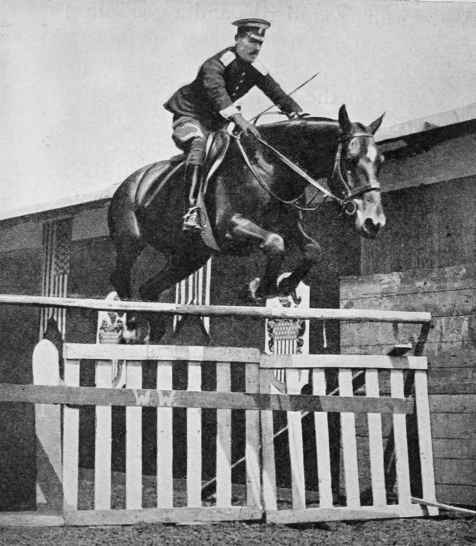
Fig. 29. - CAPT. P. Rodzanko (Russian Army) on his Irish horse "CODA CORTA"
Continue to:


My Books

