


Weaving. Continued
Description
This section is from the book "Arts And Crafts In The Elementary School", by Joan Dean. Also available from Amazon: Arts And Crafts In The Elementary School.
Weaving. Continued
When the weaving has been completed, it can be cut off the loom and the ends finished. The finishing will vary according to the use to which the material is to be put, but it is wise, if possible, to put a row of machine stitching at each end to prevent fraying. The material can then be bound, or turned in and hemmed, or it can be knotted into a fringe, or a fringe can be frayed out and made firm with a row of blanket stitches at the edge of the weaving. If the mesh of the material is square and the material firm, it can be cut and sewn just like any other fabric. It will fray easily, however, and a row of machine stitching round a raw edge is a wise, though not essential, precaution.
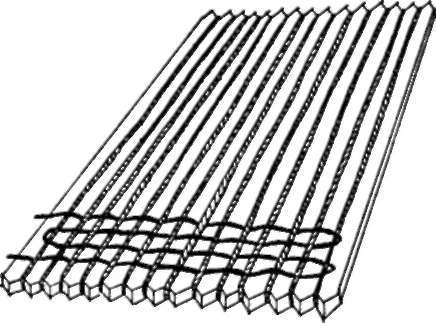
Cardboard loom
Another kind of simple loom can be made from stiff card, cut at each end in a series of notches. This is most easily done with pinking shears. It is probably better if two sheets of card are used. These can be placed on each side of a piece of wood or really stiff card, with the pinked ends just overlapping. They should then be firmly fixed in place. The loom is set up by winding the thread round and round, through each indentation. This form of loom is more suitable for small-scale work than large.
One of the minor problems of weaving in school is that of finding a compromise between making a material for some specific purpose, and providing sufficient experimental work. The child who sets out to make a scarf or a purse or something of the kind is often limited from the beginning by what is suitable for the work in hand, and by his own preconceived ideas of what is suitable. One way of overcoming this is to get everyone to start off with an experimental strip of weaving, weaving enough of each pattern to see what it is like. If this is fairly carefully arranged, all the possible kinds of experiment can be undertaken by somebody. If the strips are alike in size they can be joined together to make a blanket, or, if there are some thick enough, a rug for the floor (string makes the best warp for this) or they can simply be kept as samples. You then have a wide range of experiments in weaving from which to plan individual work, and the children profit, not only from their own experiments, but from those of other people.
What other things can be made with the fabric from these simple looms? Among the more obvious kinds of work are table mats and kettle holders, which will need backing, and scarves, which will probably need to be made from two pieces of material joined together with a firm seam. It would also be possible to make mittens to match, cutting out and sewing the material as you would any other loosely woven cloth. In the same way it would be possible for a child who is enthusiastic and fairly skilled to make enough material for a short cardigan or even a skirt.
Although the setting up of even a small heddle loom is generally rather too tedious a task for Juniors, there is something to be said for giving them the opportunity of weaving on a loom which has been set up for them. It will give them the chance to see their ideas carried out in weaving where an even texture is easier to achieve, and it will also pave the way for more advanced weaving at the secondary level.
Continue to:


My Books

