


III. Box Problems. Part 4
Description
This section is from the book "Paper and Cardboard Construction", by G. F. Buxton, F. L. Curran. Also available from Amazon: Paper and cardboard construction.
III. Box Problems. Part 4
e. Make pencil marks heavy to show where to cut away.
f. Cut on heavy lines.
g. Fold on light lines, considering the form and how it is to be glued together. h. Glue with all tabs on the inside.
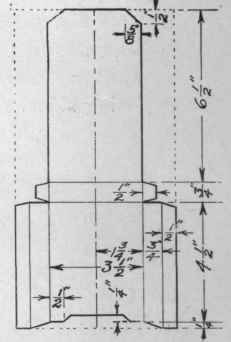
Stock 6"x 12" Cut To Size 423. Original Box.
Thin strawboard, 2 pieces, 9"x 12".
Plain cover paper, 2 pieces, 9"x 12".
Rough cover paper, 2 pieces, 9"x 12".
Binding tape, glue, paste.
Rule, pencil, scissors (chip carving knife if desired).
Directions: a. Follow directions from number 421, except that the strawboard should be scored on both sides with the back of the scissors before folding.
b. Cover both box and cover outside with rough cover paper.
c. Line both box and cover with plain cover paper.
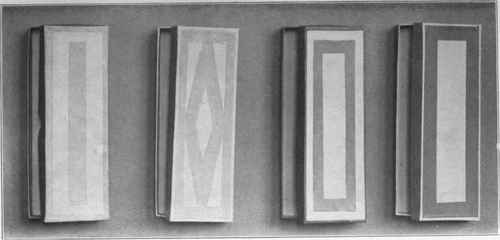
Covered Boxes.
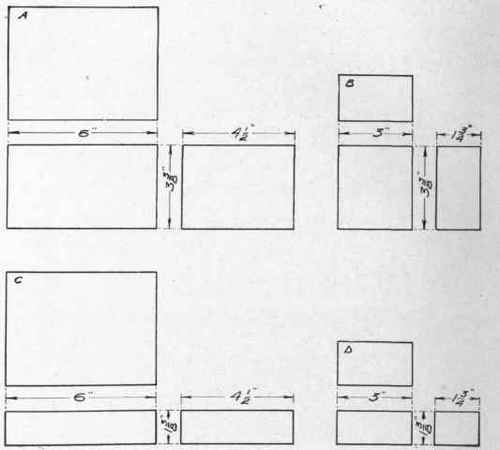
Four Suggested Shapes For Boxes, - A, B, C, D.
Note: - An unlimited opportunity is offered here for the pupil to work out original shapes of boxes for varied uses. The four drawings are given only as a suggestion for possible shapes which can be made from the stock supplied. An attempt is made in each case to get an interesting variation in the proportion of side, top and end. If enough time can be given to this phase of the work, it may be well to have each pupil make several boxes of the same type, gradually developing the ability to do a first class piece of special work.
424. Pen Box.
Strawboard, 1 piece 4"x 4 1/2" (or 6"x4 1/2").
Box board (or pulp board), 1 piece 2"x 12". If more convenient use all box board or all straw-board.
Plain cover paper (or marble paper or plated paper), 1 piece 4 1/2"x 12".
Plain cover paper, different color, 1 piece 3"x 6".
Glue, paste.
Rule, pencil, scissors, knife, cutting board.
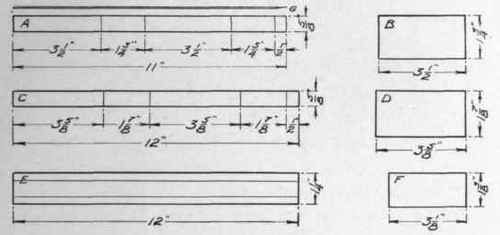
Stock Cut To Size For Pen Box.
Directions: a. Cut box board A, for sides of box, 5/8"x 11", and crease as indicated for folds.
b. Make end G a little thinner by scraping or cutting with scissors or knife.
c. Cut strawboard B, for bottom of box. If heavy material be used, it may be given cut to size with a card cutter, or pupils may cut it with a knife and straight edge upon a piece of cloth board.
d. Cut box board C, for sides of cover, 5/8"x 12", and crease for folds.
e. Cut strawboard D, for base of cover.
f. Cut two pieces of plain cover paper E, 1 1/4"x 12", for finishing outside of box and cover.
g. Cut plain cover paper F, for finishing top of cover of box.
h. Fold A and glue around B with lap G inside, and paste cover paper E around sides and bottom of box and down inside. Long creases of E are shown in drawing.
i. Fold C and D in same manner and cover sides.
j. Paste cover paper F over center of top of cover.
Note: - This type of construction is very common for small boxes, but requires careful fitting. It makes a first class problem for repeated work, and may be made in place of number 423. A second box of this type is made by pupils very much better than the first.
425. Sliding Box.
Box board, 1 piece, 9"x 12". Cover paper, 1 piece, 9"x 12". Stay tape, 1 piece, 4" long. Paste, glue. Rule, pencil, scissors.
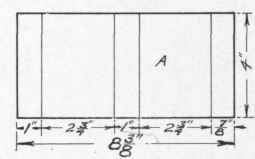
Case For Box Cut To Size.
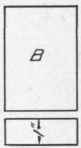
Case Folded.

Box Cut To Size.
Directions: a. Cut one piece of box board 4"x 8 3/8" for case A.
b. Cut one piece of box board 4 3/8"x 5 3/4" for box C.
c. Lay out the measurements for case as indicated on drawing A.
d. Fold to shape as indicated at B.
e. Spread glue on the inside of the 7/8" fold and glue case together. When glue begins to stick the case may be pressed flat and weighted.
f. Lay out lines 7/8" from all edges on box board for box C.
g. Cut away corners.
h. Fold up sides and ends.
Box Problems i. Cut four pieces of stay tape each 3/4" long. Manila paper may be used here if desired as in number 322.
j. Fasten corners in place with the stay tape or with manila paper.
k. Cut one piece of the cover paper 5"x 9" to cover the case.
1. Cut strips of cover paper 2" wide and long enough to reach around the sides of the box. This length may be determined by each pupil separately.
m. Paste these strips of paper around the sides of the box in the same manner as in number 421.
n. Paste cover paper around case and fold edges in at ends. These ends must be folded in carefully and pressed smooth or the box will catch and tear them up when sliding thru.
Note: - By using tough paper instead of the stay tape a closer fit may be made and a smoother slide will result.
The boxes which have been explained are perhaps sufficiently varied in construction to suggest any type of box which may be desired for primary handwork. Boxes with tied covers have been purposely omitted as being less satisfactory as finished articles. This is in line with the stated purposes of the book to emphasize the simpler and more typical and practical problems for school use.
On the next page is illustrated the entire arrangement of box problems, with names, numbers and recommended sizes.
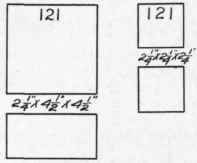
Souare Box And Cube.
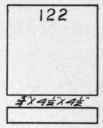
Square Tray rectagular thay.


Small Square Box.
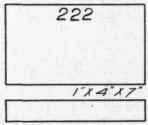
Rectangular Open Box.
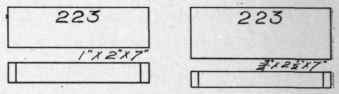
Boxes With Reinforced Corners.

Covered Small Box.
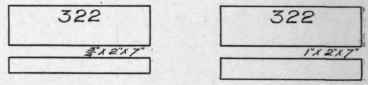
Pencil Boxes With Fitted Cover's.
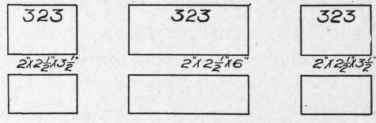
Small And Larger Candy Boxes.
Folding Box.

Pin Box with Cover.
Post Card Box.
Original Box.

Pen Box.
Sliding Box Box Problems Arranged By Grades.
Continue to:


My Books

