


Cutting Tools
Description
This section is from the book "Spons' Mechanics' Own Book: A Manual For Handicraftsmen And Amateurs", by Edward Spon. Also available from Amazon: Spons' Mechanics' Own Book.
Cutting Tools
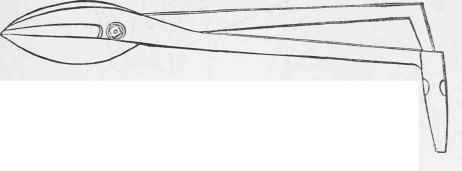
Shears are made in several patterns, according to the stoutness and toughness of the material to be cut. Fig. 182 represents the common form termed platers' hand shears; Figs. 183, 184, are respectively called stock and block shears, and both are intended for use in a fixed position on a bench. Fig. 185 is a guillotine shears. Fig. 186 is a machine for cutting edges true. Fig. 187 is a machine for cuttiug out circles. Fig. 188 is a pair of follies for punching holes. Fig. 189 represents a contrivance for cutting circular holes of considerable size, by the aid of an ordinary carpenters' brace; a is a thumb-screw; b, a bar of 3/8-in. square steel; c, cutting edge, which may be modified to suit the material under treatment; d, pivot.



Flattening Tools
Fig. 190 is a flattening mill for sheet metal; and Fig. 191 is a pair of tinmen's rolls.
Continue to:


My Books

