


265. Example Of A Loam Mould
Description
This section is from the book "An Elementary Outline Of Mechanical Processes", by G. W. Danforth. Also available from Amazon: An elementary outline of mechanical processes.
265. Example Of A Loam Mould
Fig. 127 shows a cross-section of a loam mould, with the parts assembled and bound together firmly. It is now ready to be lowered into a pit dug in the foundry floor and surrounded by sand packed inside a circular curbing of iron plates to fortify the sides against the pressure of the molten metal when poured. Fig. 128 shows a drawing of the cylinder for which this mould is made.

Fig. 127. - Loam Mould.
Loam moulds are used only for the largest castings, particularly large propellers and steam cylinders. The bricks of these moulds may be used many times.
The mould here shown is made in three detachable parts carried on the heavy cast-iron plates B, D and T. The bricks are laid in a mortar of old moulding sand and water. Venting is aided by placing cinders between bricks, and by mixing chopped straw or dry horse manure with the loam.
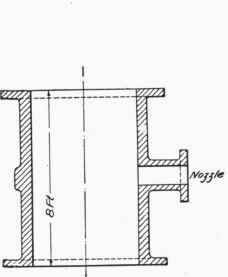
Fig. 128. - Cylinder to be Moulded.

Fig. 129. - Beginning a Loam Mould.
Continue to:


My Books

