


Scale Work
Description
This section is from the book "Elementary Metal Work", by Charles Godfrey Leland. Also available from Amazon: Elementary Metal Work.
Scale Work
Omewhat like this is a very easy and effective style of ornamentation, which has also never been described in any book. This is Scale Work, which can be made from any waste metal. Cut the iron or brass into disks or round pieces. Then, using perfectly flat-headed nails or tacks, like artists' drawing tacks, or pu-naises, fasten down one on a board, and then another lapping over it. The result will be a series of scales like those of a fish. This, when combined with painting or carving, may be used to produce very good results, which may be heightened by employing matting, outlining, graving, and gilding on the scales. The scales may be oval, shaped like the ends of hearts, scolloped, shaped like sorrel leaves, ivy leaves, or several leaves together of any kind in a sprig. Brass or iron, copper or German silver scales, placed alternately, look very well. Fig. 120.
We can buy at most metal or curiosity shops, or founders, masks or medallions or ornaments in relief which can be used as centres for scale work. In fastening the scales, a nail or tack should be driven into the upper right and left-hand corners.
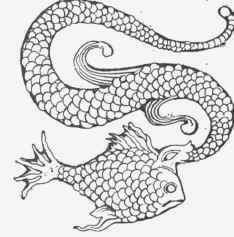
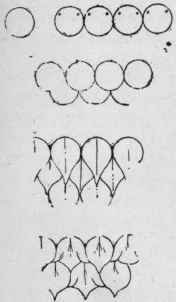
Fig. 120.
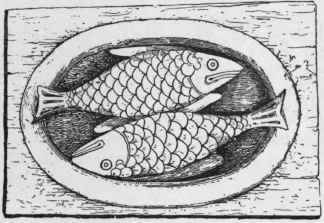
Fig. 121. Scale Work on Wood.
Tinmen have a contrivance by means of which small disks or round pieces of any kind of sheet metal are cut out. Any of them would, for a moderate sum, cut out any quantity of scales from thin brass or iron. Large figures of knights or dragons thus covered with scales form very striking mural decorations. Chinese often use the small coins known as cash for this purpose. Figs. 121, 122.
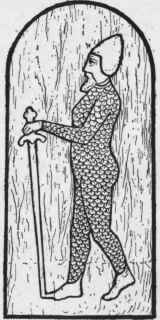
Fig. 122. Scale Work on Panel.
Continue to:


My Books

