


How To Weld Iron
Description
This section is from the book "Welding Theory, Practice, Apparatus And Tests Electric, Thermit And Hot-Flame Processes", by Richard N. Hart. Also available from Amazon: Welding: Theory, Practice, Apparatus And Tests, Electric, Thermit And Hot-Flame Processes.
How To Weld Iron
The mechanics of a "smithed" weld is in the main as follows: Suppose the smith wishes to join two short bars of malleable iron, of cross-section 1 by 2 inches. He first hammers or cuts a convex bevel or "scarf" on the ends of each bar, as shown in Fig. 1.
The heating must be done in a coke or coal forge. Coke is the best fuel for the reason that it gives a good reducing flame. The fire is blown with the bellows until it is at a high heat. The ends of the bars are thrust well into the midst of the ignited coke and more coke is piled over them. The blowing is continued until the bars are red-hot on the ends, when the smith takes them out with pliers and dips them into pure sand or borax near by. This is the flux, and it so acts on the surface of the iron as to clean it of rust and forms a glass that protects the fresh iron from further rust. The smith puts his irons back into the forge again and heats them until white.
When white, or nearly white-hot, the smith takes one bar in his pliers, his helper takes the other, and they place them together on the anvil, the one lapping the other (Fig. 2). Both the smith and his helper give the pieces quick, light blows with their hammers until the plastic iron is well-joined. They turn the irons while hammering to get an even weld on all sides.
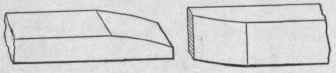
Fig. 1. - Views of scarfed bars for lap welding.

Fig. 2. - Bars in position for lap welding.
The smith will try to weld at a white, but not a dazzling white, heat, and he will try to complete it without putting it back into the fire for a reheating.
When the weld is finished, he may give it a special shape by placing it between swage blocks and hammering.
This simple operation of welding requires much skill, as will appear. The smith may find that with all his skill his joint is bad or that his iron will not join at all.
Continue to:


My Books

