


A Large Tool Crib
Description
This section is from the book "Things To Make In Your Home Workshop", by Arthur Wakeling. Also available from Amazon: Things to Make in Your Home Workshop.
A Large Tool Crib
Plywood packing cases are an excellent source of material for the home craftsman. The stock seems mainly to be oak, maple, birch, and poplar. While the plywood is not made quite as well as regular cabinet stock of this kind, nevertheless careful selection will produce some really good sides that will answer many purposes. One good use for a case is to form a large tool crib as shown in Fig. 24.
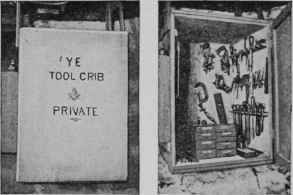
Fig. 24. - This tool cabinet, made from a packing case, is suspended from the first floor beams in the basement.
It might be added in this connection that when it is necessary to remove the plywood from the frame of a packing case, a fine saw should be used to cut around the frame on the inside. Sacrifice the little plywood left on the frame in order to get out the sheet in good shape. In selecting cases at the store, look for sides which are as free from imperfections as possible and those whose grain markings are most pleasing. Let the light fall slantingly on the side under examination and look for smooth surfaces, free from many waves.
In the construction of particular work, it is best to use regular cabinet plywood for the exposed surfaces that are to receive a fine polished finish. For the backs, drawer bottoms, partitions, and any less conspicuous sections, the cases provide far less expensive plywood.
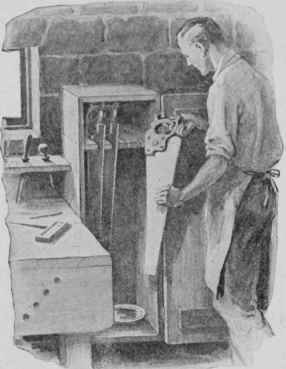
Fig. 25. - The purpose of this cabinet is to protect hand saws from rust and damage.
A few hints on handling plywood: Keep it in a dry place; for although much of it is made with waterproof (casein) glue, it will curve and buckle and the plies may separate if left in a damp place. It is well upon acquiring a plywood case to saw the sides out and lay the sheets fiat, one on top of the other, in a warm, dry place, with a few flat boards upon them for weight. Do not attempt to use a warped piece of plywood in a cabinet unless the frame which supports it can be braced to overcome this, which is usually not possible. In sawing plywood place it on a wide, flat surface, like a large, smooth-top box free from nails, and make the start and finish of the cut by cutting into the box as well as the plywood, in such a way as to prevent splintering the plies.
Continue to:


My Books

