


Wood Screws
Description
This section is from the book "Things To Make In Your Home Workshop", by Arthur Wakeling. Also available from Amazon: Things to Make in Your Home Workshop.
Wood Screws
"What is there to be said about driving wood screws?" the beginner in woodwork is apt to ask. But the old mechanic and those who have studied the results of recent laboratory tests on the holding qualities of screws, know that a good deal can be said.
In all hard woods, two sizes of bits or drills should be used in boring for screws. The larger one should be from 80 to 90 percent of the diameter of the shank of the screw. Alter some experience, one can gage the size by placing the drill on the shank of the screw as shown in Fig. 1 1. With this drill, a hole is bored to the depth of the shank or entirely through the first piece of wood if two pieces are to be held together as in Fig. 15.
A smaller bit or drill matched to the size of the root or core of the threaded part, but no larger, is used to bore to the entire depth of the screw. If this is not done the screw will often break before it is fully driven in place. In soft wood, smaller drills can be used and a hole of the same size throughout is often satisfactory.
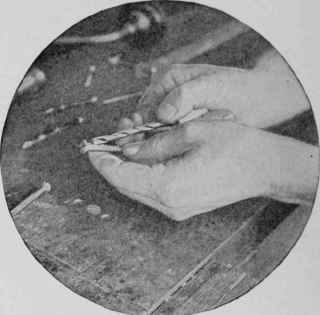
Fig. 14. - Placing the bit on the shank of the screw to obtain the correct size before boring.

Fig. 15. - Before driving srews, it is of primary Importance to know what size holes to bore for them.
When an attempt is made to fasten two pieces of wood together without adequate boring, the joint sometimes cannot be pulled tight because the shank of the screw will not slide in the first or uppermost board. In such a case the only remedy is to remove the screws and bore larger holes for their shanks.
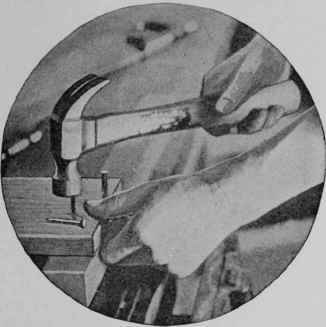
Fig. 16. - Hammering a screw part way in is not as bad practice as is commonly thought.
A small amount of lubricant, usually soap, placed on the threads of a screw, will make it easier to drive and help prevent breakage. Tests have proved that the holding power of the screw is not appreciably diminished by this practice.
A countersink should always be used to make a seat for flat-headed screws.
To drive screws a part of the way with a hammer, Fig. 16, is not so vicious a practice as some would believe, for scientific tests seem to indicate that the holding power of a screw is slightly increased by being so treated, provided it is not driven too far. The blow of the hammer bends the fibers of the wood downward around the screw and in this position they offer additional resistance.
The use of a screw-driver bit in a brace is shown in Fig. 17. Such a tool facilitates the driving of all larger screws.
Care must be taken, however, not to drive the screws too tight, for the mechanical advantage of the brace is great. Other things being equal, longer screws have more holding power than shorter and heavier ones. Screws inserted in end grain will not hold more than 75 per cent as much as those in the side grain, therefore use longer screws.
Continue to:


My Books

