


Wines Of Burgundy
Description
This section is from the book "Beverages And Their Adulteration Origin, Composition, Manufacture, Natural, Artificial, Fermented, Distilled, Alkaloidal And Fruit Juices", by Harvey W. Wiley. Also available from Amazon: Beverages And Their Adulteration.
Wines Of Burgundy
There are three geographic divisions which are recognized as the home of the Burgundy wines. These are Lower Burgundy, Higher Burgundy and Beaujolais. Each of these divisions is subdivided into smaller areas. One of the most famous in these sub-divisions is the Cote-d.Or,' belonging to Upper Burgundy. In these regions are produced the celebrated wines known as Chambertin, Musigny, Clos de Vougeot, Romanees and Richebourg. In the Cote de Beaune are found the wines known as Savigny, Beaune, Pommard and Volnay. The varieties of grapes which are grown in the Burgundy region are principally pinots and gamays, from which the red wines are made, and gamay blanc, aligote and pinot blanc for the white wines. From the pinot grapes the finest of the red and white wines are made. The gamay varieties yield the ordinary wine. The different types of red and white wines also vary with each region. Thus we have the Montrachet, the Meursault, the Chablis and Barton and Guestier.) the Pouilly, all of which are made from the pinot blanc, or white pinot. The Burgundy white wines should be drunk at a temperature a few degrees below that of the dining room, while the red wines should be kept in the dining room long enough to acquire the temperature of the room.
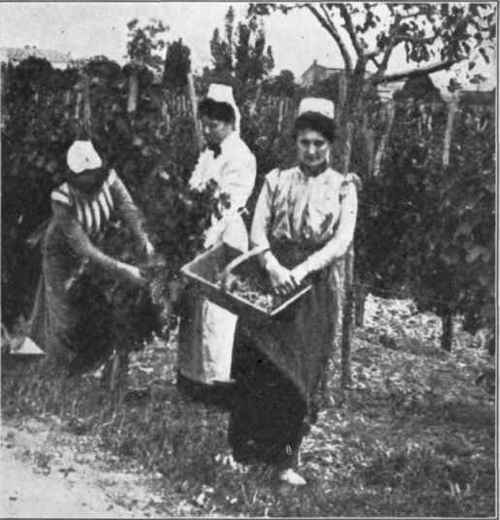
Fig. 20. Grape gathering at Saint-Emillion. (Courtesy of Barton and Guestier.)
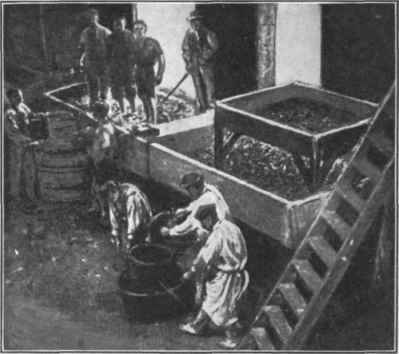
Fig. 30. Vintage in the tubs - tramping the grapes. (Courtesy of
Continue to:


My Books

