


Wines Of Distinctive Type
Description
This section is from the book "Beverages And Their Adulteration Origin, Composition, Manufacture, Natural, Artificial, Fermented, Distilled, Alkaloidal And Fruit Juices", by Harvey W. Wiley. Also available from Amazon: Beverages And Their Adulteration.
Wines Of Distinctive Type
It is rather strange that American producers should establish foreign names for American wines, when it is well known that the American wines have a distinct character of their own. They are not like the wines of the Rhine or Mosel, nor yet those of the Cote-d-Or, nor do they resemble in any particular character the grand classed wines of the Medoc and the Sauternais. It is a well-established fact that plants of the same kind produce fruits in different localities which are entirely distinct in character. The mild peppers which grow in Hungary and produce a spice known as "Paprika," when grown in the United States produce a spice which is far more pungent and more distinctively of a high pepper character than that of the Hungarian plant of the same species. It is well known, again, that the Albermarle pippin does not reach its perfect production of character and flavor outside of a certain very limited area. While all grapes are essentially the same, they differ in acidity, amount of sugar, flavor, aroma, and character, due to the environment in which they are grown. In this country this environment is so powerful in character as to produce very distinct types of fruit, and these in turn make perfectly distinct types of wine. There never was another country so favored, therefore, to develop a wine of a distinctive type, under a distinctive name, and thus secure a trade wholly its own. I think it may be said with perfect truthfulness that one of the principal reasons which have retarded the growth of the American wine industry was the mistaken notion that wines could only be sold if labeled with the names of foreign wines whose character had been fully established and whose merits were fully recognized.
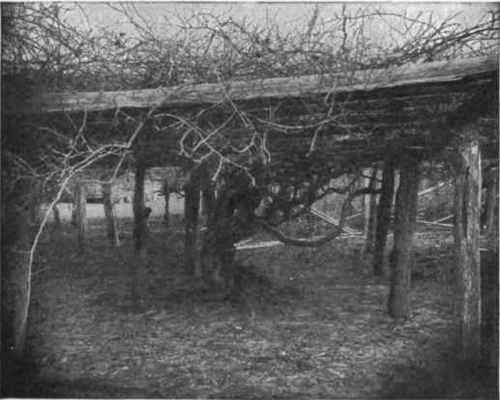
Fig. 18. Scuppernong grape vine. Roanoke Island. (Courtesy B. W. Kilgore.)
Continue to:


My Books

