


Cotton Adulteration
Description
This section is from the book "A Manual Of Home-Making", by Martha Van Rensselaer. Also available from Amazon: A Manual of Home-Making.
Cotton Adulteration
Cotton, being the cheapest fiber, is not adulterated with any other fiber when the material is to be sold as cotton cloth, but it can be made to appear heavier by the addition of mixtures called sizing. Starches, gums, dextrin, glue, china clay, as well as other ingredients in varying proportions, constitute this sizing which may add a large percentage to the weight of the cloth. The spaces between the threads are filled up, and a good finish is given to the cloth, although the wearing quality is not improved. If present in large quantities, the cloth is greatly reduced in weight and firmness after the first washing. Adulterations of this kind can be detected by the feeling, a large quantity imparting a harshness to the material.*
If material suspected of being heavily weighted or sized is rubbed vigorously between the hands, the white chalky specks of sizing may be seen on the hands. If the material is held up and torn quickly, a small cloud of starch or sizing may be seen. If very heavily starched material is touched by the tongue, the starch may be tasted or a sticky spot left on the material. In very thin fabrics the sizing may often be detected by holding the cloth up to the light, when the starch shows between the threads. Washing or thoroughly boiling a sample in soda water will show the amount of sizing present.
Another method of adulterating cotton is shown in certain kinds of dotted swiss. A good swiss has thread dots woven or embroidered in the cloth. These dots are generally woven with continuous threads on the back of the cloth; and in a later process of finishing, the threads between the dots on the wrong side of the material are sheared off, leaving only the threads which catch through to make the dots on the right side. Occasionally one finds a piece of swiss selling at the regular price, on which the dots instead of being woven as just described are merely dots of very stiff paste. In washing, these dots disappear; or if they do not disappear entirely, they are made brown from the heat of the iron.
* Univ. of 111., Bull. 15.
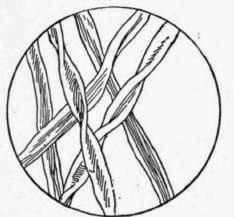
Fig. 57. - Cotton fibers, show-ing the characteristic twist.
Occasionally cotton cloth which has been on the market for some time is weakened by the action of the chemicals used in bleaching, dyeing, or in the sizing. This may be easily detected by tearing the cloth.*
Continue to:


My Books

