


1179. - Puff Paste
Description
This section is from the book "The New Cyclopaedia of Domestic Economy, and Practical Housekeeper", by Elizabeth Fries Ellet. Also available from Amazon: The New Cyclopaedia of Domestic Economy, and Practical Housekeeper.
1179. - Puff Paste
To obtain this in perfection much will depend on the quality of the butter used, and on its being rolled out or turned a sufficient number of times, so that the butter may be mixed with the paste in minute layers. Salt butter will make as good, if not better paste than fresh. When salt butter is used, it should be broken into small pieces, and put into a pan or pail of clean cold water; well work or squeeze it between the hands in the water, which will deprive it of the greatest portion of the salt it contains; take it from the water and put it on a cloth, and mould or work it well, in the same manner as you would a piece of paste; when the water is all worked out, and the butter appears dry and firm, make it in a roll and put it in a cold place for use. Fresh butter should be moulded in the same manner as directed for salt, but it does not require being first put into water. In summer a few pieces of ice may be put into the water with the butter, to harden it.
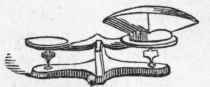
Scales.
Weigh one pound of butter and one pound of sifted flour. Take two ounces of the butter and rub in with the flour; make a hole in the middle, in which put a teaspoonful of salt, and pour in sufficient cold water to make it into a paste of nearly the same consistence as the butter. This should be more particularly observed in summer, as the heat then causes the butter to become very soft during the rolling of the paste, and to break through the surface, unless the dough is made of considerably less consistence in the first place, in order to allow for this. To each pound allow two eggs, well-beaten and mixed with the water.
Mix the dough into a clear, smooth paste, without toughness, by rubbing it well with the heel of the right hand on the board until it has acquired a clear, smooth, shining appearance; mould it into a round lump, then press all the moisture from the remainder of the butter, and form it into a ball, taking care not to soften it; put this upon the paste and press it down, then enclose it with the paste like an apple-dumpling; flour the marble well and roll it out; this is called the "first turn;" then fold it in three, and roll it out again, which will be a second turn; now fold it again in the same manner, and put it in a cold place, if convenient on ice, covered with a damp cloth, until it is required to be rolled out for use. Experience alone can determine when the paste has been sufficiently rolled.
Continue to:


My Books

