


Cuts Of Meats And Their Uses
Description
This section is from the book "The Home Cyclopedia Of Cooking And Housekeeping", by Charles Morris. Also available from Amazon: Home Cyclopedia of Necessary Knowledge.
Cuts Of Meats And Their Uses
Every housekeeper, in fact, every one who has marketing to do, should know something of the cuts of all common meats and the most desirable way each can be prepared for the table. In the illustrations below are shown the location of these cuts. The names may vary somewhat in different sections.
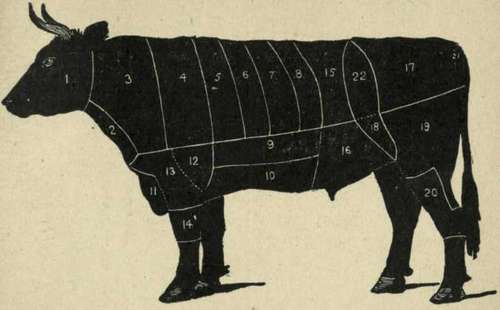
Beef
1. Head. Not used for food.
2. Sticking piece. Soups, beef-tea, stews corning.
3. Neck. Soups, stews, beef-tea, boiling corning.
4. Second and third chuck. Brown stews braising, steaks, poorer roasts.
5. First chuck. Roasts.
6. First cut, standing ribs. Roasts.
7. Middle cut, ribs. Roasts.
8. Back ribs. Roasts.
9. Plate (no bones). Stews, soups, corning
10. Brisket. Stews, brown stews, soups, corning
11. Butt end of brisket. Soups, stews, corning
12. Bolar (no bones). Corning, cheap roasts.
13. Bony end of shoulders. Soups.
14. Shin. Soups.
15. Loin (including tenderloin and sirloin) Roasts and steaks.
16. Flank or skirt. Rolled steaks, braising boiling, corning.
17. Rump. Roasts and steaks. Meat to be cut across the grain.
18. Veiny piece. Stews, soups.
19. Round. Stews, beef-tea, poorer steaks.
20. Leg. Soups and stews.
21. Tail. Soups.
22. Pin-bone. Roasts.
The bones, gristle, tendons and other gelatinous portions are all excellent for making soup stock,
Mutton

1. Shoulder. Boiling.
2. Breast. Roast, stews, chops.
3. Loin. Best end used for roasts, chops.
4. Neck. Best end, cutlets, stews, pies.
5. Neck. Scrag end, stewing pieces.
6. Head. Not used.
7. Loin. Roasts, chops.
8. Leg. Roasts, boiling.
Continue to:


My Books

