


Propagating Plants By Cuttings Of Ripe Wood
Description
This section is from "The Horticulturist, And Journal Of Rural Art And Rural Taste", by P. Barry, A. J. Downing, J. Jay Smith, Peter B. Mead, F. W. Woodward, Henry T. Williams. Also available from Amazon: Horticulturist and Journal of Rural Art and Rural Taste.
Propagating Plants By Cuttings Of Ripe Wood
Many kinds of plants whose stems and branches are composed of what is called ligneous fiber, are readily propagated by cuttings of the ripened wood. Sometimes wood of two or more years old is used for that purpose; but, as a general rule, that of one season's growth produces roots the most readily. The cuttings are usually taken from the parent plants in the fall of the year, as soon as vegetation has received a check in its growth, or as soon as the leaves of deciduous plants will part from the stem without injury to the buds adjacent Autumn is also a proper time to make cuttings of many kinds of evergreen plants, more particularly those of hardy trees and shrubs.
A branch, when it ceases to grow in summer or fall, contains a large amount of matter which has not assumed any particular form or structure, and it is in a proper condition either to produce roots or branches. "With some kinds of plants it can be made to produce the former very readily; with others it is quite difficult - simply because we have not learned the proper conditions necessary for their development; and it is just here that we come 11 upon the great secret in the propagation of plants - i. e., under what conditions should a particular plant or cuttings of it be placed to insure growth ? Cuttings of the willow, currant, and many other woody plants will grow quite readily, even if taken from the parent plant at almost any time of the year, while a branch from the hickory would be difficult to make produce roots under the most favorable conditions, although it is not among the impossibilities to grow hickory cuttings. The gardener, however, does not seek the most difficult methods in multiplying plants, but the easiest, consequently we have many ways of producing the same results.
It requires more or less time for a cutting to produce roots; and as it is apparent that it is better to give an abundance than too little, we usually make the cuttings of all woody plants in autumn, because by doing so, we secure several months in which to produce the change, or, in other words, for roots to form. Roots are produced, more readily at a low temperature than leaves - also in the dark - and these conditions are easily secured, even in the coldest weather, for the earth, although frozen on the surface, is always warm enough below to afford a proper heat to produce roots on most kinds of woody plants native of a similar climate.
We avail ourselves of the knowledge of this fact, and make the cuttings of hardy plants in the fall, and either plant them immediately where they are to grow, protecting them from the frost, or covering with moist soil, in some convenient place, where the temperature which surrounds them will be above the freezing-point, but not so warm as to excite the leaves into growth.
In such a situation the process of forming roots will go on; and some kinds will become so well rooted by the time the regular growing season commences in the spring, that the roots will be able to supply the leaves with nutriment as soon as they are expanded; consequently a rapid growth early in the season will be produced. Although the roots of some kinds of plants will form at a very low temperature, still, if a higher one can be obtained, while at the same time the buds which are to form leaves can be kept in a cool atmosphere, a great point is gained, because roots must be produced before anything like rapid or permanent growth can be secured. These conditions are produced naturally in the open ground, for the temperature of the soil in the spring is generally warmer than the atmosphere, and the lower end of a cutting, from which point it is always desirable to have the roots produced, receives more heat than that portion which is exposed to the air. In latitudes where the ground freezes to a considerable . depth, every one who has ever taken the trouble to examine the soil at the time of its thawing in spring, must have observed how much more rapidly it thaws from below upward than from the surface downward.
Heat descends very slowly, but cold rapidly, and just as soon as the weather becomes so warm that the surface does not freeze, the heat from below will rise to the surface.
The hot-bed used by the gardener is formed on the same principle. His object is to secure heat for the roots, while the branches or upper portion of the plant are kept comparatively cool. Thus plants are grown with what is usually termed bottom heat Nearly all plants emit roots more readily at or near their buds than elsewhere; therefore in making cuttings it is always best to sever them just below the bud, leaving it on the cutting, thereby exposing the wood at a point from which roots appear to be produced naturally. Some species of plants, like the willow and quince, emit roots very readily from every portion of the stem, and with these it is not necessary that they should be cut off at a bud; yet even these grow more rapidly if made in this manner. With some of the hollow-stem plants, like the common Deutzia, the orifice is usually entirely closed, or nearly so, at the point where the bud is situated; and it must be apparent that there will be less liability of water lodging within the stem and causing its decay if severed just below the bud than if at any other point.
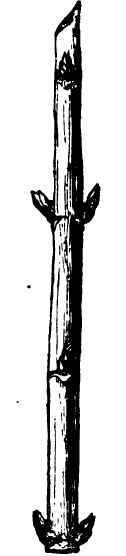
Fig. 87. Propagating Plants by Cuttings of Ripe Wood.
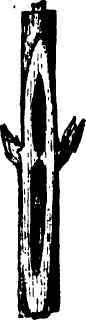
Figure 88 shows a section of a stem of Deutzia scabra: a is the hollow in the stem; at b the orifice is closed by the wood growing completely across, thus preventing water from passing beyond the bud, even if it should enter the cutting from below. In other plants the hollow in the center of the stem is continuous; but in many others it is closed, as shown, or filled with a pith, as in the common elder, grapevine, weigela, etc.
Continue to:


My Books

