


37. Eucalyptus intertexta
Description
This section is from the book "A Research On The Eucalypts Especially In Regard To Their Essential Oils", by Richard T. Baker, Henry G. Smith. Also available from Amazon: A Research On The Eucalypts And Their Essential Oils.
37. Eucalyptus intertexta
(R.T.B., Proc. Linn. Soc, 1900, p. 308, t. XVII.) Spotted Gum, Gum, Coolabah.
Systematic.- A large tree, up to 80 feet high, and 3 feet or more in diameter. Bark smooth, nearly to the ground; butt-bark hard and persistent, extending a few feet up the trunk; the smooth bark has patches, or spots, and varies much in colour, from brownish, to all shades of a lighter grey, and sometimes to quite chalky white. Leaves lanceolate-acuminate, mostly under 6 inches long, of a pale yellowish, or sometimes bluish colour on both surfaces, not shining; lateral veins spreading, but not prominent, and almost quite hidden, intramarginal vein close to the edge. Buds on slender pedicels from 4 to 6 lines long. Flowers numerous, mostly in a terminal panicle. Calyx small, pyriform; operculum hemispherical or conical, sometimes shortly acuminate.
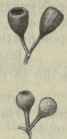
Fruit. - Variable in shape, sometimes cylindrical, pyriform, with the thin rim incurved, whilst at other times pilular in form, with a constriction below the rim ; valves inserted; 2 to 3 lines in diameter.
The pyriform variety is very much like E. pani-culata; the coarser form like E. odorata; the pilular form E. pallens, and the small variety E. polvbractea.
Habitat. - New South Wales, Dubbo to the Darling River (" Gum "); Nymagee, Condobolin ("Coolabah "); Mt. Hope (" Yellow Jacket " and "Gum"); Cobar (" Coolabah," " Gum "); Drysdale (" Coolabah "); Bodabah, 30 miles cast of Nymagee. Mr. Maiden, Cr. Rev. Vol. IV, pt. 6, pp. 170 to 172, records it from South Australia, Western Australia, and Northern Territory.
Timber.- Timber very hard and red in colour, and very much interlocked, in fact, so much so that it is stated to be almost impossible to split; and though being in good repute for durability, it is very little used owing to this difficulty in cleaving. It should be a good timber for railway sleepers.
REMARKS.- Eucalyptus bicolor, which occurs in the same districts, is also known occasionally by the vernacular name of "Coolabah." but in the field there can be no doubt as to these being distinct species. E. bicoior is a " Box Tree," with the usual " Box" bark, and characteristic " Box " timber; but this speecies has a smooth bark and reddish timber. The two trees are readily distinguished by the settlers. The name "Coolabah " attached to this and a few other species is evidently an error, since the true " Coolabah " is an Angophora (A. melanoxylon, R.T.B.), which occurs at Coolabah, the town of that name on the Western Railway line This Eucalypt is at Coolabah also, where it is known as " Cum," and not " Coolabah." The meaning of the aboriginal name " Coolabah "-a gnarled knotted tree-applies eminently more to the Angophora than to E;. bicolor or this species. The specific name has reference to the close, interlocked timber.
ESSENTIAL OIL. - Leaves and terminal branchlets of this species for distillation were collected at Nyngan, New South Wales, in December, 1899. The yield of oil was 0.2 per cent. The crude oil was of a light orange-brown colour, and had an odour resembling the cineol-pinene oils generally. Pinene was the principal terpene, and phellandrene was absent. The oil contained a fair amount of cineol. The third fraction consisted principally of the sesquiterpene.
The crude oil had specific gravity at 15o C. = 0.9076 ; rotation aD + 10.25° ', refractive index at 20° = 1.4691, and was soluble in 1 3/4 volumes 70 per cent. alcohol. The saponification number for the esters and free acid was 4.9.
On rectification 2 per cent. distilled below 165° C. (corr.). Between 165-185°, 82 per cent, distilled; between 185-255°, 6 per cent, came over, and between 255-270°, 5 per cent, distilled. These fractions gave the following results: -
First fraction, sp. gr. at 15o C. | = | 0.9016; | rotation | aD | + | 12.24°. | |||
Second | " | " | " | = | 0.9186; | " | not taken. | ||
Third | " | " | " | = | 0.9316; | " | + | ||
The cineol was determined by the phosphoric acid method in the large fraction. The result was 42 per cent, of that constituent, indicating about 35 per cent, in the original oil (O.M.).
Material of this species was obtained from Girilambone, New South Wales, in March, 1900. The oil differed in no respects from that distilled from the Nyngan leaves. The crude oil had specific gravity at 15° C. = 0.9078; rotation aD + 9.71°, and was soluble in 2 1/2 volumes 70 per cent. alcohol. The saponification number for the esters and free acid was 5.4.
The cineol determined in the crude oil by the phosphoric acid method was 35 per cent. (O.M.). '
Material was also obtained from Gunbar, New South Wales, in December, 1900. The results from the oil agreed entirely with those of the above samples.
The mixed oils of the above had been kept in the dark, and in October, 1919, the sample was again analysed. The oil had increased in specific gravity, and in cineol also, and that constituent was present at this time in some quantity. The specific gravity at 15° C. = 0.9331; rotation aD + 10°, and refractive index at 20° = 1.4671. 84 per cent, distilled below 190°. This fraction had sp. gr. at 15° C. - 0.9145; rotation aD + 7.8°; refractive index at 20° = 1.4613.
The cineol determined by the resorcinol method in the fraction, and calculated for the crude oil, was 65 per cent. By the rapid phosphoric acid method it was 60 per cent., when calculated for the crude oil.
Continue to:


My Books

