


Shoulder Joint
Description
This section is from the book "Handbook Of Anatomy For Students Of Massage", by Margaret E. Bjorkegren. Also available from Amazon: Handbook Of Anatomy For Students Of Massage.
Shoulder Joint
Shoulder-Joint, between the head of the humerus and the glenoid cavity of the scapula.
A ball-and-socket joint, permitting of particularly free movement as the socket is very shallow and much smaller than the ball. Movement can take place round three axes, viz.Transverse - flexion and extension. Antero-posterior - abduction and adduction. Vertical - rotation in and out.
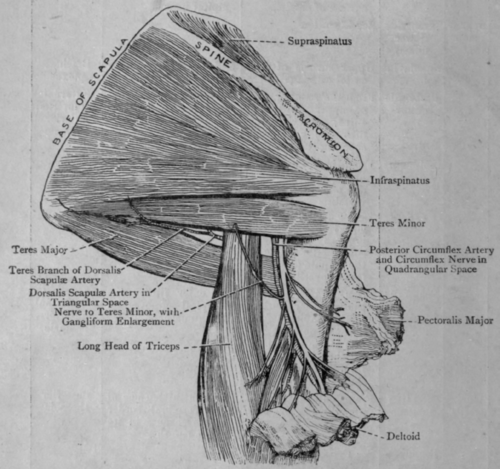
Fig. 6. - Muscles of the Shoulder-Joint.
A capsule surrounds the joint attached to the anatomical neck of the humerus and the edge of the glenoid fossa outside the ligament. Inferiorly the attachinent of the capsule runs down a little way on the shaft of the humerus.
The capsule is very loose, so that were it not for atmospheric pressure the humerus could be pulled at least an inch away from the scapula; this adds to the mobility of the joint.
Glenoid ligament, a band of circular fibres round the edge of the glenoid fossa to deepen the socket.
Transverse humeral ligament bridges over the bicipital groove and allows the tendon of the biceps to pass under it.
Coraco-humeral ligament between the root of the coracoid process and the upper surface of the head of the humerus.
Gleno-humeral ligaments, three in number, from the anterior edge of the glenoid fossa to the anterior surface of the head of the humerus.
All these ligaments are in reality part of the capsule.
Accessory Ligaments: Coraco-acromial ligament, a strong band of fibres passing between the coracoid and acromion processes. This arches over the top of the joint and prevents dislocation upwards.
The tendons of subscapularis, supra- and infra-spinatus are closely applied to the capsule of the joint as they near their insertions, so strengthening it; but it will be noticed that the joint is weak inferiorly, having no strengthening ligaments in that aspect.
The tendon of the biceps from the edge of the glenoid fossa passes through the joint over the head of the humerus, emerging from under the transverse ligament.
The synovial membrane is very extensive, lining all the joint, and is prolonged down on the tendon of the biceps.
Muscles Acting On The Joint
Action. | Muscle. | Origin. | Insertion. | Nerve-supply. |
Flexion | Deltoid (anterior fibres) | Outer third of anterior surface of clavicle; outer border of acromion process; lower edge spine of scapula;. and deep fascia | In a V-shaped impression half-way down the outer surface of the humerus | Circum-flex |
Pectoral is major | See Sterno - Clavicular Joint | |||
Flexion (con tinued) | Coraco-brachialis | With short head of biceps from tip of coracoid process | Into a rough linear impression half - way down the inner surface of the humerus | Musculocutaneous |
Subscapu-laris | From the whole of the subscapular fossa and the groove along the axillary border, excepting at the angles of the bone | Lesser tuberosity of humerus and capsule of shoulder-joint | First and third subscapular | |
Biceps | 1. Short head from the tip of the coracoid process with coraco-brachialis. 2. Long head from the edge of the glenoid fossa at the root of the coracoid process | Rough posterior portion of bicipital tubercle of radius, and by a prolongation of the fascia of the deep fascia of the forearm (see Bicipital Fascia, p. 37) | Musculocutaneous | |
Extension | Deltoid (post-fibres) | See Flexion | ||
Teres major | From the lower third of the axillary border of the dorsum of the scapula, and from deep fascia | Inner lip of bicipital groove | Second subscapular nerve | |
Infraspinatus | From the infraspinous fossa and deep fascia | The middle facet on the great tuberosity of the humerus | Suprascapular | |
Latissimus dorsi | See Sterno - Clavicular Joint | |||
Triceps | 1. Long head from a rough surface on the axillary border of the scapula just below the glenoid fossa. 2. Outer head from posterior surface of humerus between the musculo-spiral groove and the insertion of teres minor, a linear impression 3. Inner head from the posterior surface of the humerus, from the musculo-spiral groove almost to the condyles and deep fascia | By one tendon inserted on the posterior part of the upper end of the olecranon process of the ulna | Musculo-spiral | |
Abduction | Deltoid | See Flexion | ||
Supra-spinatus | From the supraspinous fossa and deep fascia | To the uppermost facet on the great tuberosity of the humerus | Supra- scapular | |
Adduction | Pectoralis major | See Sterno - Clavicular Joint | ||
Latissimus dorsi | See Sterno-Clavicular Joint | |||
Teres major | See Extension | |||
Coraco-brachialis | See Flexion | |||
Biceps (short head) | See Flexion | |||
Triceps (long head) | See Extension | |||
Teres minor | From the upper two-thirds of the axillary border of the scapula | To the lowest facet on the great tuberosity of the humerus | Circumflex | |
Weight of limb | ||||
Rotation out | Infraspinatus | See Extension | ||
Teres minor | See Adduction | |||
Rotation in | Teres major | See Extension | ||
Pectoralis major | See Sterno-Clavicular Joint | |||
Latissimus dorsi | See Sterno - Clavicular Joint | |||
Circumduction - a combination of all these movements | ||||
Continue to:


My Books

