


Artificial feeding. Part 2
Description
This section is from the book "Hygiene Of The Nursery", by Louis Starr. Also available from Amazon: Hygiene of the nursery.
Artificial feeding. Part 2
Cows' milk* (market milk) has a specific gravity of 1.027 to 1.035, is richer looking, that is, whiter and more opaque than human milk, is slightly acid in reaction unless perfectly fresh from pasture-fed animals, when it may be neutral or alkaline, and always contains bacteria. It has the following average composition:
Fat..............................
Milk sugar.......................
Proteids........................
Salts............................
Water...........................
4.0 per cent. 5 .0 per cent. 3.5 per cent, 0.7 per cent. 87.0 per cent.
* The character of cows' milk may be determined with sufficient accuracy in the following way:
Provide a specific gravity glass, such as is shown in Fig. 18, and which can be obtained at any chemist's, or a lactometer may be used. To obtain the specific gravity, fill a beaker to such a point with milk that it will float the specific gravity glass or lactometer, and read the degree of density from the scale at a • level with the surface of the milk. The chemical reaction is found by inserting a piece of blue litmus paper, which should turn slightly red a few moments after being wet. In applying this test small pieces of litmus paper should be examined under and in the milk, as exposure to air may redden paper dipped in milk, although the fluid itself may not be acid. To ascertain the proportion of cream, cut a narrow strip of paper four inches long, and divide the upper half-inch, by cross-markings, into twelve equal parts; paste this on a beaker (Fig. 18) with the marked portion uppermost, and the lower edge coming accurately to the bottom of the beaker; then pour in enough milk to come just to the top of the paper, and place the whole aside for twenty-four hours. During this time the cream rises and appears as and is precipitated in fine, soft particles, which are dissolved by an excess of acid. After the separation of the casein, the lactalbumin is left in solution in the whey. Lactalbumin closely resembles serum albumin, is unaffected by acid, but is precipitated by boiling.
Comparing -this analysis with that previously given for human milk, it is readily seen that the two fluids differ in specific gravity and reaction, and that cow's milk contains more nitrogenous material but much less sugar than woman's milk.
While the sugar of human and cows' milk is chemically identical, and the fats are quite similar, there are important differences in the quality as well as the quantity of the nitrogenous material. This in both fluids is complex, being made up of casein, lactalbumin, and peptones. The peptones are present in very small quantities only, and to what extent they exist naturally, and to what, in cows' milk, they are formed by bacterial action, is not known. Casein is an acid substance, and is present in combination with an alkali, chiefly as potassium caseinate. The casein of cows' milk is readily precipitated by dilute acid, and is thrown down in large firm masses; that of human milk requires more acid a yellow layer at the top; this layer should have the depth of ten or twelve spaces. Beakers with a scale cut in the glass are now sold in instrument shops under the name of "creamometers."
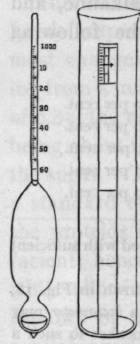
Fig. 18. - Specific Gravity Glass and Cream Beaker.
The relative proportions of casein and lactalbumin have been determined with sufficient accuracy to point out the most important of all the differences between the two secretions, which is, that the fraction of the total albuminoids in cows' milk which is coagulable by acids (casein) is far greater than the non-coagulable part (lactalbumin). In woman's milk, on the contrary, the reverse is true, and the non-coagulable part much exceeds the coagulable portion. The following table shows this difference:
Human milk. | Cow's milk. | |
Total proteids....... | 1.80 | 3.50 |
Casein .................... | 0.60 | 3.00 |
Lactalbumin....... | 1.20 | 0.50 |
Taking weight for weight of each secretion, the coagulum of human milk is only one-fifth that of cows' milk. This difference is readily tested by adding rennet to the two fluids. In the case of cow's milk the casein is coagulated into large, firm masses, while with human milk a light, loose curd is formed. In the stomach the acid gastric juice has the same effect, producing in the first instance a coagulum most difficult to digest; in the other, one of vastly less bulk and readily attacked and broken down by the gastro-intestinal solvents.
These chemical and physical properties of cows' milk can be altered by various methods of preparation, and unless this be done there are few instances in which it will not prove a poor substitute for the natural food.
Condensed milk is frequently recommended by physicians and largely used by the laity on their own responsibility. It keeps better than cows' milk and is supposed to be more readily digested by young infants. The latter supposition is a mistaken one, and arises from the overlooked fact that condensed milk is always given dissolved in a large proportion of water (1 part to 12-10-8 or 6, according to the age of the child), while cows' milk is too frequently used insufficiently diluted or otherwise improperly prepared. The author is convinced of the accuracy of this statement from a number of years' close study of the subject.
Condensed milk contains a large proportion of sugar, forms fat quickly, and thus makes large babies; sugar also counteracts in some degree the tendency to constipation - often a troublesome complaint in hand-feeding. These advantages are unquestioned, and, together with the ease of preparation and the fact that, when in good condition, it is sterile or free from bacteria, are those which place it so high in the esteem of monthly nurses. It is equally true, however, that prepared as a food it does not contain enough nutrient material, either in the form of fat or proteids, to supply the wants of a growing baby.
Continue to:


My Books

