


Pulmonary Tuberculosis
Description
This section is from the book "A Manual Of Pathology", by Guthrie McConnell. Also available from Amazon: A Manual Of Pathology.
Pulmonary Tuberculosis
Pulmonary Tuberculosis is a not uncommon condition occurring after the patient has apparently entirely recovered.
An important test in the making of the diagnosis of typhoid fever is the Widal reaction. It is based upon the principle that when the blood of a patient suffering from typhoid fever is added to a fresh culture of the typhoid organism the bacilli will gather into clusters and gradually lose their motility, a process known as "clumping." The reaction is performed as follows: The most satisfactory way is to obtain the blood in a fresh state, and if one can get a sufficient amount to allow the use of the serum alone, it is even better. A drop of blood or serum is forced out of a capillary tube, in which it should be received, and to this nine drops of sterile water are added.
This is thoroughly mixed, and one drop of this mixture added to one of the culture gives a dilution of 1: 20. The culture to be used that is generally recommended is a bouillon one not more than twenty-four hours old. Some authors recommend a fresh agar culture, but there is danger of the bacilli being already clumped to some degree. Dilutions of 1:10 and 1:50 should also be employed as control tests. A drop of this solution is placed on a cover-glass, which is then inverted over a hollow-ground slide. The reaction is said to be positive if within forty-five minutes the bacilli are found to be gathered in little groups and their motility almost or entirely absent.
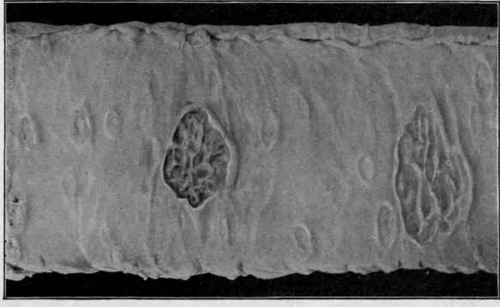
Fig. 155. - Tuberculous Ulceration of the Intestine (Stengel).
If the blood cannot be sent fluid, several drops of blood should be placed on a sterile slide, and when dry, sent to the laboratory. One of the drops is dissolved in a drop of sterile water and then diluted until the proportion is one to fifty. The rest of the technic is the same as with the fluid blood.
This reaction does not, as a rule, appear until seven to eight days after the onset of the disease, and may be delayed until much later. It may also appear in those who have suffered from typhoid fever some time previously.
Continue to:


My Books

