


3. The Gastric Spray (Eirihorri)
Description
This section is from the book "Diseases Of The Stomach", by Max Einhorn. Also available from Amazon: Diseases of the Stomach.
3. The Gastric Spray (Eirihorri)
In cases in which it is necessary to apply medicaments of a toxic or irritating character to the gastric mucosa, the risk of poisonous effect can be prevented by the use of the spray, by means of which large surfaces can be covered with a comparatively small amount of fluid.
1 Rosenheim: L. c.
2 Max Einhorn: "The Use of the Spray in Diseases of the Stomach." New York Medical Journal, September 17th, 1892.
In order to make use of the spray in diseases of the stomach, the usual spray apparatus has been modified by me in such a way that, instead of the hard-rubber branch of the apparatus, the same branch is made of soft-rubber and lengthened. In this way the gastric spray apparatus consists of the usual spray apparatus, in which there is a soft Nelaton tube, of 70 cm. length, inserted between the nozzle and the hard-rubber branch running to the bottle; within the Nelaton tubing, another soft tube of thinner calibre connects the inner capillary tube with the nozzle (see Fig. 46). As the spray is generated by the air forced by the bulb through the tube, taking up the fluid and dividing it into fine particles, the medicament will necessarily come in contact with every part touched by the air.
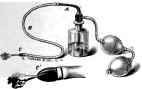
Fig.40. - The Gastric Spray Apparatus (Einhorn).
1 The gastric spray apparatus is manufactured by Geo. Tiemann &: Co, New York.
If the stomach is empty when spraying, the air that enters will expand the organ and transport the fluid to every part of its interior.
The administration of the spray in gastrotherapeusis is a suitable form for fulfilling the following purposes:
1. To disinfect the mucous membrane of the stom ach.
2. To exert an astringent effect.
3. To produce analgesia in gastralgia of local character (from ulcer, cicatrix, or cancer).
Method
As it is possible to spray the stomach only in its empty state, it will be necessary to administer the spray either when fasting or after a previous lavage.
A preceding lavage will always be indicated if we intend to disinfect or apply astringents, for in these instances it is necessary first to remove the mucus with the micro-organisms embedded therein. In order to exert an analgesic influence, the lavage may perhaps be omitted.
After filling the apparatus with a sufficient amount of the required solution, the tube end is dipped into warm water and thereupon inserted into the stomach of the patient. It is best to begin with the spray as soon as the nozzle (being in the stomach) is at a distance of about 45 cm. from the lips of the patient. Provided the nozzle is not covered by the stomach wall, there can be heard during the spraying, at times in the neighborhood of the patient - otherwise by putting the ear on the gastric region - the sound characteristic of the spray. In case the opening is covered, the spray is generally unable to pass, and it is then necessary to insert the tube a little farther.
Even if the spray works well from the beginning, it will be expedient after a while to introduce the tube a little farther, in order to have the spray work from different points. The spraying of the stomach has proved very useful, according to my experience, in the following conditions: (I) In erosions of the stomach; (2) in those forms of chronic gastric catarrh which are associated with an abundant amount of mucus; (3)) in cases of hypersecretion and hyperacidity.
Continue to:


My Books

