


Chapter 9. Medicine - Its Use And Abuse - How To Live One Hundred Years
Description
This section is from the book "How To Live 100 Years", by G. H. Lockwood. Also available from Amazon: How to live 100 years.
Chapter 9. Medicine - Its Use And Abuse - How To Live One Hundred Years
To say that there is no use for medicine would probably be making an extreme statement that will not be seriously considered for perhaps another century. To say that the habitual use of medicine is very harmful to the physical organism, and that most medicines are without any real "curative" properties, is to state the truth - whether acceptable or not to the "doctors" or the "patients."
The absurdity to which this matter of medicine has come may be surmised when one goes into a modern well-equipped drug store and notes the thousands of bottles of extracts, lotions, and poisons that are used in the "mixing" of the concoctions that are put together "by order of the physician."
The man or woman whose hope of health lies in this direction is headed straight for the grave.
External applications in case of wounds or sores may at times be desirable. If I ran an old nail in my foot, I would wash the wound with some kind of antiseptic, turpentine is mighty good for such purposes, and the nail hole should be enlarged or opened so that the bruised flesh will be bathed. A poultice made of a scraped raw potato, or piece of fat pork, should afterwards be applied. One of the. best poultices for a thing of this kind is a fresh "cud" of chewing tobacco - it's about the only thing that the stuff is really good for. An injury of this kind should be watched very carefully, and if it does not heal readily and there is any indication that it is getting worse, a good physician should be consulted and the wound cauterized and properly attended to.
It is not, however, necessary to run for a rag every time one cuts one's finger with a penknife. The writer worked for years as a lather, and during that time very frequently cut and pounded his hands and fingers with a hatchet; they are covered today with scars, real badges of labor. I soon learned that the best treatment for these small wounds was to wash them out in clean water and then let them alone. Nature soon covers the wound with a clot of blood and starts the healing process.
In case of broken limbs or serious injury, the surgeon should be at once consulted, and in the meantime bandages should be applied that will stop, as much as possible, the flow of blood to the injured part, clothing loosened, and the patient made comfortable, mentally and physically. It is not in cases of accident where the body is apt to be injured by treatment, inasmuch as this treatment is of an exterior nature. It is when the "doping" process starts that the danger starts, and it continues as long as the "doping" is kept up.
Very briefly and distinctly stated, the writer does not believe in the "curative properties" of "medicine." The evidence that it does not cure is found in every graveyard, and in the multitude of sick people that are continually under the doctors' care.
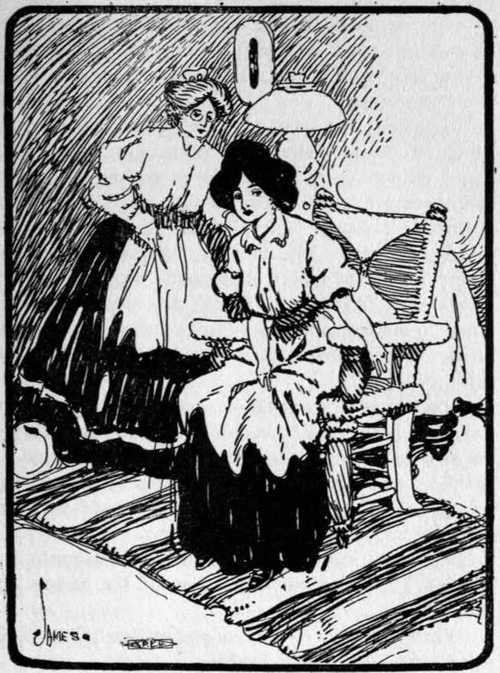
In Nine Cases Of Sickness Out Of Ten A Short Fast Will Put You On Your Feet
I do not even believe that medicine often assists in making cures, unless it is in such cases as the patient has "faith" in it, and hence it acts as a curative "suggestion."
In this last statement I do not wish to be misunderstood. I do not believe in "faith cure," nor "mind cure," except for such diseases as are purely mental, and there are many such; neither am I a so-called "Christian Scientist." In the cure of any disease, or the recovery from any accident, however, the mind is a very important factor, and mental suggestion from a doctor or "healer" or friend, and auto-suggestion from the patient, must now be reckoned with as one of the most powerful assistants to nature in the healing process.
There may be some simple, harmless extracts from roots and herbs that have a helpful effect in restoring the sick or diseased body to its normal condition of health; I would not say that there are none such, but it is questionable, in my mind, if they are of any considerable importance.
Now, note carefully the position here taken!
Health is the normal condition of the human organism.
When the body is not in perfect health, there is some cause for the ill health.
You can not restore your body to perfect health without first removing the cause of its ill health.
By removing the cause of its ill health, if this cause has not been too long standing, nature will at once commence to restore the body to its normal condition of health.
If the cause has been too long standing and the resulting injury too serious, all the physicians in Christendom can not make good what nature can not make good; they may kill pain by laudanum or opium or morphine, but they can not cure, nor does their "doctoring" assist nature to cure, nor will it prolong the life of the patient, but rather help to hasten the visit of the undertaker.
The real physician will locate the cause of ill health and, if possible, remove it, or teach the patient how to remove it, and after it is removed, how to live so as to avoid a repetition of the same condition.
Years ago, visiting a friend in Ohio, I saw his cow carrying a bone in her mouth. It was to me a very unusual and comical sight and I asked him for the explanation. He said: "The soil here is lacking in certain bone-making properties that the cow instinctively knows or feels she needs, and she recognizes these properties in the bone that she has found." In other words, the cow was not getting just the kind of food that answered her physical requirements.
I anticipate that the time will come when physicians, real ones, will be able to analyze the exact physical requirements of building up strong bodies, or repairing weak ones, and instead of writing out a long list of Latin names of drugs, powders, and lotions for the patient to swallow in capsules and "doses," they will say: "What you need is to eat a little less starchy food and more muscle food; try eating raw carrots (or something) for a week." In other words, they will prescribe the medicine, if we can call it such, in its natural stage in the food itself.
This is not a common, but a rational idea of medicine, and the day will come when it will be seriously considered by the teachers whose business it will be to keep the people well. In the meantime you consider this seriously right now.
Continue to:


My Books

