


Nat. Order. Labiatae. Ocimum Sanctum, Linn. Sans
Description
This section is from the book "The Materia Medica Of The Hindus", by Udoy Chand Dutt. Also available from Amazon: The Materia Medica Of The Hindus.
Nat. Order. Labiatae. Ocimum Sanctum, Linn. Sans

Tulasi,

Parnάsa. Vern. Tulsi, Beng. Hind.
Sanskrit writers make two varieties of this plant (founded upon some difference in the colour of their leaves) namely, white and black. The Ocimum sanctum is held sacred to Vishnu of the
Hindu trinity, and is reared in every hindu house where it is daily watered and worshipped by all the members of the family. The beads or rosaries used by orthodox natives for counting the number of recitations of their deity's name, are made of the stems of this plant.
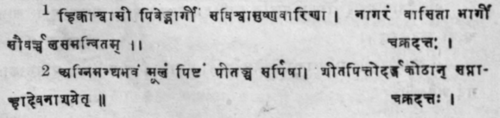
The leaves are regarded as anti-catarrhal or expectorant and are used in catarrh, cough and pain in the sides. The juice of the leaves is given with the addition of black pepper in catarrhal fever.1 It is often used as an adjunct to metallic preparations, which are rubbed with it into a thin paste and then licked up. The leaves enter into the composition of some compound decoctions for cough and affections of the chest. The following is an exam-ple. Take of the leaves of Ocimum sanctum, gulancha, ginger, root of Clerodendron Siphonanthus, (bhάrgi) and Solarium Jac-guinii (kantakάri), equal parts and prepare a decoction in the usual way.2 The dried leaves are used as snuff in ozaena. They also enter into the composition of some compound medicines used in this disease, as for example of an oil which is prepared with a paste of the leaves of Ocimum sanctum, roots of Solanum Jacquinii (kantakari), Baliospermum montanum (danti), Acorus Calamus (vachά), Moringa pterygosperma (sigru), long pepper, black pepper, and ginger.3
Continue to:


My Books

