


Nat. Order. Lythraceae. Woodfordia Floribunda, Salisb. Grislea tomentosa, Roxb
Description
This section is from the book "The Materia Medica Of The Hindus", by Udoy Chand Dutt. Also available from Amazon: The Materia Medica Of The Hindus.
Nat. Order. Lythraceae. Woodfordia Floribunda, Salisb. Grislea tomentosa, Roxb
Sans.

Dhάtaki'
Agnijvάla.
Vem. Dhάiphul. Beng. Dhάi. Hind.
The Sanskrit synonyms of this beautiful flowering shrub well describe some of its prominent characters. It is called Tamra-pushpi or red flowered, on account of its bright red permanent calyx, and Guchchhapuslipi or having clusters of blossoms, on account of its numerous small flowers, which give it a gaudy appearance. From the circumstance of its being common in mountainous tracts, it has got the name of Parvati or hill-born.
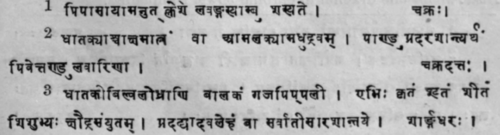
The dried flowers of Woodfordia floribunda are regarded as stimulant and astringent and are much used, in combination with other astringent medicines, in bowel complaints and haemorrhages. Two drachms of the dried flowers are given with curdled milk in dysentery, and with honey in monorrhagia.2 In the dysentery of children, the following combination is recommended to be given in the form of powder or decoction with the addition of honey. Take of the flowers of Woodfordia floribunda, bel fruits, bark of Symplocos racemosa (lodhra), root of Pavonia odorata (bάlά), and the fruits of Pothos officinalis (gajapipul), in equal parts, two tolάs in all, and prepare a decoction in the usual way.3
The powdered flower is sprinkled over ulcers for diminishing their discharge and promoting granulation.1
Continue to:


My Books

