


A. Of Cohesion
Description
This section is from the book "The London Dispensatory", by Anthony Todd Thomson. Also available from Amazon: PDR: Physicians Desk Reference.
A. Of Cohesion
The attraction of Cohesion is that force which retains together the particles of bodies at insensible distances. According to the degree of force which it exerts, substances assume the solid, the fluid, or the aeriform state.
1. In solid bodies this force is sufficiently powerful to prevent their component particles from being moved with regard to one another, except in a very small degree; and to oppose a considerable resistance to any mechanical power applied to separate them. In the same kinds of bodies, all the circumstances being equal, it is always the same; but in dissimilar bodies it is exceedingly various: from which, and the peculiar arrangement of the particles, arise the different qualities of solids, denominated hardness, softness, malleability, ductility, and elasticity.
The attraction of cohesion in solids is exerted at insensible distances only, and may be weakened or altogether overcome by caloric, or that matter which produces the sensation of heat. If a piece of ice, for example, be brought near a fire, the cohesion of its particles is weakened as the caloric flows into it, till it is changed from the solid state to the fluid state, or water; and by continuing and increasing the heat, the particles are still further separated from one another, until the fluid passes into the gaseous form, or becomes steam. This power is also weakened by chymical affinity; for, when a solid body is put into a fluid, the affinity between the particles of the fluid and those of the solid is often sufficient to overcome the aggregation of the solid; and its detached particles, being uniformly diffused through the fluid, now form a part of it, without altering, or not greatly altering, either its fluidity or its transparency. This constitutes the ordinary chymical or pharmaceutical process of solution, which is always favoured by the application of heat, owing to the assistance which it affords in overcoming the cohesive attraction, as has been already noticed.
2. In liquid bodies this force also operates, but in a less degree than in solids, their particles being at greater relative distances, and moveable with regard to each other by a very small force; but as their mobility does not change their relative distances, they remain within the sphere of this attraction, and are kept together. The exertion of this power varies in different liquids: it is greater in mercury than in water, and in this than in alcohol. It offers, however, scarcely any resistance to the combination of fluids with other bodies; and, thence, the mutual affinity of two bodies is always favoured when one of them is in the liquid state. Between bodies that do not combine when they are mixed in a liquid state, there is little or no affinity.
3. This attraction is not exerted over aeriform substances; for while these remain at the temperature necessary for the preservation of their aerial state, their particles mutually repel each other, and would recede to an indefinite distance, were they not prevented by the pressure of the surrounding bodies. Thus, a portion of air which can be contained in a vessel of I cubic inch of capacity, will fill a vessel of 100 cubic inches of capacity, if the pressure which confines it within the smaller vessel be removed.
One of the most important results of this variety of contiguous attraction, in a pharmaceutical point of view, is the formation of crystals, or the regular, geometric, and determinate figures assumed by many bodies in passing from the fluid to the solid state, when nothing opposes the union of their particles according to the laws of aggregation.
The process of crystallization requires that the particles of the substance to be crystallized be moveable; and, consequently, in order to obtain any body in a crystalline state, it must first be rendered fluid, either by solution in a liquid, or by fusion.
The crystallization of salts is usually effected in the first method. When a salt is much more soluble in hot water than in cold, as is the case, for example, with sulphate of soda, nothing more is required for its crystallization than to saturate hot water with the salt, and set the solution aside to cool.
As the caloric is dissipated, the saline particles gradually approach one another, and uniting, owing to the power of cohesion overcoming that of the affinity of the liquid for the salt, they form solids of a regular shape, the crystals of this peculiar salt. But, when the salt is one which is almost equally soluble in hot and in cold water, as sea salt (chloride of sodium), for instance, its crystallization can be effected only by evaporating a part of the fluid: and the more slowly the evaporation proceeds, the mutual attraction of the particles is more regularly effected, and the more definite is the shape of the crystals which are obtained. In both cases, however, the attraction of the saline particles for one another at length ceases to act, while, the affinity of the fluid for them remaining the same, it holds as much saline matter as it can preserve dissolved at the temperature of the atmosphere, or is a saturated solution; but, by a great reduction of temperature in the one case, and a further evaporation in the other, it will again yield crystals.
By fusion, bodies which are not soluble in water, as glass, metals, sulphur, etc. are enabled to assume the crystalline form. In this case, the body is, as it were, dissolved in caloric: and the particles being separated from one another, these, when the cooling is gradual, assume, in aggregating again, the regular arrangements which take place in crystallization. This mode of crystallizing substances is seldom used for pharmaceutical purposes.
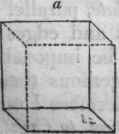
Crystallization is promoted or retarded by various circumstances, to be afterwards noticed. (See Section in.) Its theory is still obscure; but some light has been thrown upon it by the experiments of Hauy. He found that crystals may be mechanically divided, and reduced to certain primitive forms, which are always the same in the same kind of substances, and depend upon the figure and the mode of combination of the integrant particles composing the crystals. The varieties of figure of these particles, notwithstanding the great diversity of crystalline forms, are reducible to three: namely, 1. the parailelopiped, the faces of which are six, parallel two and two; 2. the triangular prism; and, 3. the tetrahedron, or four-sided pyramid; and these particles, therefore, according to the mode in which they unite, which may be either by their faces or their edges, form primitive crystals, which are the nuclei of the secondary crystals. The forms of primitive crystals may be reduced to the following six:-1. the parailelopiped, which includes the cube or hexahedron, a, consisting of six faces or planes, all the eight angles of the twelve edges of which are equal to 90 degrees; -the right square prism, b, differing from the cube by its four lateral planes being rectangles, whilst the terminal planes are square; - the right rhombic prism, c, the terminal planes of which are rhombs, and all solids terminated by six faces, parallel two and two. 2. the regular tetrahedron, d, which consists of four equilateral triangles. 3. the octohedron, with eight equilateral triangular faces, e, all the plane angles of which are equal to 60 degrees. 4. the hexagonal or six-sided prism, f, the lateral planes of which incline to each other at an angle of 120 degrees; and, 5. the dodecahedron, g, the faces of which incline to each other at the edges at an angle of 120 degrees.
The variations of the forms of secondary crystals are considerable in the same salt, and depend, in general, either on variations in the proportions of the ingredients which compose the integrant particles, or on the properties of the solvent in which the crystals are formed. Thus, alum crystallizes in octohedrons, but the addition of a little alumina produces cubes; and an excess of this earth prevents crystallization altogether: thus, also, chloride of sodium, which crystallizes in cubes when dissolved in water, assumes the regular octohedral form when it is crystallized in urine. Independent, however, of these causes, a variety of secondary forms make their appearance; which the theory of Hauy explains, by supposing, that,- as the matter which envelopes the primitive nucleus to form a secondary crystal is attracted in thin layers, each layer decreasing in size in consequence of one or more rows of integrant particles being abstracted from its primitive edges or angles,-the decrements may be on the edges of the slices, which correspond with the edges of the primitive nucleus : or on the angles, that is, parallel to the diagonals of the faces of the primitive nucleus; or the decrements may be intermediate, parallel to lines situated obliquely between the diagonals and edges of the faces of the primitive nucleus.
It would be impossible, however, to give a satisfactory view of this ingenious theory in the narrow compass of this epitome; and therefore I must refer the reader to Brooke's Familiar Introduction to Crystallography; Mohs's Treatise on Mineralogy, by M. Haidinger; Hauy's Traite de Mineralogie, tomes 1. and 2.; to the An-nales de Chimie, torn, 17.; and the third volume of the fifth edition of Thomson's System of Chymistry.

Such is the Attraction of Aggregation, and its general effects. It is frequently concerned in modifying pharmaceutical results; but it is a power of much less importance than the next variety of contiguous attraction, namely,
Continue to:


My Books

