


Antipyretics And Antipyretic Analgesics
Description
This section is from the book "A Text-Book Of Materia Medica, Pharmacology And Therapeutics", by George F. Butler. Also available from Amazon: A text-book of materia medica, pharmacology and therapeutics.
Antipyretics And Antipyretic Analgesics
In the attempt to make an artificial quinine when it was pointed out that that alkaloid was a derivative of quinolene, a host of new bodies which have become of immense importance in modern therapeutics, has been brought into existence. A number of these bodies will be discussed in this chapter, and for purposes of convenience they have been grouped as follows: I. Quinolene derivatives, with the general formula C9N7N. Quinine, euquinine, anal-gene, kairoline, thalline, cupreine, quinaphtol. II. Pyrrhol derivatives, C4H5N, C3H4N2, antipyrine, tolypyrine, tolysal, anilipyrine, pyramidon, and other antipyrine relatives. III. Hydrazine derivatives: phenylhydrazine, pyrodine, antithermine; and IV. Aniline derivatives: aniline, acetanilid, exalgine, euphorine, thermodine, neurodine, phenetidine, phenacetine, triphenine, lactophenine, citro-phen or, apolysine, malakine, phenosal, cosapine, phesin, phenocol, eupyrine, pyrantine, etc.
The chemical relations of these will be pointed out later. It is of importance to remember that, although a large number of substances are here printed, many of them have no real excuse for being. Thus, in the first group, the quinolines proper, quinine is practically the only one worth mentioning, and in the second group antipyrine is the only member of real importance.
As for the hydrazines they are not a trustworthy series of drugs. They depress temperature very markedly, it is true, but they do so at the expense of a profound hemolytic action in the blood.
Concerning the aniline groups, it contains many important drugs, principally acetanilid and phenacetine, but there are many others of marked therapeutic value. This group falls naturally into two series. In the one are derivatives of phenylamine,

or ammonias in which one hydrogen is replaced by the phenyl radicle. In acetanilid another hydrogen is replaced by the acetyl group, or

and in exalgine the third hydrogen is replaced by a methyl group

The second series in this aniline group is termed the phenetidines, they are compounds of paraamido phenol,

in which a hydroxyl in the dioxybenezol nucleus is replaced by an amido group. If an acetyl group is introduced in the hydrogen of the hydroxyl,

phenetidin is the result, if an ethyl and an acetyl group are introduced,
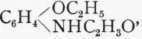
phenacetine is produced, while a methyl instead of the ethyl gives
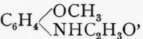
methacetin. Other substitutions are numerous in these bodies, but these are the most fundamental.
The anilines possess to a certain extent the same drawbacks as the hydrazines, they are destructive to the blood, but usually only in larger doses. Only continued experience will teach which are the most to be trusted.
Continue to:


My Books

