


Tablets, Lozenges, And Pastilles
Description
This section is from the book "The Art Of Dispensing", by Peter MacEwan. See also: Calculation of Drug Dosages.
Tablets, Lozenges, And Pastilles
These articles more or less resemble each other, especially in respect to the fact that they are generally the product of the manufacturing chemist, and few physicians prescribe remedies to be compounded in any of the forms, as they usually expect them to be ready-made. Nevertheless, all competent dispensers should be able to prepare them at a moment's notice. Several forms of medication go under the name Tabellae or Tablets.
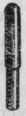
For convenience they may be divided into three classes - (1) tablets made by compression ; (2) tablets made by moulding without compression, commonly called tablet-triturates ; and (3) tablets made from a chocolate basis, as provided by the British Pharmacopoeia. Apparatus for the production of Compressed Tablets work by (1) percussion or (2) pressure. The former requires the simpler form of mould, and is here illustrated, a is the lower die, b the compressing cylinder, and c the plunger, which is put into the cylinder and given one sharp and heavy blow with a mallet, whereby the powder previously placed in the cylinder is moulded into a tablet by percussion.

A

B
C
Moulds of the second type are true compressors, and are of two classes -viz., (1) long lever and (2) power. Of the first of these, the 'Duplex' is a good example, as it shows the essential parts in a simple combination. Here b is the top punch carrying the upper die and moving in the socket d, the top being connected as shown by the lever-handle e. The lower die is fixed under the bed-plate at a, and the powder to be compressed is put in the hopper c. At each movement of the handle e the hopper c is carried forward by the lever between d and c and fills the hole over a with powder ; next c is pushed back, and simultaneously punch b comes down with force and compresses the powder. The lever e has a double action- that is, one tablet is made by pulling it to the left, and another by pushing it back to the right. Each tablet is brought to the surface as formed, and the hopper c pushes it down the shoot in the act of filling the mould with powder for another tablet. The weight of the tablet is arranged by fixing the bottom punch a so as to give a hole that will hold exactly the amount of the loose powder desired, and the degree of compression is regulated by adjusting the top plunger b so that it will give a thin or a thick tablet.
The degree, once set in the machine, does not alter with the strength of the worker. Dies of various diameters or shapes are obtainable.

The 'Duplex' Tablet-Machine.
The dies for tablet-making must be kept sharp and smooth in surface, in order to get quick action and perfect finish. There are many other forms of compressing-machines on the market, the 'Freck' and ' Eureka' being quite commonly used. The principles aimed at are the same as those embodied in the ' Duplex' and it is important for the dispenser to note that while such machines give uniform results the simple percussion-mould (page 144) rarely gives two tablets alike.
Continue to:


My Books

