


Introduction. Part 2
Description
This section is from the book "The Hygienic System: Orthopathy", by Herbert M. Shelton. Also available from Amazon: Hygienic System Orthopathy.
Introduction. Part 2
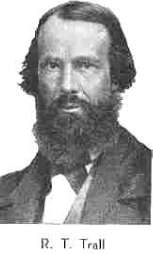
In 1849 the American Hydropathic Society was founded. Joel Shew, M. D., was made president and R. T. Trall was made Chairman of Directors. "Any physician residing in the United States of America, having received the degree of Doctor of Medicine, or a license to practice the healing art, and who can exhibit satisfactory proofs of his competency to practice hydropathy" was eligible for membership in this society. In the preamble to the constitution, the "undersigned physicians and surgeons, believing in the doctrine of the vis medicatrix naturae, or the inherent tendency of the human constitution to free itself from disease" affirm their faith in water as almost a panacea. In the following year the name of the society was changed to the American Hygienic and Hydropathic Association of Physicians and Surgeons. In 1861 Trall was president of this association.
These meetings and organizations and publications and schools, and others like them, represented the birth movements of a new system of caring for the body, both in health and in sickness. During the ensuing decades the lusty infant was destined to keep the old man of medicine walking the floor night and day, not because the child had colic, but because he had given the hoary, decrepit old monster insomnia and convulsions--or was it rheumatism complicated with St. Vitus dance? Ignoring, for the nonce, its antecedents, which may be traced back to the dawn of history, here was the beginning of the Hygienic System, of which the principle of orthopathy is an integral part.
The term Orthopathy was coined by Jennings to express a new and radically different conception of the essential nature, the rationale, of disease. The term was intended to express his conception that "Nature is always upright--moving in the right direction", in disease as in health. In his own words:
"Orthopathy: from two Greek words, Orthos, upright, erect, true, and Pathos, affection,--right affection. The vital economy always maintains an upright position. The tendency of all her movements, in the lowest depths of disease, as well as in the most vigorous natural action, is as true to the pole star of perfect health, as is the needle to the poles."
In his debate with Trall, Jennings says:: "In all conceivable conditions of the human system, under existing circumstances, whether in a perfectly sound and vigorous state of health, or in a greatly impaired state, attended with extreme derangement and distress, all vital action is under the immediate control of a perfect and immutable law, that makes a just and equal distribution of power among the several departments of the body according to rank and importance, having respect to present necessity and safety, and the ultimate good of the entire organism; giving to each and all an ample supply of sustaining energy when the resources are adequate, and netting out in equitable proportional supply when the resources are scanty."--Herald of Health, August 1864.
Orthopathy is not the name of a school of healing; nor is it a system of therapeutics; nor yet a system of philosophy. One of my contemporaries and erstwhile co-workers has attempted to identify the term with long-winded and thoroughly useless speculations about the origin and Nature of life, of God and the hereafter. He has linked it up with theories of a hypothetical hermaphrodite ancestry of man, and of virgin births; he has entwined it in a mass of metaphysical speculations; and has used it in connection with dozens of vague, ill-defined, and unformulated so-called laws--laws, which, in most instances, at least, do not exist. He has founded his treatment of the sick, not upon the Hygieo-Orthopathic principles, but upon his unverified and unverifiable opinion of the Nature and source of life and, as a consequence, has gone back to the principles and practices rejected by Jennings and not covered by the term Orthopathy.
Orthopathy has no connection whatever with any theory or hypothesis of the source and nature of life (biotic force) ; but, as a principle of biology, is true whatever the nature and source of life. Orthopathy is that branch of biology which treats of the reactions of living matter to abnormal conditions.
To the other systems then in vogue, Jennings applied the term Heteropathy. It is equally applicable to all systems of today, other than the Hygienic. Defining this last term he says: "Heteropathy:--From two Greek words, eteros, another, different, and Pathos, affection, changed condition or disease, differing in kind from the natural unchanged state; wrong or subversive action. Opposed to orthopathy."--Philosophy of Human Life.
Over against the heteropathic doctrine of disease which runs throughout the theories and practices of all schools today, Jennings placed the great fundamental fact of Orthopathy, which he states thus in the preface to his "Philosophy of Human Life": "It will be the subject of the following pages--to show the unity of human physical life; that its tendency is always upward towards the highest point of health; in the lowest as well as the highest state of vital funds; and that what is called disease is nothing more nor less than impaired health, feeble vitality; that recovery from this state is effected, when effected at all, by a restorative principle, identical with life itself, susceptible of aid only from proper attention to air, diet, motion and rest, affections of the mind, regulation of the temperature, etc., with occasional aid from what may be justly denominated surgical operations and appliances."
Thus, at the very outset, the Hygienic System differs from all heteropathic systems, past or present, in that it regards disease as a state of health, a low state of health, in which the efforts of the body are all directed toward the normal health standard. Every action of the body is "Right Action", instead of "Wrong Action" as is held by all other schools.
The term Orthopathy was coined to express a new conception of the essential nature of disease, a conception that is the very antithesis of the ancient and still prevailing Heteropathic conception. The Orthopathic conception of health and disease leads to pure hygiene, while the Heteropathic tradition places its chief reliance on therapeutics. The one is a natural system, the other an artificial structure. Therapeutics changes from day to day, hygiene remains always the same. Its principles are eternal. Theory for theory, we do not want Allopathic, Homeopathic, Eclectic, or Bio-chemic theories, but simple Nature. A Hygienic System which maintains the structures of "Medicine" cannot give us health.
Continue to:


My Books

