


The Urinary Components. Part 2
Description
This section is from the book "Auto-intoxication as a Cause and Complication of Disease", by W. Louis Chapman, M. D. Also available from Amazon: Auto-intoxication As A Cause And Complication Of Disease
The Urinary Components. Part 2
Indol
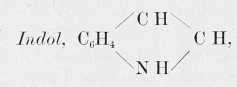
although it exists in small amount in normal urine is formed particularly by the bacterial decomposition of proteids in the intestine. Its chief source is tyrosin, one of the cleavage products of the proteid molecule. It is readily absorbed from the intestine and unites with sulphuric acid and potassium salts forming indoxyl-potassium-sulphate or indican, C8H6N K S 04, which is colorless. Indigo blue is formed by the oxidation of this as in the following reaction:
2C8H6N K S 04 + 02 = C16H10N2O2 + 2H K S 04
There are three other aromatic products of putrefaction - phenol-, cresol-, and skatol-potassium sulphate, of which the foregoing reaction is representative. All are caused by excessive proteid diet, catarrh, of the digestive tract, constipation, alimentary fermentation or putrefaction, decrease of the normal digestive fluids, and the internal exhibition of salophen, creasote, salol and benzosol.
Experiment shows that indol is highly poisonous. Herter administered it to animals and observed cardiac and respiratory depression, marked contraction of the pupils, clonic spasms and increased reflex irritability. Small quantities taken daily for several weeks produced nutritive changes, frontal and occipital headache, colic, diarrhea, unnatural mental activity, and a tendency to the neurasthenic state.
Urinary Pigments
Urinary Pigments contain a large proportion of the toxic matter of the urine, for it is found that if it is decolorized with charcoal a much larger dose is required to cause poisoning in animals. In decolorization the urine loses about a third of its toxicity, but in jaundice, where the coloring matters are enormously increased, we have a urine which is capable of causing death in the exceedingly small dose of 13 cc. per K. This urine is three times as poisonous as normal urine and nine times as poisonous as decolorized normal urine.
Urobilin
Urobilin is constant in normal urine and produces the well-known reddish-brown color which is particularly noticeable in febrile urines. It probably originates in the intestine from the action of nascent hydrogen on bilirubin, and may be made experimentally in this way or by the action of hydrogen on hematin.
Its reaction with hematin and bilirubin is apparent from the following symbols:
Hematin, | C32H32N404Fe |
Bilirubin, | C32H36N4O6 |
Urobilin, | C32H40N4O7 |
The remaining pigments will be briefly described among the auto-toxins of intestinal origin.
In addition to these substances the urine contains sodium and potassium salts, the relative toxicity of which is seen from the accompanying table of Tapret and Bouchard:
SUBSTANCE. | LETHAL DOSE | PER K. |
Potassium bicarbonate, | 0.05 | g. |
" chloride, | 0.181 | g. |
" phosphate, | 0.263 | g. |
" sulphate, | 0.181 | g. |
Sodium chloride, | 5.17 | g. |
" sulphate, | 9.00 | g. |
" phosphate, | 6.00 | g. |
Magnesium chloride, | 0.463 | g. |
" sulphate, | 0.542 | g. |
Calcium chloride, | 1.011 | g. |
It is to the potassium salts that the convulsive properties of the urine are due.
Ammonia
Ammonia and its compounds are toxic in the dose of .15 g. of anhydrous ammonia per K. Although normal urine does not usually contain appreciable amounts of ammonia, it is markedly increased and the urine becomes alkaline after a vegetable diet containing potassium salts of combustible acids. The intestine is by far the more usual source of ammonia and its salts. About one gram is. excreted by the kidneys in twenty-four hours. Rachford has found that the salts of ammonia are much more toxic than the hydrate (6) and considers it a very important element in auto-intoxication.
Continue to:


My Books

