


The Urinary Components
Description
This section is from the book "Auto-intoxication as a Cause and Complication of Disease", by W. Louis Chapman, M. D. Also available from Amazon: Auto-intoxication As A Cause And Complication Of Disease
The Urinary Components
Urea is the amid of carbonic acid, best represented by the constitution formula:
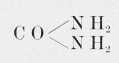
It is neutral in its reaction, readily soluble in water, and when administered is excreted unchanged and as ammonium carbamate. It is formed from the numerous amido acids and basic substances which result from the disintegration of proteids: among the former we have leucin, tyrosin, aspartic and glutamic acids and glycocol, and of the latter diamidoacetic acid, lysatin, arganin, protamins and histons. Upon being heated with acids or alkalies, urea adds to itself two molecules of water and becomes ammonium carbonate, a change which is also accomplished by ferments and enzymes.
This suggests the possibility of urea being made synthetically from ammonium carbonate, by dehydration, a thing which probably takes place in the liver. Creatin is another important source of urea, breaking up into it and methyl-amido-acetic acid.
The pendulum of opinion as to the toxicity of urea and the part it plays in the causation of uremia, has swung from one extreme, in which it was thought that it did not participate in any material way in its production, to the other, in which it was considered as the sole cause of uremia. Bouchard has claimed that it has but little toxic action, but the more exhaustive researches of Herter (3) have shown that it is a very important toxic factor, symptoms of uremia invariably following whenever the percentage of urea in the blood of animals exceeds .4 per cent, or .5 per cent., death resulting when it reaches .6 per cent, or 1 per cent, of the body weight.
When injected into dogs in aqueous solution, fibrillary twitchings, clonic convulsions, intractable diarrhea and intense congestion of the intestinal mucous membrane were observed. The diuresis occasioned was enormous, the kidneys doing in an hour that which they would usually perform in a day. The excretion of urea was markedly increased, not from the elimination of the urea given, but from increased nitrogenous metabolism of the tissues. When the dosage was large, or the urea was rapidly administered, there was hemoglobinuria and hematuria, but these disappeared upon the advent of free diuresis; there was very little influence upon blood pressure.
In a ring-tailed monkey of about 2 K. weight, 5 grams produced fibrillary twitchings and internal strabismus in four and one-half minutes. The injection was continued and in four and one-half minutes 7.5 g. had been given, producing violent general clonic spasms. After seven and one-half minutes 11 g. had been given, the respirations were labored and deep, there was vertical nystagmus and dilated pupils and grating of the teeth between the clonic seizures. After eight minutes, 13 g. had been given, the animal was comatose, the heart weak, there was fibrillation of the muscles of the throat and feeble clonic spasms, and in ten minutes the animal was dead, having received 15 g. of urea in 66 cc. of water. Fibrillary twitchings continued for several minutes after death.
The nervous symptoms in poisoning by urea very much resemble those from the injection of strong solutions of K Cl, N H4 Cl, Na Cl, or creatinine.
Urea is normally present in the blood from .01 per cent, to .06 per cent., averaging .03 per cent. This proportion varies with the state of health and the functional activity of the kidneys. In pneumonia .1 per cent, and .28 per cent, are noted and in nephritis it may be increased to .449 per cent, with a corresponding reduction in the amount in the urine.
Uric Acid, C5H4N403. Haig more than any other observer has enriched our knowledge of this body, and has proved beyond cavil that its retention in the system is attended by a great variety of morbid symptoms, yet the injection of its solutions does not cause phenomena commensurate with those of the more active poisons. The purin bodies are the antecedents of uric acid, as is shown by their chemical symbols, are much more poisonous, and their toxicity decreases with their oxygenation.
Purin, | C5H4N4 |
Hypoxanthin, | C5H4N4O |
Xanthin, | C5H4N4O2 |
Uric Acid, | C5H4N4O3 |
As yet we do not know the precise genesis of this important substance. That it is not formed primarily in the kidneys has been proved by Minkowski who found that it accumulated in the blood and tissues of snakes and fowls after the extirpation of the kidneys. He also showed that the total nitrogenous elimination was diminished by but one-third after the removal of the liver, and the nitrogen eliminated as uric acid, which is usually 60 per cent, to 70 per cent, of the total nitrogen, was reduced to 3 per cent, to 6 per cent, of it. He concludes that uric acid is formed by the synthesis of ammonia and lactic acid, both of which originate in proteid.
But in mammals the reverse is true, for it is found that uric acid output is increased rather than diminished in diseases where there is loss of functional liver mass, such as acute yellow atrophy, phosphorous poisoning, cirrhosis, and after experimental destruction of circumscribed areas. Uric acid is probably formed by the physiological breaking down of the nuclei of the leucocytes and tissue cells, and anything which increases destructive metabolism increases uric acid output.
Zoetber and Ibrahim (4) have studied the history of uric acid when introduced into the organism, and have shown that it acts as a poison to the tissues, not one of the major grade of active poisons, yet quite capable of producing intoxication, and that it is excreted unchanged and not as urea. It also causes increased production and consequently increased elimination of uric acid.
That uric acid is capable of causing migrim is proved by Hall who took half a gram, producing intense head ache with confusion of ideas which lasted for several hours.
The retention of uric acid must necessarily be considered a true auto-intoxication, and not only does it cause disturbance when circulating in solution, but it is also precipitated under certain conditions and crystals may cause trouble by their mechanical presence. Among the agencies which cause the precipitation of uric acid and its salts are poisoning by corrosive sublimate, bismuth, aloin, phosphorous, potassium chromate, and oxalic acid, and of the auto-intoxicants adenin and probably others.
Von Jaksch claims that uric acid does not take part in the acid intoxications of fevers, as elevation of temperature is unfavorable to its presence in the blood. Wright (5) has shown that the alkalinity of the blood, determined chemically, is an accurate index of the amount of acid intoxication in scorbutus and other diseases, and has proved by his experiments that the internal administration of the alkalies is shortly followed by a corresponding change in the hemic state.
Continue to:


My Books

