


Baking. The Baking Of Bread Is An Art
Description
This section is from the book "Food And Health: An Elementary Textbook Of Home Making", by Helen Kinne, Anna M. Cooley. Also available from Amazon: Food And Health: An Elementary Textbook Of Home Making.
Baking. The Baking Of Bread Is An Art
It needs a steady oven, not too hot. Test it by a piece of paper that should turn a golden brown in 15 minutes. Some day, when we all have oven thermometers, we shall be baking our bread at 3800 F.
A loaf made of 3 cups of flour, the shape of those in the picture, should bake about three quarters of an hour. It is better to overbake than to underbake.
The story of bread is not finished yet. Take the loaves from the pan to cool them. When cool all the way through, put the bread into a clean stone jar or tin box. Cover with clean paper. Some people use cloth, but paper is nicer.
More about serving bread. Do not cut the loaf for twelve hours. Bread has a better texture and is more digestible then. Can you cut even slices? It takes practice. Sometimes, when dainty sandwiches are wanted, cut the slices very thin.
What are some of the ways to use bread? Mollie Stark has a section of her cook book for bread recipes, with pictures of pretty loaves and rolls; and she says that she may decide to have a "Bread Book."
There is not room in this chapter for all the uses of bread; but Mollie has recipes for biscuits, rolls, dry toast, milk toast, zwieback, French egg toast, scalloped dishes, desserts, and so on. Her motto is, "Bread is too good to throw away."
Why use a bread machine? Why not ! Why use a sewing machine, or a mowing machine, or a cultivator instead of a hoe?
Mollie Stark and Marjorie Allen have a plan for surprising their mothers with presents of bread machines as soon as they themselves can save the money. And they have a plan, too, for earning some money by making bread and rolls to sell. Marjorie's mother has a friend who would be glad to buy bread, but she says that she soon tires of baker's bread. She asked Marjorie if she would be willing to make the bread for her. Of course, Marjorie and Barbara expect to become experts, and to make perfect bread.
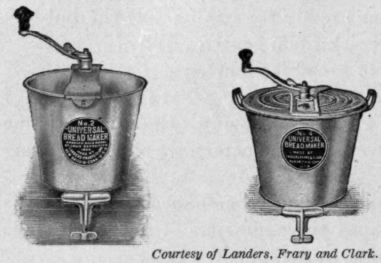
Fig. 28.- An inexpensive bread mixer, cover on and off.
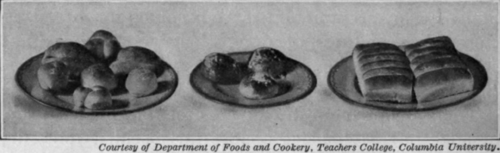
Fig. 29. - In her "Bread Book" Mollie Stark has pictures of pretty rolls.
Exercises And Problems
1. Should you pour boiling water on a yeast cake to dissolve it? Why, or why not?
2. Why should the bread box be scalded out often?
3. Calculate the cost of a loaf of bread made with three cups of flour.
4. What must you count in, if you want to compare the cost of a home loaf with a baker's loaf?
5. Can you read a thermometer? Look in the dictionary to see if there is more than one kind, and what the difference is.
6. Why can you knead a dough of white flour and stretch it, although corn meal dough falls apart? If you think you do not know, go back to the lesson before this.
7. Was Marjorie Allen correct when she said that her mother hadn't "luck" with her bread? What should she have said?
8. Can you find out why dough sours sometimes?
9. What are the most important points to remember in making bread?
10. If your bread is light and the oven is not ready, what will you do with the dough?
11. Explain why you can put a yeastcake into the ice box without injuring it?
Continue to:


My Books

