


Cultivation - Adulteration. Coffee-Production
Description
This section is from the book "Food - What It Is And Does", by Edith Greer. Also available from Amazon: Food: What it is and Does.
Cultivation - Adulteration. Coffee-Production
Coffee is the berry of a tropical tree native in Abyssinia but now widely cultivated in tropical regions. Its leaves are evergreen, its blossoms white, its berries dark and pulpy, containing two seeds each. The seeds are the coffee-beans. The tree blooms two thirds of the year. The ripe fruit is gathered three times, dried, and the seeds machine-freed. The bean is roasted to develop flavor and lessen tannin; this also decreases caffeine. Roasted beans are brittle and easily ground.
Varieties of coffee may come from different localities, though mixtures even so named often are but different berries of the same plant. This is said to be true of Mocha and Java as bought. Brazil supplies three fourths of the coffee used here. Some comes from Porto Rico, Maracaibo, Ceylon, Mocha, Java.
Unground coffee is not as easily adulterated as ground. Some artificial berries have been made, but to-day purchasing coffee unground is thought to avoid adulteration. Into coffee the French often introduce chicory for its flavor. Elsewhere this may be used because cheaper than coffee. Chicory is the most common coffee-adulterant. Cereals, beans, peas roasted, also hulls and charcoal are other materials so used. When ground coffee is shaken in cold water, pure coffee floats, adulterants usually sink and may discolor the water. Tea suffers less adulteration than coffee. Reselling of steeped leaves mixed with fresh is the commonest deception practiced in it.
Cereal coffees are substitutes that aim to avoid tannin and the stimulation of coffee while furnishing a beverage of more or less palatability. This is sometimes secured by adding some coffee or its flavoring matter.
Mocha
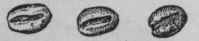
Java.
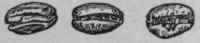
Rio.

Coffee-beans.
Continue to:


My Books

