


Methods. Fish-Shipping. Shipping Live Fish In The Frozen State
Description
This section is from the book "Food - What It Is And Does", by Edith Greer. Also available from Amazon: Food: What it is and Does.
Methods. Fish-Shipping. Shipping Live Fish In The Frozen State
In the markets of Irkutsk, Siberia, fish are displayed for sale in the frozen state piled up like cord-wood. Fish in cold storage are preserved frozen in slabs of ice. The latter method is now applied in the shipment of live fish. The method of shipping live fish in water is not feasible on account of the expense. Pictet discovered that fish may be frozen in blocks of ice without being killed, and that they will become as lively as ever after they are thawed out. The fish in a large amount of water are placed in a closed tank, and oxygen under pressure is supplied. The greater portion of the water is then drawn off. The fish remain in good condition on account of the abundant supply of oxygen. The vessel containing the fish is then placed in a freezing tank and the fish are frozen into the ice formed. The blocks of ice containing the fish can then be piled up in the ordinary refrigerator car. On arrival at their destination the fish are put through a slow thawing process lasting ten hours, when they return to their normal state of active animation.
(Quoted from The Journal of the American Medical Association, December 27, 1913)
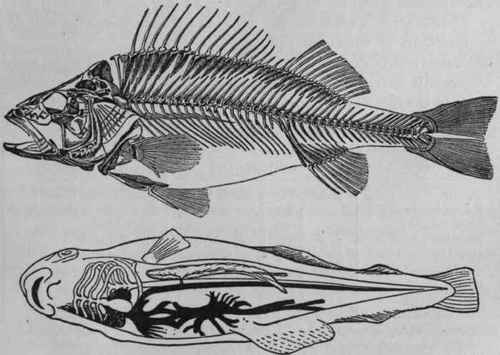
Perch - Skeleton and Circulation.
Continue to:


My Books

