


Auxiliaries And General Arrangement Of Plants. Continued
Description
This section is from the "Blast Furnace Construction In America" book, by J. E. Johnson, Jr.. Also see Amazon: Blast Furnace Construction In America.
Auxiliaries And General Arrangement Of Plants. Continued
Several years ago, having occasion to provide a water supply for a small furnace near but not on the bank of a mountain river, subject to rises of some twenty or twenty-five feet, I installed a plant designed to meet these conditions which has been very successful in operation, and of which the principle may be useful to others. This plant was described in the April 18, 1914, issue of the Engineering and Mining Journal, from which the illustration Fig. 235 is taken.
A forebay of brickwork was built with its base about two feet below the lowest water level, very much as in ordinary construction, but instead of screening this with a straight stationary screen a circular revolving screen was used, which was supported on trunnions built into the masonry. The outlets for the screened water were through the ends of the screen wheel and the side walls of the forebay into the pump pits on each side of it, these suction pits being covered over with iron plates laid in cement so as to be water-tight even when submerged. The screen wheel fitted snugly between the walls of the forebay and was perfectly open in front. At the bottom it passed with bare clearance over a wide sill of concrete running clear across the forebay. At the top it was covered over with a curved plate which fitted down over the top segment of the wheel with small but sufficient clearance. The arms of the wheel were solid plates running from side to side the full width of the wheel, reinforced by angles riveted to the hub as shown in the drawing. The sill and the curved cover plate at the top were a little wider than the space between two adjacent arms.
The wheel proper was made up of welded rings an inch and a half by a quarter, bent edgewise, with half inch spaces between them.
A stout angle across the front of the forebay carried cleaners which worked in the spaces between each pair of rings.
Supposing the pumps to be at work, and the water level somewhere about the center of the wheel, if the lower section of the screen through which the water is passing becomes obstructed by leaves, the pumps continuing to run, the level of the water inside the wheel is soon lowered well below that of the water outside, and this difference in level then works upon the arms of the wheel which thus virtually becomes an undershot water wheel and rotates the obstructed section downward, thus bringing a new clean section into play. When this becomes obstructed in turn the same action takes place and when the first section obstructed finally comes around to the cleaners, the leaves, etc., are thrown off by them and the wheel restored to a clean condition.
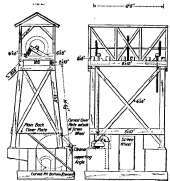
Fig. 235. Self-cleaning screen for pump suction.
It will be noticed that centrifugal pumps with vertical shafts are used with their driving mechanism set on a platform many feet above the water level. The driving mechanism in this particular case was by wire rope and bevel gears, there being clutches to throw in or out either pump as desired. Now it would probably be preferable to use a vertical-shaft motor directly connected to the vertical pump shaft. A great advantage of the centrifugal pumps is that they have no valves to become obstructed, and can run submerged for an almost indefinite period. They are located about two feet above normal water level so as to make them easy of access for repairs, etc., under all ordinary conditions.
This plant has gone through several floods in which the screen wheel, pumps, and all were submerged for several feet, and has never failed, as far as I know, under those conditions.
A hand turning gear was provided to rotate the screen by hand if for any cause it should fail to work automatically, and of course it would be a very simple matter to arrange by a geared ratchet or some other mechanism to drive the screen wheel positively and continuously, which might be desirable in some cases.
This wheel was designed for a capacity of about one thousand gallons per minute, for which it was more than ample, and a plant of this kind with a capacity of many thousand gallons per minute could be built at a comparatively small expense. There is no patent on this design and anyone is at liberty to use it who wishes to do so.
Continue to:


My Books

