


Disposing Of The Slag. Continued
Description
This section is from the "Blast Furnace Construction In America" book, by J. E. Johnson, Jr.. Also see Amazon: Blast Furnace Construction In America.
Disposing Of The Slag. Continued
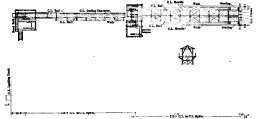
Fig. 225. General arrangement of Uehling casting machine.
Fig. 226. Pollock cinder ladle.
To eliminate these difficulties cars which dumped their contents by tipping bodily over were developed. These also were at first made of steel plate lined with firebrick, but even when emptied by tipping over they skulled up quite rapidly, and it was finally found that cast-iron pots could be successfully used, and that being smooth inside, the skull freed itself from them very much more readily than from the brick. These at first were made of the same shape as the steel plate ones had been, with almost straight sides and flat bottom, which gives maximum capacity, but it was found that by increasing the taper of the sides the pots could be made not only to dump cleaner, but in the dumping position to throw out the skull without barring or hand cleaning. Consequently such pots are now universally made with a heavy taper and are almost cones, having only a small rounded bottom. The design of the William B. Pollock Company is shown by Fig. 226 and that of the Treadwell Engineering Company by Fig. 227.
Fig. 227. Treadwell cinder ladle.
Much ingenuity has been expended in devising the best mechanism for controlling the movement of these pots and dumping them with the least labor. After they had been in use for some years with the dumping gears driven entirely by hand, Mr. Samuel Stewart, then master mechanic of the Woodward Iron Company at Birmingham, Ala., patented a successful design in which a steam cylinder mounted on the car and connected to the locomotive supplied the power for dumping and restoring the pots to their normal position without any labor and in much less time than was required for the hand-operated pots. This idea has now been applied universally to these pots, but with the very general equipment of locomotives with compressed air for brakes, air is used to operate the cylinders instead of steam. With this device a whole train of these cars can be tipped, emptied, the skulls thrown out, and the cars restored to normal position, in a period measured only by seconds.
By the use of these side-dump pots the dump may be built up approximately to track level on the dumping side so that the tracks can be moved over with but little labor, when the drop from the cars is no longer sufficient to free them properly, but cars of this type do not permit dumps to be carried ahead except by the laborious method of building up the dump at the end of the track by hand filling.
In order to make room as fast as it is used up, it is generally very desirable to build a track ahead, and for this purpose other types of cars have been devised. The earliest of these was the design of the late John M. Hartman. It consists of a half cylinder of steel plate lined with firebrick, with an extension around the top of cast-iron plates, one side of the cylinder being flared out to make a pouring lip and the other side extended up vertically. This half cylinder rests on a four-wheeled truck, to which it is fastened by two pairs of chains, one with the front end fastened to the cylinder and the back end to the truck, the other with the back end fastened to the cylinder and the front end to the truck, one pair of these being on each side. These act practically like a rack and pinion and leave the cylinder free to roll on the truck without the possibility of being displaced endwise by sliding; it is guided laterally by half rings of angles riveted to the cylindrical surface, which work between guides on the truck.
These cars are not coupled to the locomotive directly, but by means of a push pole sixteen to twenty feet long. After filling at the furnace these cars are taken to the end of the dump, the truck locked fast on the track with a powerful brake, or "scotched," the locking mechanism of the body released and the half cylinder pushed over by the locomotive operating through the push pole, which is fastened to the car with a swivel coupling.
The disadvantage of end-dump cars is of course that only one can be dumped at a trip, and if several have to be handled as many tracks must be provided as there are cars, or nearly so, because the heat at the end of the dump after dumping the car is too great to permit dumping another immediately, and of course a separate switching operation is required for each car dumped, in fact two of them when more than one ladle car is used, one switch to dump the car and set it out, another to pick it up and take it back.
It is a curious fact that these cars build a dump which is almost precipitous in its slope, both on its sides and on the front. A "fill" can be constructed from them with great economy of material because its sides are almost vertical.
On the other hand, the side-dump cars produce very flat slopes. As little as ten or fifteen degrees suffices to carry the slag away from the track with this type of car.
Another type of end-dump car with a round "thimble" like that of the side-dump car is made by the Treadwell Engineering Company and works with a similar mechanism, but fore and aft instead of laterally. It is of course a more difficult design because the truck is in the way of a free end-dump, but this difficulty has been successfully overcome.
Laying Out The Slag Dump
How a slag dump is to be handled is very largely a matter of local conditions, but I have always felt that the benefits of the end-dump car for building ahead were not properly appreciated, and that the ideal combination would be two or three, or even four or five side-dump pots with an end-dump pot on the front. With this arrangement all could be dumped simultaneously without switching, and the end-dump pot would build ahead about as fast as the side-dump pots used up the track room it provided.
The "hot pot" method of handling slag is economical for a large plant of furnaces, and where dumping room is available within a reasonable distance; but in congested districts where the only available land between high bluffs and a river is a narrow strip of bottom, every inch of which is necessary for plant and railroad tracks, it is not always easy to find a place in which to dispose of the slag without a long chance that one will later on be exceedingly sorry for having put it there. Of course if a river or harbor can be filled to the harbor line this makes an ideal condition, but one which will not last indefinitely. Moreover, this method of handling slag requires a locomotive and crew in absolutely constant attendance day and night, Sundays and holidays. If the cinder cars get off the track, which not infrequently happens on the rough tracks on the dump, and the cinder train is blocked, the furnace may be put to desperate straits before the situation is relieved by the return of the cinder cars. The expense of the locomotive and crew is just as great for a single furnace as it is for three or four, and the cost of slag disposal per ton of iron produced is therefore very much heavier by this method in small plants than in large ones.
Fig. 228. Brown hoist crane loading cinder from pit on to railroad cars.
Continue to:


My Books

