


The House Drainage System. Part 2
Description
This section is from the book "A Working Manual Of American Plumbing Practice", by William Beall Gray, Charles B. Ball. Also available from Amazon: Plumbing.
The House Drainage System. Part 2
Fig. 145. Return Bend Used to Terminate Air Inlet or Outlet Pipe..
When a trap loses its seal by waving out, the water, in flowing back to its normal position, gains momentum enough to throw some of it over the weir, and the balance is not enough to seal the trap. Waving out is always caused, first, by air-pressure on the sewer side, and then by gravity acting as described.
The operation of the fresh-air inlet depends on air from the open entering the house drain near the trap and filling the house system, passing out through the vent pipe above the roof. The inlet should be as large as the house sewer, which should never be less than 4 inches diameter, usually 5 inches. The same precautions taken against snow and ice and other obstructions to the foul-air outlet, are necessary to the fresh-air inlet. The difference in level of the inlet and the exit, together with the warmth of the building, causes an upward current through the stack. Even the taking a more exposed course and stopping at an elevation inferior to the outlet of the soil-pipe extension, when necessary to carry the inlet to the roof, will usually insure a draft.
Objection is often raised against the fresh-air inlet, for the reason that puffs of foul air are thrown out when fixtures are discharged. This is easily possible, but mainly the result of faulty installation. One feature of plumbing is no more likely to be satisfactory than another where ignorance prevails, Or when merely the simple letter instead of the spirit of ordinary specifications is lived up to. House main lines of the same size as soil-stacks (4-inch) will cause puffs of air from the fresh-air inlet if the horizontal run and the inlet branch are both short. It is well to remember that the air so puffed out is not sewer air, It is air which has just entered the house system from the open. And, if the fresh-air branch is of decent length, as described, and as shown in Fig. 144, the puff occasioned by the discharge of a fixture in an ordinary house, even in an objectionable job, may not equal a third of the really fresh air in the inlet branch.
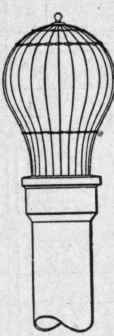
Fig. 146, Galvanized-Wire Guard at End of Pipe..
The chance of puffing under the action of fixtures can be avoided by a loop providing for simple revolution of air when fixtures are discharged. A soil-stack from the main horizontal line is carried up to the roof, with all connections as usual, except one. This is made above the highest fixture, and of the same size as the soil-stack, and is generally carried down and connected, as it should be, into the horizontal main several feet nearer the intercepting trap than where the corresponding soil-stack leaves the main. Some connections are so close to the point of exit that the vertical stacks are made to constitute the whole loop, as shown in Fig. 147, in which cases the direct stack E from X to Y should invariably be a portion of the vent. If the connection X is made in the horizontal run, as before mentioned, stack F should be the vent, as a rule, instead of carrying the closet branches GG as shown.
V and V are crown vents for the closets. The crown vents may in some situations be made into a separate smaller line leading into the soil-stack above the highest fixture.
By the loop plan, air is thrust before the water discharged from a fixture as usual; also, there is the same tendency to a vacuum behind the water so discharged. But, instead of reversing the general current and drawing air from the roof to fill the void, the roof current in the soil-stack from the loop connection up, is merely checked, more or less; and the air already rising in the loop turns down the soil-stack and fills the void. Without the loop, considerable compression would take place in front of the water before the current in the house main could be reversed. With the loop, this compression is confined principally to the stack. The void being supplied by the loop, the air driven in front of the water simply passes up the loop in response to the call for air to fill the void behind the water.

Fig. 147. Loops in Soil-Stack to Prevent Puffs of Air at Fresh-Air Inlet.
Referring again to Fig. 147, air takes the course offering the least friction; and F branching out of and into E, which is the same size pipe as shown at X and F, the greater part of a current of air passing upward through them will travel by pipe E. For this and other reasons it is best to take the branch pipe F for the soil pipe. Then, whatever offset may be necessary to reach the closet openings will be washed; and the straight, vertical stack left for the vent affords no chance for the lodgment of rust or other obstruction. When water is discharged into the soil pipe at G, pipe V protects the closet trap from siphonage; and the tendency to form a vacuum above the water in the soil pipe by the piston action of the discharge water, is neutralized by a proportional draught of air from vent pipe E through branch F. The air in the vent pipe between F and B tends to continue its course to the roof, while that below the branch Y is traveling toward branch Y. A partial vacuum formed in soil pipe F by a discharge from a fixture, will be checked by a supply of air drawn from vent pipe E between branches X and Y. The vacuum formed behind the discharge water in soil pipe F increases the upward velocity of air in vent pipe E below Y; and the air pushed down in front of the discharge attempts to reverse the current below X, The increased velocity of the air in pipe E demands more air than was passing through it by natural draught. This demand is supplied by the extra volume which the water is pushing before it.
As long as the discharge water is above branch X, the air simply revolves in the two pipes which form the loop. The air in pipe F travels downward before the water, and up through pipe E and branch F, and down pipe F behind the water. This revolution of air in the loop continues until the water reaches the junction X of pipes E and F, without causing any perceptible "puff" at the fresh-air inlet opening.
Continue to:


My Books

