


The House Drainage System. Part 8
Description
This section is from the book "A Working Manual Of American Plumbing Practice", by William Beall Gray, Charles B. Ball. Also available from Amazon: Plumbing.
The House Drainage System. Part 8
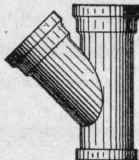
Fig. 177. Single Y..

Fig. 178. DoubleY-Branch..
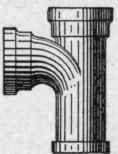
Fig. 179. Sanitary Tee..

Fig. 180. Double Sanitary Tee..
The return bend for cast soil-pipe is represented by Fig. 176;
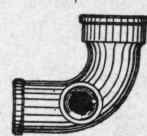
Fig. 181. Quarter-Bend with Side "Outlet.".
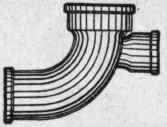
Fig. 182. Quarter-Bend with Heel "Outlet.".
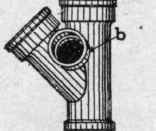
Fig. 183. Single.
Y with Side being furnished straight, as shown in Fig. 187, or in the form of a quarter-bend. These are very convenient for use with wrought vents, and are equivalent to the regular combination lead and iron ferrule, shown in Fig. 188, which can be used with cast pipe by calking-in. This combination ferrule, the "Raymond", is often prohibited as it is sometimes damaged during the process of calking; and sometimes the outer covering is burned through in running the joint. Some lead is generally desirable in a fixture connection as it is the surest means of providing shrinkage and settling. The lead should be surrounded with a sheet-metal (iron) band in a way to prevent rats and mice from knawing through the lead.
"Outlet." single Y, by Fig. 177; double Y-branch, by Fig. 178; sanitary tee, by Fig. 179; and the double sanitary tee, by Fig. 180. The tee and double tee shown are known as the sanitary pattern, on account of the curved branches, which direct the flow in the pipe line somewhat in the same manner as does a Y-connection. Common tees and crosses are made in strictly right-angle branches. Th 1/4-bend is also made with right and left side-outlet, as indicated by Fig. 181; and with heel-outlet, as shown in Fig. 182. Tees, crosses, and Y's can be had with side outlet as shown at b, Fig. 183. These auxiliary openings, while always termed outlets by the trade, are in fact inlet branches. Long branch fittings, with a branch equivalent to a Y and 1/8-bend connection, are also made.
Offsets may be had to offset the pipe as little as half of one diameter, and up to six diameters. Any of the standard branches can be had with trap-screw clean-out, as shown at a, Fig. 184. The bolted-plate clean-out, indicated in Fig. 185, is undesirable, as the cover can rarely be securely replaced when removed for purposes of cleaning. A series of cast soil-pipe fittings are made with branches threaded for wrought pipe, as shown in Fig. 186. These meet the demand for a means of easily connecting wrought vent-pipes to a cast-iron pipe line. Similarly, combination lead and brass soldering nipples threaded for wrought pipe are now carried by supply houses, the lead
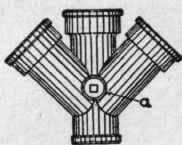
Fig. 184. Double Y-Branch with Trap-Screw Clean-Out..

Fig. 185. Bolted-Plate Clean-Out on Soil-Pipe,.
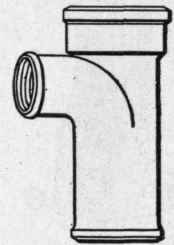
Fig. 186. Cast Soil-Ptpe with Threaded Branch to Connect to Wrought Pipe..
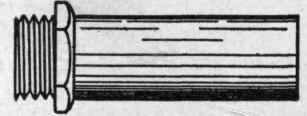
Fig. 187. Combination Lead and Brass.
Soldering Nipple Threaded for Wrought Pipe.
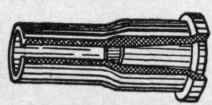
Fig. 188. Combination Lead and Iron Ferrule, "Raymond" Type..
Brass ferrules for calking-in make a better job than lead and iron; when used, a piece of lead should be wiped on, which is often inconvenient; and both ferrule and work are more expensive.
The recessed or hub ferrule shown at b, Fig. 189, is a good form, but the stock length brings the increase in diameter necessary for the recess close to the face of the hub of the fitting, making it very difficult to yarn and calk, even before the lead pipe is wiped on; and as these joints are usually wiped before the ferrule is calked in place, it is difficult to make safe joints where they are used. The forms of brass ferrule generally used are shown at c and e, Fig. 189, the lead end of e being contracted for use With l 1/2-inch pipe or less. Soilz=Pipe Joints. A section of a soil-pipe joint is shown in Fig. 190. The materials used in making these joints are good, clean hemp or oakum, with melted lead poured in and afterward calked. The packing to support the lead should be of uniform strand, evenly twisted. When a joint is made with pipe cut to length, the bead having been cut off the spigot end, care must be taken to pack the yarn uniformly tight without driving it through into the bore of the pipe, and in a way to keep the spigot end in the center of the hub space so as to get a uniform thickness of lead on all sides. As an extra precaution in difficult places, the packing is sometimes dipped in linseed oil, and then wrung as dry as possible, before yarning a joint. This gives almost positive assurance that the joint will not leak water. Likewise, shavings of sperm candle whittled in on top of the yarn before pouring the lead, prevent water leakage.

Fig. 189. Brass Ferrules - b, Recessed or Hub; c, Straight; e, with Lead End Contracted to Make Joint with Smaller Pipe.
Continue to:


My Books

