


General Arrangement Of Plumbing Fixtures, In View Of Their Effect Upon Each Other
Description
This section is from the book "Improved Plumbing Appliances", by J. Pickering Putnam. Also available from Amazon: Improved Plumbing Appliances.
General Arrangement Of Plumbing Fixtures, In View Of Their Effect Upon Each Other
In a report* to the Medical Director in charge of the Museum of Hygiene, at Washington, on trap siphonage, by a private experimenter, just published, we find special trap venting advocated on the ground that it is needed to protect the seal of traps from destruction by "back pressure." We can only account for such an error as this on the ground that the report must have been prepared too hastily to permit of a very careful study of the subject. Severe back pressure is now rarely encountered in good plumbing, and may always be very easily provided for by simpler methods than by trap venting.
* For a full copy of this report, as well as of the author's reply to it, see the "American Architect and Building News," for January 15th and 29th, 1887; also, "Building," for February 5th, 1887.
The appearance of this report, however, seems to call for a brief consideration, not only of this point, as promised in Chapter V (Simplicity And Economy) of this book, but also of the general subject of the arrangement of plumbing fixtures viewed from the stand-point of the effect upon their traps of fluids passing through the waste-pipes.
Backpressure in modern plumbing can, as has been already explained, now be caused in force only under certain rare conditions, such as when a trap is situated near the bottom of a tall stack of pipes and close to a sudden bend. The bend in the soil-pipe prevents the escape of the air below as fast as it accumulates above under the falling water-plug. One of the simple methods by which any evil effect from this may be guarded against is to connect the waste-pipe of the trap with the soil-pipe at a point beyond the bend which causes the back pressure. This can always be very easily done in practice.
Another method is to set the trap far enough below the fixture it serves to permit of the formation in the waste-pipe above the trap of a column of water long and heavy enough to resist the greatest back pressure of air likely ever to be encountered in good plumbing. The trap must be constructed with sufficient water capacity to fill such a pipe. From 12 to 18 inches would be sufficient for the worst case which could be met with in practical plumbing. A trap which could be completely emptied of its water when standing alone, as in these laboratory tests, will easily resist the pressure when attached to and placed some little distance below a fixture. It will be found that if the column of water in a trap be high enough to resist this back pressure it will entirely exclude the entrance of foul-air bubbles from the soil-pipe.

Fig. 91. - Stack supporting Closet. Roof Connection at top of Stack.

Fig. 92. - Stacks of Durham Piping passing through Floor.
These experiments were made with apparatus and conditions which do not exist in plumbing practice. Fig. 94 is a partial reproduction of the drawing accompanying the report. The drawing does not correctly represent the vent-pipes actually used, which were 3 inches in diameter, with short 2-inch branches.
Our Fig. 93 shows the pipes more accurately. Such vents, new and straight, would naturally be expected to do their work, while those of Fig. 94, like the vents used in ordinary practice, would utterly fail under the tests applied. At the right-hand side of our Fig. 93 we have shown a trap vent run in a manner very common in ordinary practice under the present trap vent laws.* Those experiments, which were chiefly relied upon to show the need of trap venting, were made with the main soil-pipe opening closed as by snow or ice. The very important consideration, that such closure would be equally if not more likely to close also the mouth of the trap vent-pipe, and render it useless, appears to have been overlooked.
The discharges to produce the siphoning action in these experiments were made by opening a solid plunger without air-pipe in the bottom of the large tank shown in the drawings,only a portion of the water in the tank being discharged at a time. This could never occur in plumbing practice, and caused a suction so powerful that the pipe first used was crushed out flat by it. The assistants employed to open and close the plugs first used came near losing their fingers in the attempt to manage them, and specially formed plugs like that shown at the top of Fig. 93 had to be substituted. In plumbing practice no such strains could occur, for the overflow passages form, as has already been explained in these articles, vents to break the suction produced by the discharge of fixtures. Otherwise how does it happen that the lead soil-pipes used in England are not in a chronic state of collapse?

FiG. 93. - Stack showing Vent-pipes as used in the Experiments at Washington. Also, at the right-hand side of drawing a Vent-pipe as frequently run in plumbing practice.
* The downward bend of the vent-pipe just beyond the fixture is a faulty arrangement often found. It illustrates one of the dangers to which the complication of trap-venting gives rise. Condensation in this pipe would soon shut off air circulation therein.
Our rules for the choice and arrangement of plumbing fixtures, with a view to the absolute and permanent security of their trap seals would be as follows:
1. The main soil-pipes should be thoroughly vented and nowhere over 4 inches in diameter.
2. No traps or smaller branch waste-pipes should be separately vented.
3. The branch waste-pipes should be as short, and the entire plumbing as compact, as possible.
4. No valve or plunger-closet should be used.
5. The trap seals of water-closets should be over 3 inches deep.
6. The diameter of the water-closet trap should be a third less than that of the soil-pipe, or should not exceed 3 inches in diameter.
7. The outlets of all lavatories should be large enough to fill their waste-pipes "full bore."
8. All lavatories should have stand-pipe overflows.
9. All lavatories should have anti-siphon self-cleansing traps.
10. Except in the case of horizontal or nearly horizontal pipes having slowly running water, every lavatory waste-pipe should be enlarged just before receiving another pipe of size equal to or smaller than itself; or, in other words, no pipe liable to run "full bore" under heavy pitch should be allowed to receive the mouth of another pipe of size equal to or smaller than itself without an increase of its size, but should be enlarged before such connection. The above is not indispensable, but it is recommended as a useful precaution.
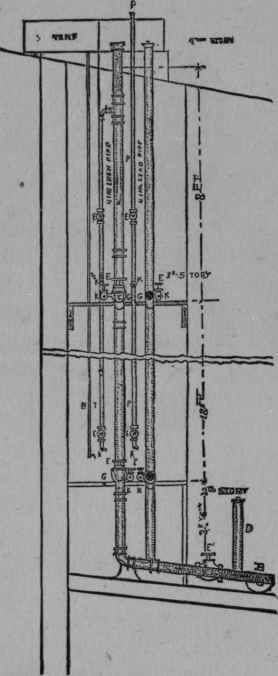
Fig. 94. - Partial reproduction of [Drawing accompanying Report.
11. Where back pressure is anticipated on any trap, either its waste-pipe should connect below the bend of the pipe causing the back pressure, or the trap should be placed below the fixture far enough to form a water column sufficiently heavy to resist it, and the capacity of the trap should be sufficient to supply this column.
12. Traps under kitchen and pantry sinks should be placed close to the sink outlet.
Where the above simple precautions are observed, and the plumbing appliances recommended in these articles are used and set in the manner directed with reasonable care by a good plumber, the work will be entirely safe. Even if any defect in material or jointing should be developed in the course of time, it will at once be detected, and may be cured, since every part of the work will be in full view; and as every pipe used will be for water carriage, no back air or vent-pipes being allowed, a defect will be revealed to the eye by a leakage of water. If desired for extra precaution, a peppermint, smoke, or other test may be periodically applied.
Continue to:


My Books

