


Water Closet Seats
Description
This section is from the book "Principles And Practice Of Plumbing", by John Joseph Cosgrove. Also available from Amazon: Principles and Practice of Plumbing.
Water Closet Seats
Water closets should never be enclosed with woodwork; all except the very cheapest closets are now made with lugs to which seats can be attached. When not so constructed, the seat can be fastened to the wall and supported by brackets or legs, leaving the space beneath open to light and air. Seats are made with and without covers; when seats only are specified, it does not include covers.
Closet seats should be about one inch thick, finished natural wood with two or more coats of good spar varnish. Some seats are made of soft wood and finished with white enamel paint. This practice cannot be recommended, however, as urine and vapors about a closet discolor the paint and make the seat unsightly.
A particular part of a water closet seat are the hinges.
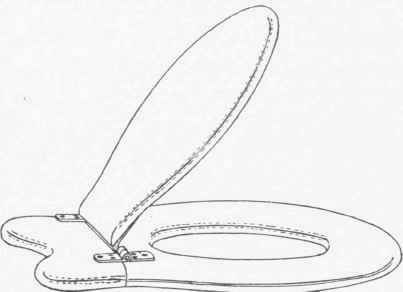
Fig. 145
Some manufacturers use a light pattern hinge of iron or thin sheet brass that corrodes, becomes stiff and is soon broken off.
A good seat for the cheapest grade of closets is shown in Fig. 145. It is attached to the closet bowl from below by lag screws or bolts passing through lugs moulded on the closet. The metal of this type of hinge should be at least one-eighth inch thick, with joints loose enough for the hinge to work freely. Better hinges are shown on the seat and cover in Fig. 146. They are made of cast brass about one-half inch in diameter, and are strong, easy working and neat appearing.
Continue to:


My Books

