


Loss Of Water-Seal In Traps, And Trap-Ventilation. Continued
Description
This section is from the book "Principles And Practice Of Plumbing", by S. Stevens Hellyer. Also available from Amazon: Principles and practice of plumbing.
Loss Of Water-Seal In Traps, And Trap-Ventilation. Continued
5. How great the current of air may be in a 4 in. pipe of great height with a plug-like discharge of water into it on the ninth or tenth floor of a twelve-storied building, the men who have stood in a tunnel when an express train has gone through it at full speed may have some fair notion, but passengers who have only felt the current of air carried along by an express train when standing on the platform of a station can only have a bare idea.
In making some experiments a year or two ago, an anemometer fixed on the top of a stack of 4 1/2 in. soil-pipe, with 5 in. ventilation-pipe, in all 129 ft. long, registered 360 ft. lin. of air as having passed down into the pipe by a discharge from a valve-closet fixed on the seventh floor - the basin being filled up to its brim. A discharge from any of the lower closets did not suck down so much air; each floor made a difference.
6. When several fixtures are in communication with one stack of pipe, and their contents can be discharged at one and the same time into the pipe, the volume of water may be so increased as to endanger the seals of the traps by its passage through the pipe, though the discharge of any one of the fixtures alone may be too small to affect them. But a discharge simultaneously of a fixture on each of several floors, when the bore of the pipe is not filled by any one of them, will not have so great an effect upon the seals of the traps fixed upon the stack as would a simultaneous discharge from several fixtures on a level, e.g., as a range of closets discharging into a stack of soil-pipe on an upper floor of a high building, or a range of baths or lavatories discharging into a waste-pipe on the fourth or fifth floor of a seven-storied house.
7. To prevent the water-seal of a trap being syphoned out by a body of water sent through the trap, or through a pipe on which the trap might be in communication, either directly or by means of a branch pipe, Dr. F. S. McClellan, of N. J., patented a few years ago what he has called an anti-syphon trap-vent for fixing on the pipe-side (sewer-side) of the seal of a trap, as shown at a, fig. 96.
It is somewhat similar to an ordinary bell-trap, but for the admission of air instead of water, the entry being upwards instead of downwards, and that it has a mercury-seal instead of a water-seal.
Directly a body of water is sent through a trap on which it is in communication, the cup, B, is drawn up well above the seal by the suction of the discharge, and air is admitted freely through the grating, A.
In the many tests which I have made with this trap-vent I have found that even the water-seal of an ordinary round-pipe trap is well preserved against the action of
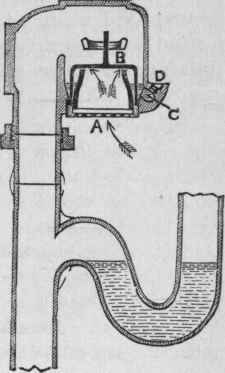
Fig. 96. - Section of the "Anti-Syphoning Trap-Vent." • syphonage. But it does not protect the seal of a trap from back-pressure, nor does it prevent the loss of the water-seal of a round-pipe trap by momentum (Art. 8).
The mercury is poured into the annular groove, c, through the screw-hole, d, after the trap-vent is fixed, to prevent any loss of the fluid in the fixing, for, mercury-like, it is soon gone; and also to prevent any loss of seal by a little lurching of the trap-vent, it should be well and securely fixed in its place. According to Dr. McClellan, the seal has " a gravity resistance on the sewer-side of more than four times that of the water-seal of a trap of usual depth." The trap-vent is made of cast iron, with a brass cap-and-lining for soldering to a lead pipe.

Fig. 97. - V-shaped Round-Pipe Trap.
In all such devices there is some risk. These trap-vents would often be fixed where they would rarely be seen, and being " out of sight would be out of mind." The mercury seal might last a long time, but I should very much hesitate before allowing such an arrangement to be fixed in any important place inside a house, even in a position where it would be seen. In those that I have had fixed they are so placed that the air from a waste-pipe coming back through them from a broken seal would escape into the open air.
8. The nearer to an upright the ascending-pipe of a round-pipe trap is, and the sharper is its weir, the better will it maintain its seal against the action of momentum, whence U-shaped round-pipe traps maintain their seals better than Y-shaped ones; but even a U-shaped trap does not retain its seal so strongly as an Anti-D-trap. With an easy slope in the ascending-pipe of the trap, and a rounded weir, as shown in fig. 97, it is almost impossible to send a discharge of water through it from a valve-closet or slop-sink without unsealing it. And the greater the fall into it, that is, the greater the distance between the water-seal of the trap and flap-valve of the closet-basin, or the bottom of the slop-closet (the longer the dip-pipe), the greater will be the loss of water in the trap by a quick discharge into it. In such a form of trap there is nothing to break the energy accumulated by the fall of a body of water into it, the consequence is, that the energy gained by the drop into the trap carries the water right through it, leaving insufficient behind to form any sort of seal.
9. In many experiments which I have made with such forms of traps, I have found it quite an easy matter to send a body of water through them, from a valve-closet or slop-closet, which left the trap with an air space, between the dip and the surface of the water, equal in area to half the bore of the trap. The water in passing through the trap impinges upon the arched top, and glancing off like a ball, falls down on the pipe-side of the weir, as shown by the arrows b c, fig. 97, and runs away. Nor is a U-shaped round-pipe trap proof against this action.
10. The " Emptage " trap has been specially designed to withstand the action of syphonage, and where an anti-syphoning pipe is fixed for this purpose, this trap is valuable, as it retains its seal tenaciously, but it is wrongly constructed to resist the action of momentum. In many experiments I have made with it, I have found it most easy, with or without an anti-syphoning pipe, to unseal it when fixed under a valve-closet. With only a small quantity of water in the basin, a sharp pull of the closet-handle will leave the trap without a seal.
11. The Anti-D-trap is specially constructed, not only to be self-cleansing, but also to resist, as much as possible, the actions of syphonage and momentum; and no matter how great the body of water sent through it, the trap always retains a full seal, and that too without an anti-syphoning pipe. To stand against the action of syphonage, that is, to resist the syphonic action of plug-like discharges through the pipe on which it is fixed, or with which it communicates, it requires an anti-syphoning pipe, but such a pipe need not be fixed where it can become fouled - anywhere on the branch protects it, as shown in fig. 112.
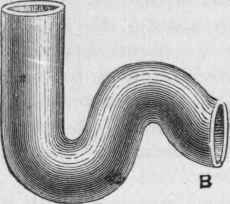
Fig. 98. - The "Emptage" Round-Pipe Trap.
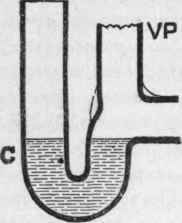
Fig. 99. - Showing Vent-Pipe for Water to Ascend up into it, to Recharge the Trap.
12. In round-pipe traps, whether U-shaped or V-shaped, the vent-pipe must be so fixed that in the passage of a body of water through the trap part of the water shall go up into the vent-pipe to fall back again into the trap after the momentum action has ceased. There are at least two evils in such an arrangement: (a) The water carried up into the vent-pipe would not always be clean. In the case of closet-traps and stop-sink traps, faecal matters would be often washed up into the pipe, there to remain to contaminate the air passing through the ventilation pipe. (6) The vent-pipe being directly over the exposed surface of the water-seal of the trap, currents of air passing over it would take up some of the water and reduce the depth of the seal.
13. Traps lose their seals by evaporation, (a) When a current of air passes over an exposed surface of the water standing in a trap, as in the case where the trap-vent is fixed on the crown of the outlet of a trap, as shown at v P, fig. 99. (b) When hot water coils are fixed near them, and when pipes for the circulation of hot water are fixed close to them, (c) When an exposed surface of the water-seal of a trap is open to the dry air of a hot room, (d) When the rays of the sun can pass through the window of a closet and fall upon the exposed surface of the water-seal of a closet-trap; also traps fixed in exposed positions outside on the sunny side of a house.
14. In very exposed positions, and in gusty weather, where at times there is a great blow-down of air in a pipe, or where the atmospheric presence on the outlet of an open pipe may be suddenly removed, the seals of traps fixed upon the stack may be much reduced, especially in round-pipe traps with easy outlets.
Continue to:


My Books

