


Materials And Framework
Description
This section is from the book "The Art Of Decoration", by H. R. Haweis. Also available from Amazon: The Art Of Decoration.
Materials And Framework
It is matter for regret that our ideas are so boniees, and our upholsterers so obstinate, else why are the materials for our chairs limited to wood, iron, and stuffs? . There are many materials besides wood which are very well adapted for our seats, and may be mounted on wood, if you will, but at the same time exhibiting new shades of colour, and offering a broad field to art.
For instance, why is not ivory oftener used for such purposes? I do not demand an ivory chair like that on which the great Rameses II. is seated in the bas-relief of Khelabshee, in Nubia, of which there is a cast in the British Museum, and in which it is easy to surmise whence the ivory chairs came, from the faces of the bearers - internal Africa. But ivory, or even bone, might be used, inlaid in large masses, and, mixed with ebony, mock ebony, or joined by metal, would not only form in itself a most elegant and picturesque aspect, but it would offer a surface for decoration such as no painted wood can do. Ivory in plates a few inches long might be painted and gilt, as in Hispano-Moorish work, where the colouring lasts well, protected by outstanding edges; or it might be etched with simple arabesques, or small human figures, as in the small seventeenth-century Italian cabinet-work, which, rough as they are, are most effective and picturesque. This idea is one which the larger furniture firms might take up with advantage; and occupation might be given to hundreds of needy art-students who could scrape in a little landscape or figure with greater facility and less risk than painting tiles and tea-cups.
Embossed leather, such as the James I. chairs, might be designed for chair backs and seats.
Brass of course will occur to all Grecomaniacs as a beautiful ornament to our chairs and tables. In the time of the Empire the Imitation Greeks actually adopted it from the school they worshipped. They built mahogany chairs, of a semi-Greek shape, or straddling stools and tables, and adorned the feet with lion's claws in brass. This was a good idea, and when the brass was new it had a pretty effect, but, like those lovelier brasses covering the exquisite seats which adorned Pompeii, the colour flies, not into a delicate green mould, but into a dingy colourless rust, in which no pattern is remarkable and no modelling worth notice.
The marqueterie chairs with lyre backs (a form derived from old Greece and Rome), imported so largely from French, Italian, and Dutch workshops in the last century and subsequently copied here, are sometimes graceful, especially the light yellow satin-wood, and might be adapted to moderate stuffing. Some of the old Italian chairs, speckled with ivory and pearl inlaying, are quaint and decorative, though not always easy, e.g., the present design, and the richness of their material adapts them to refined surroundings and richly-clad denizens. Folding and Glastonbury patterns might be revived, improved on by modern mechanism. An architectural chair, which might be a lesson to us, is preserved at Barcelona. It is made of silver, the supports representing window tracery in open-work, with three lofty gables, crocketed outside and cusped within, surmounting the back. Embossed or stamped leather in lieu of hot and fusty velvets might be more used for elegant chairs with advantage, and the designing might occupy many a deserving but needy art-student.
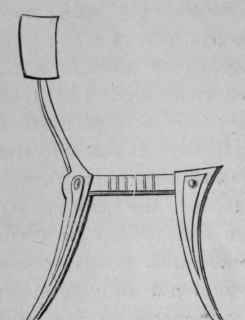
Fig. 48. - Greek chair: prototype of the common English form.
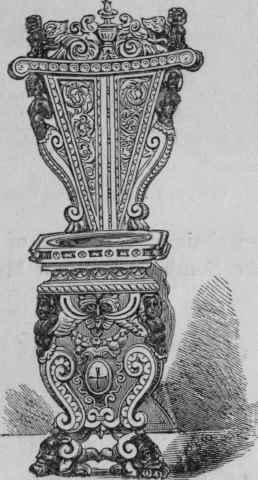
Fig. 49. - Italian Renascence chair: the decadence.
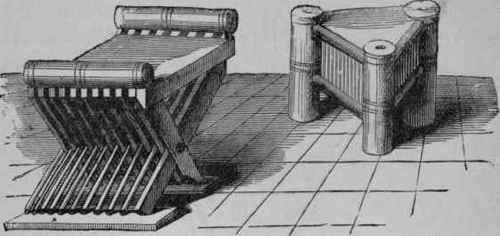
Fig. 50. - Fourteenth-century seats.
The famous chair of Dagobert, of which a copy is preserved in the South Kensington Museum, may offer hints: the seat when furnished would be quite curved. So may the more ascetic fourteenth-century seats engraved.
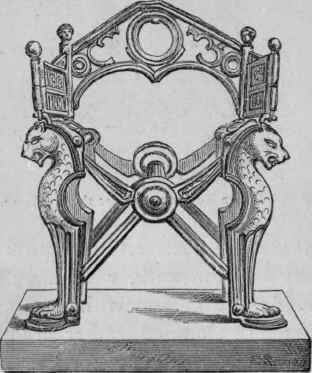
Fig 51 - Chair of Dagobert, in the Louvre, dated about 630.
We owe many lovely designs to India, whence Italy originally received the art of marquetry. The elaborate Bombay carving is very effective, like black lace on end, but it does not look well dusty, and in London it is seldom otherwise. Some of the Oriental bamboo chairs are extremely picturesque.
Veneering is unsatisfactory in theory, but so many fine effects have been produced through veneer, such as tarsia work, from classic times to our own, that we must not be hypercritical.
The ivory wardrobes mentioned in the 45th Psalm, whatever they were, must have been veneered. Venetian pillars cased in malachite and lapis lazuli, recur to us as suggestive of effects for portions- of modern seats. Old Egypt, like old Greece, is full. of hints, which we may study in the British and South Kensington Museums.
The small inlaid Roman sella can be easily copied, and forms a pretty stool or seat, cushioned. The old Greek folding-stool, the sculptured seat (evidently cushioned and fringed) of Nineveh, need not dismay an intelligent modern upholsterer; and it is reasonable, while demanding sumptuous walls to enclose Beauty, to claim something like splendour for the seat that shall enthrone her, and chryselephantine effects, without gold and real tusk, are obtainable by well-chased brass and bone, which excite no cupidity whilst improving our rooms.

Fig. 52. - Chair of Assyrian character on a bas-relief from Xanthus, in the British Museum.
A little trouble on the part of the present public and their suppliers, a little education, and enthusiasm for something higher than the immediate money return, would give us nineteenth-century objets de vertu worthy to rank with those of Louis XIV. or any other period of art-encouragement. And it would 'pay,' for those who care for beauty of design and construction are usually ready to give a good price for it, and they set the fashion gradually. Such furniture as I have suggested would be a more consistent environment than Spartan shapes, which are radically unfitted for frames enervated by luxury and by high culture, and whose use cannot check but rather increases weakness by denying it rest.
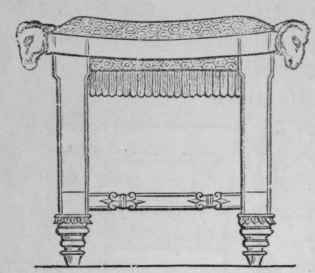
Fig. 53. - Stool, in sculpture, from Nineveh.
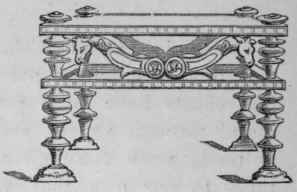
Fig. 54. - Ancient sella, or low seat.
In spite of an imminent scream I maintain that we are as a nation more dependent on luxuries, in fact less able to endure discomfort, than we were some centuries ago; and no doubt every nation, as it rises in the scale of culture, and grows wealthy, does become so far enervated as to like comfort. The increased culture is able to devise new modes of enjoyment and relief, but it only devises them because they are called for by new wants; and much as I deplore physical weakness and the habit of self-indulgence, and however sure I am that moderate rough-living, or the power at any rate to do without luxury if necessary, is a nobler and grander state than dependence on increasing refinements, I feel that we must take life as we find it, without trying to force ourselves into an ill-fitting mould; and I am sure that the severe temper of the early part of the present century, like that of the Puritan revival, dealt many an injury to the health and happiness of the young and delicate rising generation, to say nothing of its comfort. Nineteenth-century spines are not adapted to span-broad seats and straight backs - nor to a perpetual pen in the collar for the uplifting of the chin - nor even to the cherished backboard, which rendered girls the reverse of straight and strong.
What is wanted is daily exercise, good air, well-planned change of work and recreation, sufficient but not heavy feeding, and and ease and comfort within fit limits in our homes, to repair the waste involved in hard mental labour, late hours in a vitiated atmosphere, and sedentary and other unhealthy habits, which I fear cannot be suddenly given up.
A really comfortable sofa or chair often puts to flight a bad headache, a bad backache, or a bad humour, and, this admitted, I may go on without hesitation to exhort the public, if only for the sake of those who have to live with them, to collect every variety of chair and sofa that is comfortable, so as to allow of varying positions and relief to their poor skeletons; and further, for the good repute of art in England, to see that the chairs and sofas are pretty objects in themselves. Note that lumpishness in stuffing does not add to comfort - six inches depth of wadding is in reality no whit softer than two inches. The object of stuffing is to destroy the hardness of the internal wood-frame; and, so long as this is effected, the result in comfort is the same whatever the depth; and too great a mass of wool, so much indeed as to demand holding in place by buttons, is no more but considerably less luxurious than a smaller mass well laid without buttons. These dropsical velvet and satin monstrosities, which the ordinary upholsterer turns out by the thousand, use up more material to cover the humps of horsehair, last no better, and are hideous; a good spring-seat covered with a little wool, and handsome silk or tapestry, uninsulated by buttons, requires less material and is far more comfortable.
Continue to:


My Books

