


Plate And Cutlery. Continued
Description
This section is from the book "The Art Of Decoration", by H. R. Haweis. Also available from Amazon: The Art Of Decoration.
Plate And Cutlery. Continued
And when we study the ancient gold and silver ornaments of Greece and Rome, and read the long list of names of goldsmiths which have been preserved to us from this remote antiquity - when we hear of the microscopic groups worked by Callicrates of Lacedaemon and Myrmecides of Miletus, so small as to be hidden beneath a fly's wing, and scrutinise the foreign treasures which Cook's tickets have rendered so accessible - why, we ask again and again, are we to put up with these poor and vulgar table-'ornaments' (?) which we pay so exorbitantly for?
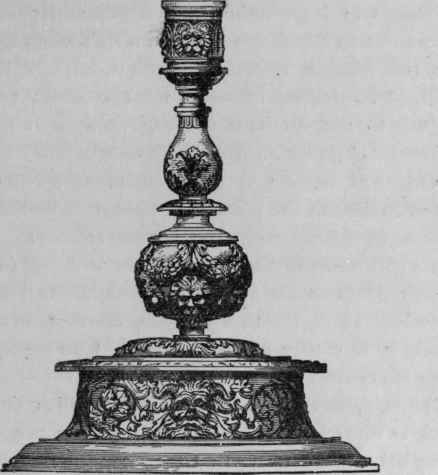
Fig. 63. - Candlestick, Italian, sixteenth century.
One very curious fact is, that many an artist, challenged to defend the plate on his own dinner-table, will hesitate, or stammer out the lamest excuses. 'Mustn't look a gift horse in the mouth,' one will say (a proverb which reflects on the honesty of benefactors!) - 'I really never looked at the thing before,' another answers; or 'Well, it is rather a good design, I thought, without being too critical.'
Thus, artists will sometimes say English designs are good, as musicians will say English bells are good, because habit is so strong that they cannot rid their judgment of implied conditions. Their praise means 'good enough for bells,' ' good enough for plate.' It has never entered the musician's head to judge a bell as a musical instrument; it has never entered the artist's head to judge of his plate by the same standard as he judges pictures by. The thing has always occupied a lower place in his mind, and has not been thought of as belonging to art at all.
But if an artist, like any other cultivated man, has collected a few pieces of old plate, he knows the difference very well: his attention has been awakened to unforeseen possibilities, and he will no longer have a word to say in favour of the bits of presentation plate which have ceased to deface his table.
A bit of finely-modelled pewter gives a cultured eye more pleasure than a monstrosity in pure gold. I wish that those who can, would sometimes practise the art of working in the above humble metal which was not beneath the attention of Francois Briot, nor despised at the tables of Marie d'Anjou and Francis I. There are one or two amateur goldsmiths in England who have it in their power to redeem our name among the nations.
Meantime, the safest investments in modern work are the copies of Cellini's standard patterns (however impaired), and good Indian and Persian designs, which are very common, happily.
Until the public taste has risen to the critical level of our seventeenth-century ancestors, or the Athenian populace, the English designer will do no better than he does.
French designs are no loftier, though the workmanship is by some considered more refined. As to the humbler requisites of the table - the mere forks and spoons and knives, in which we hardly require elaborate workmanship since they must undergo rougher usage than salt-cellars, tankards, and centrepieces - they might be greatly improved without being more costly or more troublesome.
In the first place, the four prongs should dwindle to three, which admit of a more elegant curve from the handle, and are quite as serviceable for all probable purposes. Spoons should be of two shapes, round and oval in the bowl, but never as large and heavy as most modern dessert and table-spoons, which are only fit for an ogre's jaw. The old Apostle spoons are better suited in shape to serve fruit or cream than oval spoons, but less so to drink soup than the present kind. A spoon should never be too large to be taken into the mouth; otherwise we might just as well sip from a bowl's edge, as our grandmothers sipped a 'dish of tea.'
The handles of most modern table plate, whether silver or electro-plated, are utterly destitute of refinement in design. The fiddle-patterned fork with its inconvenient edges quite forgets the outline of a fiddle, and is smothered under ornamentation such as the so-called 'shell' which really is a base imitation of the Greek honeysuckle, or other caricatures of Renascence detail under a fancy name; because this kind of clumsy prominent work suits trade purposes admirably. In silver it adds enormously to the weight, and consequently the cost. In electro it grows shabby speedily, because the spoon or fork always falls on the ornament, and forces us to replace the set before long.
The industrious collectors of Queen Anne plate (really Queen Anne this time), who do good service to art in giving us the opportunity to compare old silversmith work with new, nurse an enmity to engraved patterns which I do not wholly understand. Whilst repousse work, well and delicately done, is certainly the most showy with its many reflected lights, fine incised patterns seem to me admirable in many ways; and for such things as spoons and forks would be far more suitable and agreeable to the touch than embossed lumps. The admirers of Queen Anne plate admire chiefly its plain surfaces and solid worth of execution. No doubt in an age of debased design, the simplest design is usually the best; but simplicity is not art, for the highest art aims at decorating and beautifying, without marring the purpose; and satisfactory to the mind as is the small hammer-mark on the flat surface of an antique bowl or ewer because we prefer the thoroughness of patient handwork to the specious ingenuity of machines; yet the work which contains similar skill superadded to brilliant fancy, as in designs still more antique, must be far more satisfactory; and so a delicate repousse or engraved punch bowl of, say, Stuart times, must rank higher than a plain one of Queen Anne's or the Georges' day, because more nearly influenced by a capital school of art.
The value no doubt depends on the merit of the work; but the artist's share cannot rank so decidedly below the artisan's that the addition of ornament detracts from the true value of the object.
Conventional forms alone are suited to the humble purposes of sugar-basins, butter-dishes and castors. The butter can never taste sweet which is covered by a straw hat, or a kitten. The pepper shaken out of a top-boot though of silver, must spoil one's appetite. Salt should not be dug out of an animal's back, nor sugar picked up by a harlequin's legs. Now that our minor objects of daily use are no longer needed to point a moral or adorn a tale, as in mediaeval times, and we do not care for the stones of saints and the songs of troubadours appealing to us from under our hands; now that we have no longer the leisure and enthusiasm to evolve a new school of splendid design as the Renascence artists did, we had better adhere to careful reproductions of the works of those who could think and labour in the right way, else we shall surely fall back on the vulgarities of beasts and old wearing-apparel upon our tables.
In cutlery, people as usual do not know the difference between good and bad. It is strange, but true, that sterling hammered steel knife blades can hardly be got now, and only at an enormous price. We observe that our knives last for a very short period, as compared with our fathers', and we observe, too, that dinner knives are increasingly cheap. The blades, like fire-irons and grids, are merely cast, not hammered at all, and therefore they are brittle and soft, stand no wear, soon rust and chip, and fall out of the handles. The handles themselves turn yellow and crack before they have been in use a year or two, and the razor-fine blade worn down to the shape and size of an oyster-knife, in its strong and goodly setting, is a thing of the past.
As to shape, nothing can be clumsier than the fashionable one, which grows ever larger and heavier, it is true, but which can have had no utilitarian origin unless in days when the master of the house was so commonly in liquor at his meals that round-ended knives were thought safest for his eyes. This may explain, too, the wafer-like disc which ends some old-fashioned pointed blades. At any rate the pointed end, with blade and handle both sufficiently curved to give the hand a good purchase, lasted throughout the seventeenth century into the eighteenth, as we see in the old silver-handled William III.'s knives and forks, blades and prongs being steel. Some old knives have blades so curved that they suggest some upright use of them in the fist, perhaps to pick up hot bits before forks were common. That this was comparatively late is shown by Coryat's account of being 'chaffed' by a friend for his Italian habits, 'who in his merry humour doubted not to call me at table furcifer, only for using a forke in feeding, but for no other cause.' Furcifer in Latin meant literally fork-carrier, but it also signified a villain, who deserved the gallows. Hence we get no table-forks for feeding before temp.
James I.

Fig. 64. - Ancient knives and forks.
Silver-handled knives and forks, however, are very cold to the touch, hardly pleasant in winter, though they admit of delicate ornaments which please the eye. Elephant's tooth, mother-of-pearl, coloured bone, shagreen, and above all, damascened steel, ought to supersede the monotonous bone or ivory in richly appointed houses.
There is no reason why high art, sensibly applied, should not invade the forgotten ranks of implements we have to see and use so constantly as knives, forks, and spoons.
The subject of table glass is treated at some length in my 'Art of Beauty.'
Continue to:


My Books

